Selections from the Torlonia Collection, the largest private collection of Roman sculpture in the world, to be presented in major exhibition in the US and Canada
Art Institute of Chicago (March 15 – June 29, 2025)
Kimbell Art Museum through January 25, 2026)
Montreal Museum of Fine Arts (March 14 – July 19, 2026)
Rome, Italy — The Torlonia Foundation announced today the North American tour of Myth and Marble: Ancient Roman Sculpture from the Torlonia Collection, a major exhibition of ancient Roman masterworks marking the first time these works have been shown outside of Europe. Selections from the Collection, assembled and stewarded by the Torlonia Family beginning in the early-19th century, will premiere at the Art Institute of Chicago in March before traveling to the Kimbell Art Museum in Fort Worth and the Montreal Museum of Fine Arts as part of the Foundation’s mission to showcase these extraordinary historical works to the public.
Established during the course of the 19th century by the Franco-Italian banker Prince Giovanni Torlonia and his son Alessandro, the Torlonia Collection was handed down over generations, eventually growing into the largest private collection of ancient Roman sculptures. Today, the Torlonia Foundation represents the culmination of the Family’s continued passion for art. Created at the behest of Prince Alessandro Torlonia (1925–2017), the Foundation’s mission is to preserve and promote the Torlonia Collection and Villa Albani Torlonia. The Foundation is an exceptional repository of artistic heritage, with works that speak to some of the most pivotal moments of Western civilization, the history of collecting, and the history of archaeology and restoration.
In 1876, Prince Alessandro Torlonia (1800-1886) created a museum to house and exhibit the Family’s holdings, which was open to small groups until its closure at the onset of World War II. The sculptures remained unseen by the public from that time until the Foundation’s first exhibition at the Musei Capitolini in Rome in 2020. Next year the collection will come to North America after drawing unprecedented audiences (more than 600,000 visitors to date) at the Louvre, the first presentation of the collection outside of Rome.
The curators of Myth & Marble: Ancient Roman Sculpture from the Torlonia Collection are Lisa Ayla Çakmak and Katharine A. Raff of the Art Institute of Chicago. The exhibition is co-organized by the Art Institute of Chicago and the Torlonia Foundation, in collaboration with the Kimbell Art Museum, the Montreal Museum of Fine Arts, and The Museum Box. All of the sculptures in the exhibition have been restored by the Foundation with the support of Bvlgari.
The exhibition is accompanied by a catalogue co-published by the Art Institute of Chicago and the Torlonia Foundation, edited by Lisa Ayla Çakmak and Katharine A. Raff, with essays by Silvia Beltrametti and Salvatore Settis.
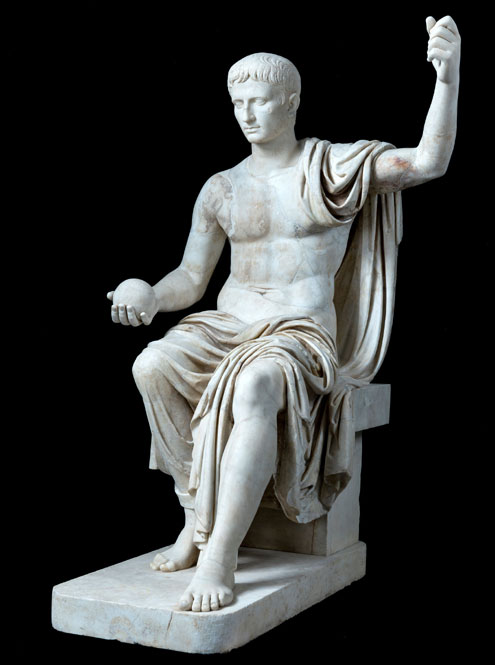
The North American presentation will feature 58 highlights from the Torlonia Collection, including 24 newly restored works that have not been on view in nearly a century. The sculptures date from approximately the 5th century BCE to the early 4th century CE, with the majority of the works dating to the High Imperial period (1st–2nd centuries CE). Highlights include examples of the most emblematic genres of ancient marble sculpture, acquired by the Torlonia Family from the most prominent collections of Rome’s patrician families, as well as from excavations made on the Family’s own estates throughout Italy.
“The Foundation is excited to be sharing the Torlonia Collection with audiences in North America for the first time. This exceptional group of ancient sculptures is a testament to the enduring cultural legacy of ancient Rome, as well as the vision and passion of multiple generations of the Torlonia Family,” said Alessandro Poma Murialdo, President of the Torlonia Foundation.
“By sharing these rare masterpieces with the public, the Foundation aims to deepen appreciation for and foster a renewed connection with the artistic achievements of the ancient world,” said Carlotta Loverini Botta, Director of the Torlonia Foundation. “The universal spirit that has always informed classical art must continue to be nurtured for generations to come. It is a universal language that thrives on the ongoing reinvention of the classics through engagement with modern culture—a vision brilliantly highlighted through the curatorial approach of Lisa Ayla Çakmak and Katharine A. Raff.”
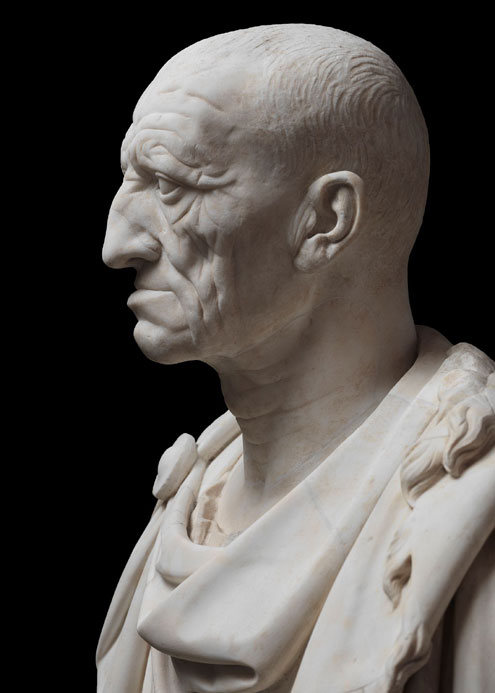
The presentation is organized thematically in six sections, opening with “Icons of the Torlonia Collection,” featuring three of the most historically significant sculptures from the Collection. Portrait of a Young Woman, called the Maiden of Vulci, among the best-known of the Torlonia Marbles, provides a singular example of Roman female portraiture from the early Augustan era. The exhibition continues with “Imperial Portraits,” featuring works drawn from the Collection’s expansive holdings of depictions of the reigning emperors of the 2nd century CE and their imperial families, including a remarkable selection of portraits of women. These works provide a window into the behind-the-scenes power wielded by the women of elite Roman families, spotlighting an often-overlooked aspect of the ancient society.
The next section, “Torlonia Excavations,” features sculptures found on the Torlonia Family’s properties in Rome and the surrounding suburbs and their estate in Porto, Portugal, an area that served as a key harbor during ancient Roman times. Highlights include Attic Votive Relief, dating to end of the 5th century BCE, the earliest sculpture of the entire Torlonia Collection, and Portus Relief, exceptional for its intricate details of a harbor scene.
“Exceptional Restorations” spotlights sculptures that have been transformed into new works, reflecting how from the time of the Renaissance, collectors like the Torlonia Family preferred unfragmented objects to decorate their homes and populate their lived environments. On view is Rondanini Type Medusa on a Trapezophoros (Table Leg) with a Griffin’s Head, an object that appears to be created from distinct ancient sculptural fragments (the Medusa head and the Griffon-headed table leg). Sometimes great artists were engaged to update or perfect ancient fragments: for example, a statue of a reclining ram features an exuberant head carved by Gian Lorenzo Bernini around 1620. The next section, “Gods and Goddesses,” features sculptures depicting the myriad deities of the broader Roman world, illustrating how, as it expanded, the Roman Empire increasingly embraced aspects of Greek culture such as mythology, cementing a shared Greco-Roman cultural heritage.
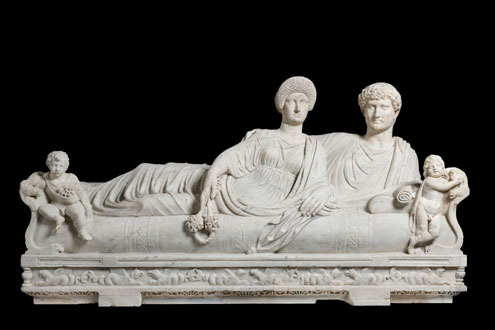
The final section, “Funerary Sculpture,” reflects a major strength of the Torlonia Collection: funerary monuments, which underscore the longstanding Roman tradition of commemorating the dead and visually celebrating one’s personal identity for eternity. On view are a number of exceptional sarcophagi (stone coffins), which are among the largest sculpted works in marble to survive from ancient Rome.
The tour reinforces the work of the Foundation to advance the appreciation and understanding of this unparalleled collection and the rich cultural heritage it represents. The Foundation’s mission is carried out through a continuous joint effort between the public and private sectors, including with the cooperation of the Italian Ministry of Culture. The Foundation is supported by a longstanding collaboration with Bvlgari as the principal sponsor of the restoration project since its inception in Rome and throughout the global tour, and Chiomenti, who has lent invaluable support to the Foundation’s core activities.
United by a shared passion for art and collecting, the Torlonia Foundation and Fondazione Bvlgari have joined forces to undertake the conservation of the Torlonia Marbles, ensuring the continued relevance of their historic and aesthetic value and safeguarding these masterpieces for future study. This enduring partnership has seen the Roman Maison serve as the main sponsor for the restoration of over 150 statues from the Collection to date, as part of an initiative aimed at raising awareness of the vital study and conservation work carried out by the Torlonia Foundation in the Laboratori Torlonia (Torlonia Workshops).
Bvlgari’s support for this restoration underscores its broader commitment to cultural projects and artistic patronage in Rome. Over the years, the Maison has spearheaded numerous initiatives to preserve Rome’s incomparable creative heritage for future generations. This sponsorship also pays homage to Bvlgari’s Greco-Roman roots and its enduring dedication to the classical aesthetics, reflected in its commitment to excellence in design and craftsmanship.
Additional comments on the exhibition
“It has been an honor to curate the first-ever North American touring presentation of this historic collection,” said Lisa Çakmak, Mary and Michael Jaharis Chair and Curator of the Arts of Greece, Rome, and Byzantium at the Art Institute of Chicago. "We are thrilled to introduce these exceptional yet little-known sculptures to our visitors, which will offer a once-in-a-lifetime opportunity to not only view these rarely seen objects but also to explore the stories of both their ancient pasts and modern afterlives."
“The opportunity to bring large-scale works of ancient Roman sculpture to the American public is extremely rare, and we at the Kimbell are grateful to the Torlonia Foundation for creating this once-in-a-lifetime experience,” said Eric Lee, Director of the Kimbell Art Museum. “This will be the first exhibition of ancient Roman sculpture in the Kimbell’s 52-year history and is all the more exciting because the legendary Torlonia Collection went unseen since the closing of the Torlonia Museum in the wake of World War II.”
“From the Mediterranean to the contemporary art collections, and from Old Masters to Inuit art, there’s not one aspect of the MMFA’s holdings that does not in some way embody the influence of the Torlonia Foundation’s masterworks of Roman sculpture. Their sheer expressive force is such that it transcends centuries and frontiers. We are truly honored to be the first museum in Canada to host these masterpieces,” said Stéphane Aquin, Director of the Montreal Museum of Fine Arts.
“The Bvlgari Foundation perpetuates and amplifies a mission that has always been part of Bvlgari's DNA. A commitment to building a magnificent future with long-term, lasting value in the fields of art and patronage, education, philanthropy, and inclusion. The collaboration with the Fondazione Torlonia is the perfect testament to this mission, aiming at the pursuit of beauty and the preservation of what must be passed down from generation to generation. The journey now begins in Rome and extends to the United States and Canada,” said Jean-Christophe Babin, Bvlgari Group CEO and President of Fondazione Bvlgari. “Once again, we are proud to stand alongside the Fondazione Torlonia on this unique journey of artistic rediscovery, bringing to light the unrivaled beauty of one of the world’s most important private collections of ancient Greek and Roman sculptures, which includes some of the most famous statues of Roman emperors.
“Thanks to the Torlonia Foundation, universal values such as culture and beauty find new space in our modern and complex world, after having passed the test of time through the centuries,” said Filippo Modulo, Senior Partner, Chiomenti. “It is a privilege to contribute to such a journey sharing Italian treasures at their best.”
About the Torlonia Foundation
The Fondazione Torlonia came into being at the behest of Prince Alessandro Torlonia, with the aim of preserving and promoting the Collezione Torlonia and Villa Albani Torlonia: “cultural heritage of the Family for humanity” to be handed down to future generations. Together, as well as comprising an exceptional artistic heritage, they reflect some of the key moments of our civilization, of the history of collecting, as well as of archaeology and restoration: the Collezione Torlonia offers a significant testimony of the history of collecting items of antiquity, and Villa Albani Torlonia—a sublime testimony of the coupling of reason and nature—constitutes an unspoiled representation of 18th-century taste. For more information, visit www.fondazionetorlonia.org.
About the Art Institute of Chicago
Founded in 1879, the Art Institute of Chicago is one of the world’s great art museums, renowned for its iconic collection of objects spanning 5,000 years of human creativity. Located in the heart of Chicago amid the city’s parks and bustling downtown, the Art Institute is uniquely situated to share its world-class collection with the city's residents and visitors from around the world. Alongside its global collection, the museum presents landmark exhibitions featuring a range of art forms and periods, from ancient objects through works made by today’s emerging and leading artists. Beyond the artworks in the galleries, the museum offers an array of engaging programs, creative educational experiences, and activities in local communities that connect art lovers to the innovative storytelling, groundbreaking research, and conservation initiatives behind each artwork. For more information, visit https://www.artic.edu/.
About the Kimbell Art Museum
The Kimbell Art Museum, owned and operated by the Kimbell Art Foundation, is internationally renowned for both its collections and its architecture. The Kimbell’s collection includes masterpieces from Europe, Asia, Africa, and the ancient Americas, with works ranging in period from antiquity to the 20th century. The museum’s 1972 building, designed by the American architect Louis I. Kahn, is widely regarded as one of the outstanding architectural achievements of the modern era. A second building, designed by Italian architect Renzo Piano, opened in 2013 and now provides space for the collection, special exhibitions, dedicated classrooms, and a 289-seat auditorium with excellent acoustics for music. For more information, visit kimbellart.org.
About Montreal Museum of Fine Arts
Founded in 1860, the Montreal Museum of Fine Arts (MMFA) has been built on the generosity of multiple generations of Montrealers. Its mission is to acquire, conserve, study, interpret and present significant works of art from around the world and from every era, in the hope that members of its community and all Museum visitors may benefit from the transformative powers of art. The MMFA’s collection showcases Quebec and Canadian heritage, Indigenous art and international art from a progressive and innovative perspective. It comprises close to 47,000 paintings, sculptures, graphic artworks, photographs, multimedia installations and decorative art objects dating from antiquity to the present. The MMFA’s exhibitions and cultural programming aim to inspire new ways of looking at art and the history of art. As a hub of art, community and exchange and a pioneer in the provision of art therapy, the Museum collaborates with partners in the fields of community organization, education, health and technology to offer all audiences an enriching and transformative experience of art. Thus, through each of its projects, the MMFA continues to strive towards a more inclusive, accessible and just world. For more information, visit https://www.mbam.qc.ca/en/.
About The Museum Box
The Museum Box is a leading international strategy and traveling exhibitions partner for museums. We are known for our thoughtful and personal approach to museum business that draws on decades of experience working with institutions of all scales. Our team of museum professionals offer a selection of turnkey and customized services. We position our clients to access our vast global network of 500+ museums, to expand their domestic and global footprints, and to raise vital funds in support of their missions. For more information, visit https://www.themuseumbox.com/.