


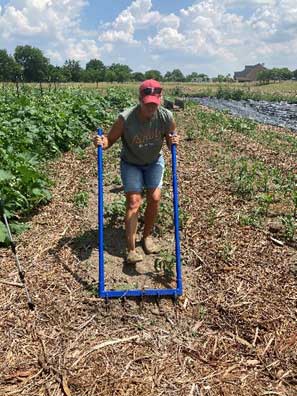
The broadfork has two long wood or metal handles connected to a flat bar that has between four to seven, 8-to-16-inch spikes on it. To use it, the gardener puts the prongs into the ground and steps onto the bar pushing or wiggling the spikes into the ground with their body weight. The gardener steps off the bar and pulls the handles toward them, aerating the soil. This process is repeated over and over in preparing new planting beds or reinvigorating current ones.

My own personal experience with the broadfork has proven these benefits. I bought a used metal broadfork last summer for $75 compared to the price of a good rear tine tiller which is about $500. This spring we broadforked 26, fifty-foot rows. As a result of using the broadfork, we no longer have any water pooling in any of the uneven or low areas. We were also able to remove much of the Johnson grass rhizomes and Bermuda grass stolons from the growing areas.
In conclusion, small acreage farmers and gardeners who choose to try the broadfork will be rewarded with increased crop yields, improved soil health, and experience a very cost-efficient alternative to tilling. #cropfit #theresilientfarmer