

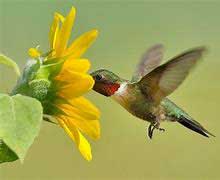
Every year, hummingbirds travel from their winter homes in Central America and Mexico up to North America. They are responsible for their own flight all that way and do not “catch a ride” on other birds, animals, or any other means. After traveling so far, they arrive hungry and are relatively easy to attract to your yard. The most commonly thought way is to provide nectar from a feeder, 1:4 parts sugar to water ratio. Red dye is not needed and may, in fact, not be good for them. If you choose to hang a feeder, or multiple feeders, be sure to thoroughly clean and refill them every few days to not pass on any dangerous or even deadly bacteria to the birds. It is also a good idea if you choose to have more than one hanging feeder, to space them out. This will help diminish the birds fighting over the food source.
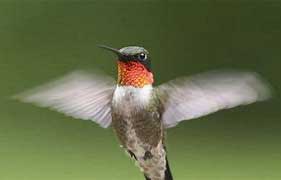
Hummingbirds, also known as Hummers, love red and orange flowers, of which there are many native perennials that require very little care or maintenance. Any plant with nectar-bearing, tubular shaped blossoms will be inviting to hummingbirds. Interestingly, hummingbirds get their protein from small insects and spiders, and have been known to easily snatch insects right out of the air. If you are using any pesticides, be very careful that they are not harmful to pollinators and wait on brushing down those spider webs so the hummingbirds can get their fill.
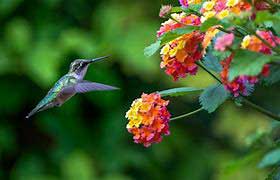
Here are 5 interesting facts about hummingbirds you might not have known:
1. While hummingbirds are very active, it is a common myth that they never stop flying. How would they rest or sit on their nest of eggs? [4] Besides buzzing around being extremely active looking for food, hummingbirds love to perch. They often pick a spot high up where they can rest and survey their surroundings. They often perch in trees, shrubs, at the top of swing sets and even on clothes lines.[5] If you are curious, just watch where they go after feeding in your yard and you will see their favorite spot!
2. Did you ever wonder what happens to hummingbirds when the temperature is cold or even at freezing levels? Or how do such little creatures survive cold nights or mornings? Well, another fascinating adaptation is their ability to slow their metabolic rate down up to 95%. This helps them to survive freezing temperatures by allowing them to enter a deep sleep called Torpor. It is like hibernation. It takes about 20 minutes to an hour for the hummingbird to “wake up” from this state.
3. Many people think hummingbirds have straw-like tongues that suck the nectar from flowers, but that is another myth. They have specially shaped tongues with grooves in them and tiny hairs. They lap up the nectar like a cat.
4. Hummingbirds’ nests are very tiny, about the size of a half dollar coin, often found in the bend of branches. They use spider webs to help bind the structure together. Hummingbird eggs are no bigger than small jellybeans and weigh about 1/50 off an ounce. Female hummingbirds are very shy and skittish and may abandon their nest if they do not feel secure. If you are fortunate to spot a hummingbird nest, it is always best to keep your distance and watch it from a distance rather than risk harming the nest or hatchlings.[6]
5. Hummingbirds are often called “hummers”. A group of hummingbirds is called a “charm”.
Go ahead and invite them to your garden and enjoy the endless hours of entertainment and beauty they provide!
[1] Hummingbirdguide.com for Hummingbird enthusiasts.
[2] https://www.audubon.org/content/how-create-hummingbird-friendly-yard
[3] “What to do in your Texoma Yard & Garden,” by Jessiie Gunn Stephens
[4] https://birdwatchingbuzz.com/do-hummingbirds-die-when-they-stop-flying/
[5] 5 Ways to attract Hummingbirds to your years, by Katie Parker, Univ of Illinois Agrilife Extension
[6] 5 Ways to attract Hummingbirds to your years, by Katie Parker, Univ of Illinois Agrilife Extension