

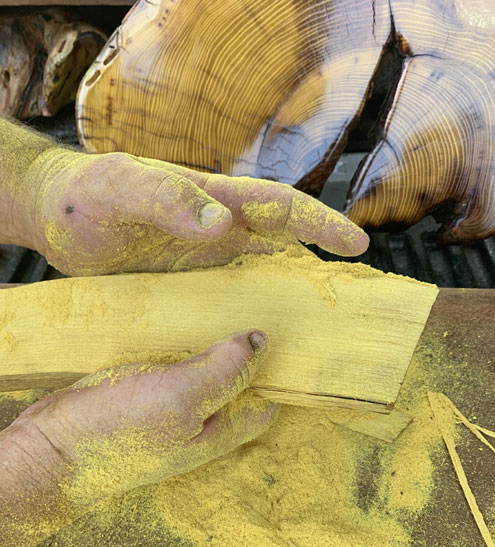
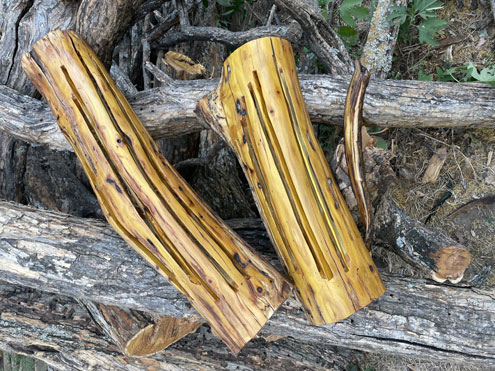
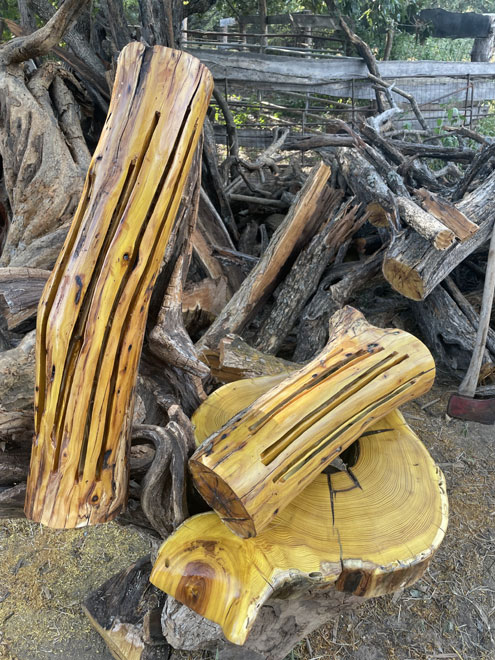
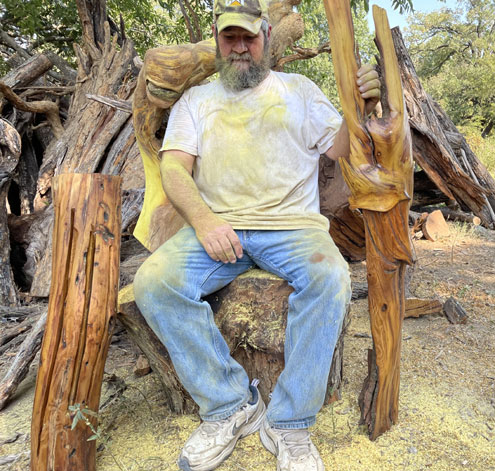
Fannin County, Texas -- When you watch brightly colored yellow wood quickly molded into shape like soft butter in the hands of John Baecht, you have to keep reminding yourself that this locally grown treasure is some of the hardest wood on God's green earth.

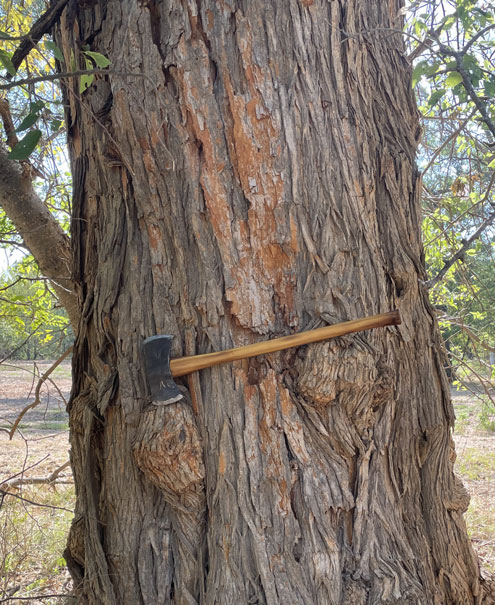
Bois d'arc trees likely evolved as a food source for megafauna, with strong branches to take the beating that came from feeding sessions by massive animals like giant sloth and mammoth that fed on "horse apples" during the Pleistocene, 2.5 million to 11,700 years ago.
But while the era of megafauna came and went, somehow bois d'arc managed to live on. Some call it a neo-tropical anachronism; others are a bit more specific and call it an evolutionary anachronism.
A massive extinction of numerous megafaunal species occurred during the latter half of the Late Pleistocene to the beginning of the Holocene, somewhere between 50,000 years ago to 10,000 years ago. The evolutionary anachronism theory is that bois d'arc co-evolved with these large animals that fed on its fruit and dispersed the seeds until the animals because extinct.
But every time bois d'arc seemed to have outlived its purpose, maclura pomifera has reinvented itself.
It seems to have originated as fruit-bearing tree favored by certain megafauna. Then, tens of thousands of years later, American settlers discovered they could plant rows of bois d'arc seeds and weave the young, thorny plants into hedgerows that served as fencing around gardens and cornfields to keep free-range cattle out.
Maybe the most amazing part of the story of bois d'arc came when Lucien B. Smith was issued a patent for barbed wire in 1867, making the thorny hedgerows obsolete. Suddenly, the search was on to find which tree could be harvested to make the best fence posts.
As it turned out, nothing lasts longer than bois d'arc.
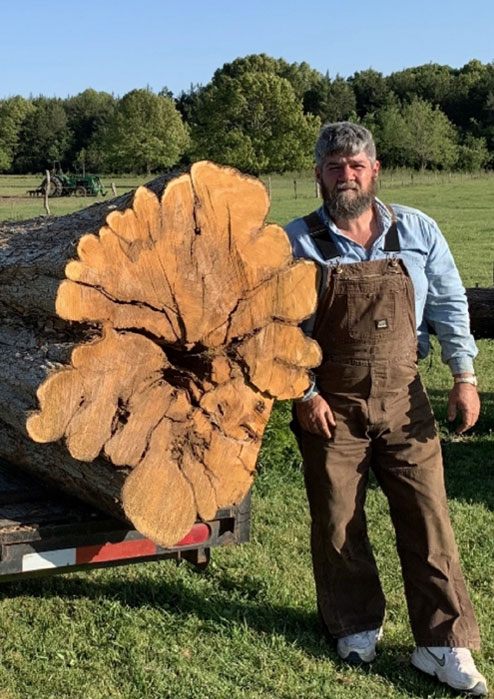
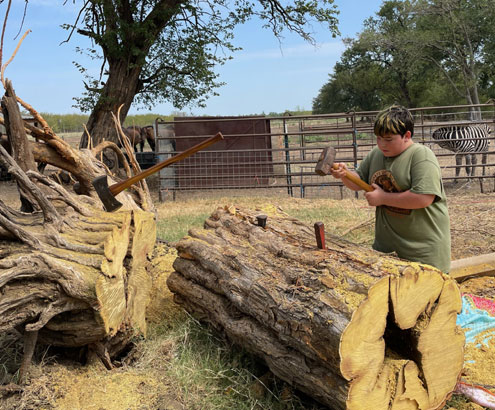
Some of those 150-year-old fence posts are now being harvested by Fannin County resident John Baecht.

Baecht calls bois d'arc "the Swiss army knife of trees" as he fashions everything from incredibly sturdy axe handles to deceivingly delicate-looking daffodil petals from this unique yellow wood that attracted Native Americans to the Bois d'Arc Kingdom thousands of years ago.
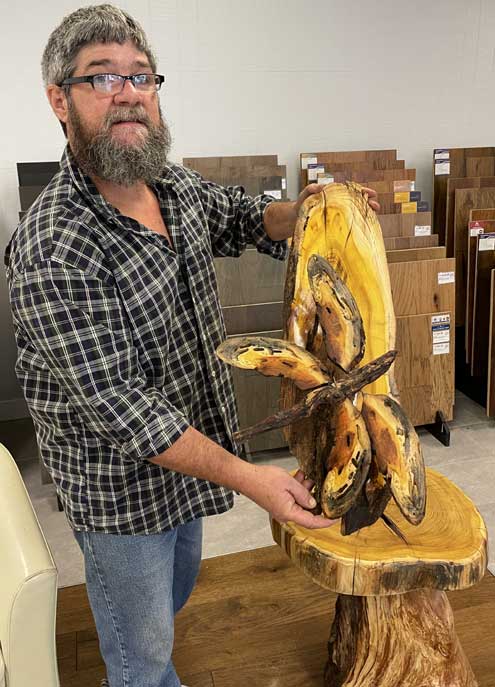
"It has a heart of gold and a soul of steel," Baecht says with quiet admiration in his voice that has developed from years of working with a remarkably unusual tree that many North Texans unknowingly shrug off as "trash wood." For those who understand the fascinating properties of this tree, nothing could be farther from the truth.
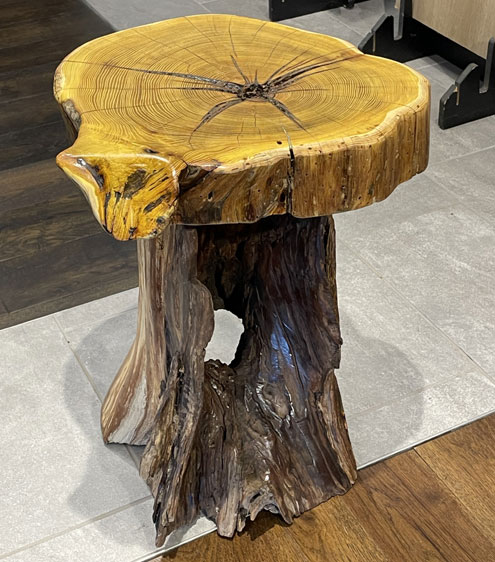
From practically unbreakable tool handles to graceful dragonfly wings destined for bookshelves and coffee tables, it is that combination of fulfilling basic utilitarian purposes and also creating one-of-a-kind art treasures that makes Baecht's work as versatile as this unusual wood he cherishes.
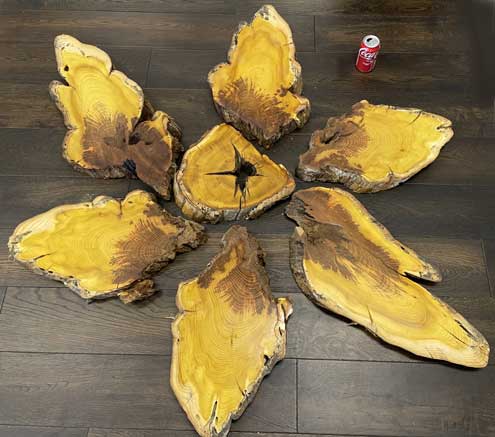
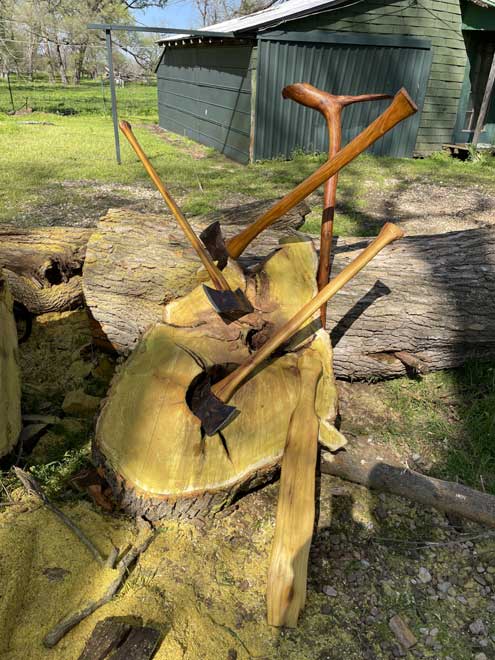
Heirloom handles start at $200. Baecht is transforming bois d'Arc fence posts into family heirlooms that will be passed down for generations.
"If you lose the hammer or ax for a year in the field, just wipe off the rust and go to work," Baecht says.
A family of artists
Art has been a constant theme in several generations of the Baecht family. John's mother, the late Sue Tucker, is the matriarchal artist of the family, known for producing Southwest-style ornaments at her Southwest Treasures in Santa Fe, New Mexico Christmas Store for years. Sue's cow skulls with turquoise inlays won numerous accolades.
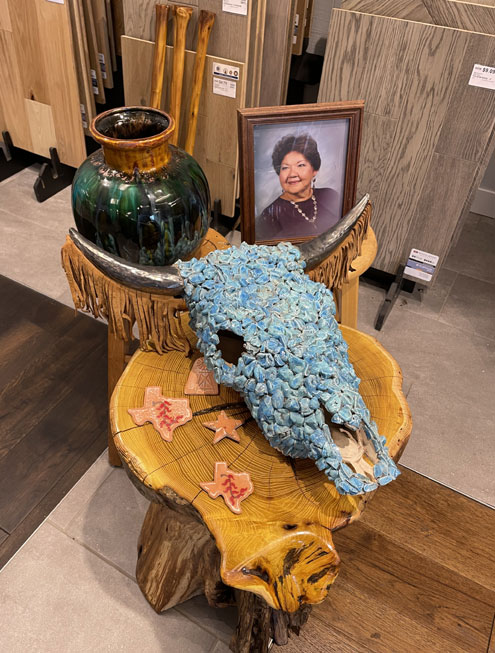
John's father, Robert Baecht, is the owner of Goldstar Carpet One in Denison, Texas. The name of the store comes from something Robert created in 1963 when he found a box of discarded, broken gold-colored tile at a wholesaler in Dallas and took the broken tile and created gold stars in the white-tile showers. Soon everyone wanted the gold star tile installer.
"His ability to lay out large, complicated tile designs is pure art of math," John says with a bit of awe in his voice.
Robert loves to make mosaic stepping stones out of up-cycled used tile.


But the best may be yet to come for this family because John credits his daughter, Tabitha Baecht, a student at Savoy High school, with inspiring him to let my hands follow his thoughts.
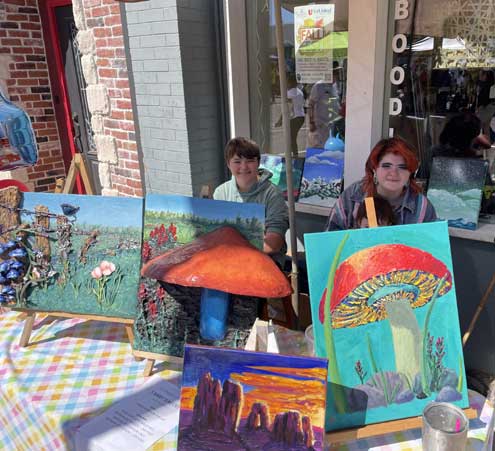
"I witnessed Tabitha transform sticks, twigs, corn husk, newspaper and lots of glue into a 3-D painting of a weathered bois d'arc fence row that placed 6th in the National Beta Division 2 competition," remarks an obviously proud father.
Tabitha's bois d'arc fence is in the far left of this photograph and the large mushroom won 8th in the National Beta Division 2 competition.
There is a rumbling in the Bois d'Arc Kingdom that Mr. Baecht and several bois d'arc craftsmen will gather for an exhibit in Fannin County this fall.
To contact John Baecht for more information, please email boisdarckingdom@gmail.com


courtesy photos