

September 8, 1873 – 2023
"Dodd logs"
Dodd City, Texas -- About 1840, one mile east of Dodd City in the L P Cook survey, the “Dodd logs” had their beginning. Edmund Dodd and his family moved into this area and began cutting bois d’arc trees from the land. These trees were then shaped into uniform logs for use in the construction of their cabin and outbuildings. These buildings were of vital importance for the protection of themselves, food and animals. They would have stayed in a tent, covered wagon or may have simply slept under the stars until the cabin was completed.
According to W. A. Carter’s 1885 History of Fannin County, Texas, Judge J.P. Simpson states that, “In 1837, when moving to the frontier there was no house from where Paris now stands until you reached the west side of Bois d’ Arc Creek.”*
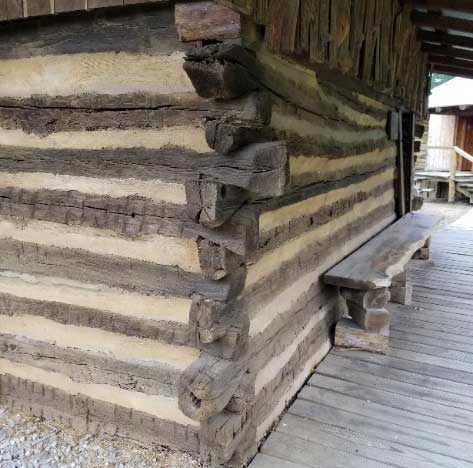
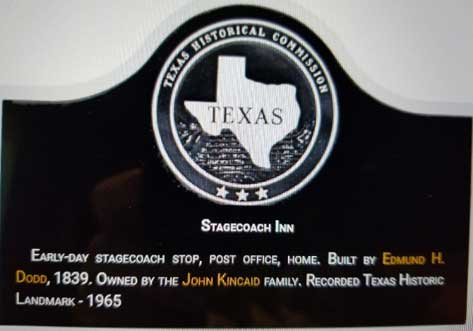
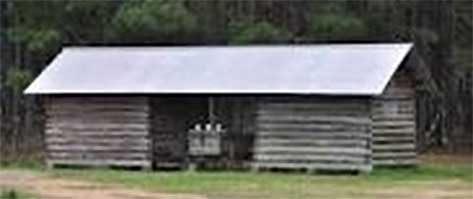
Over the years their log cabin would be used as a home, post office, stagecoach stop/inn and eventually evolved into a stately two-story home. Mrs. John Kincaid’s family, daughter of Edmund Dodd, who owned the property, received the above Texas Historic Landmark plaque in 1965 which included the house and log buildings. The house burned in October of 1976, but the 1840 log barn and other structures on the farm survived. After the fire, the Kincaid family donated the log barn known as a “DOG TROT” to the Fort Inglish Village in Bonham. These are the only buildings remaining from the original Dodd homestead and are about 183 years old. The picture below is a typical "dog trot" log structure in that time period.
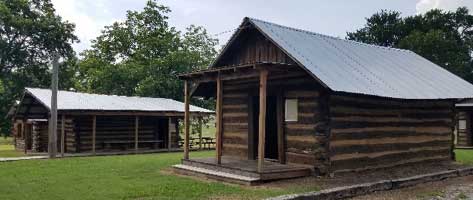
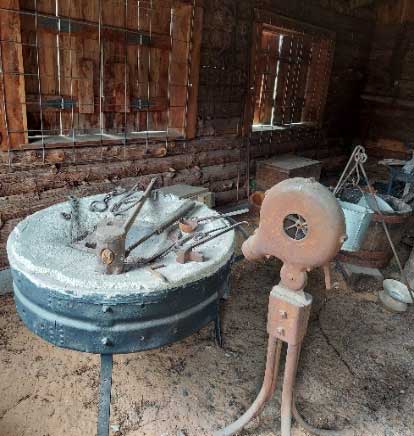
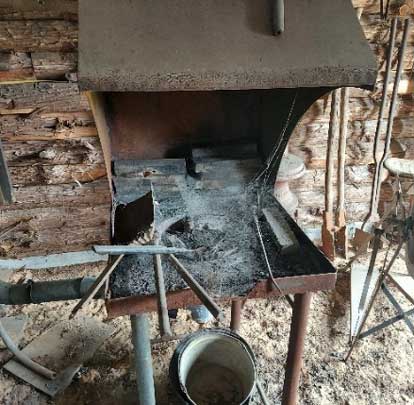
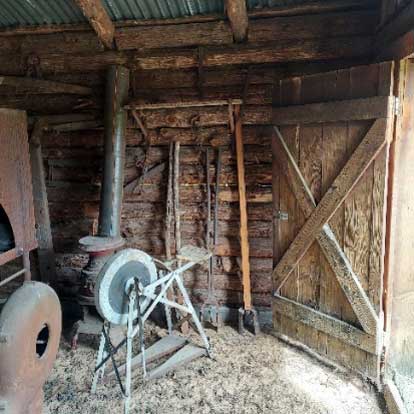
The "dog trot" is now two separate log cabins just north and east of the visitors center as shown in the above photo. Until 2004 one cabin was used to display the tools of a typical blacksmith shop circa 1900. Much of the old equipment was donated by the Doyle Chapman family who in the 1970s owned the SW corner of 3rd & Bullard Street in Dodd City. This is where James R “Jim or Pappy” Lowrey settled after moving from Sparta, TN in the 1880s.
Jim ran the blacksmith shop until his death on Feb 8, 1950 while at his home on 3rd & White Oak one block east of his shop. You can see Jim’s traveling forge and many more tools that he used while in his shop and on house calls when the roads were too muddy for folks to get to town.
The Lowrey shop and Edward Olson’s Blacksmith shop, located on west 3rd street, just west of the First National Bank building, were the last two blacksmith shops in Dodd City. Mr. Olson was also mayor from 1948-49 just before he sold his property and moved.
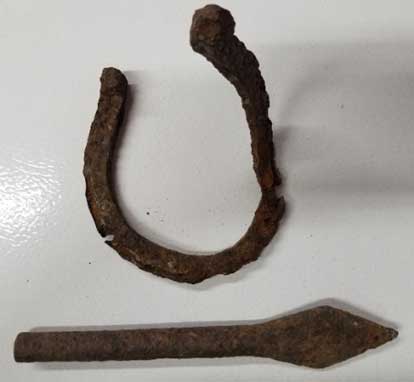
The above horseshoe and metal working tool were found by the authors this April while doing dirt work on the old Lowrey Blacksmith lot in Dodd City. Keep your eyes open for your 'bits of History.'
In 2004, Bobby Fine employees, Bonham Jr. High shop class, and fort volunteers with Leroy Munger’s supervision built the current blacksmith shop in the Village out of cedar. It is worth your time to walk back into history and see how our early pioneer families “got 'r done!”
Visit Fort Inglish Village and see these “Dodd logs” and the Blacksmith Shop.
More history at:
Bonham Chamber of Commerce: https://www.cityofbonham.org/260/Fort-Inglish-Village
Millard Brent’s The History of Dodd City, Texas available at Fannin County Museum of History
*The History of Fannin County, Texas by W. A. Carter https://www.txfannin.org/book-hist/004/hist-fannin-county