

The 10th in a series of articles
for the 175th Anniversary of Bonham
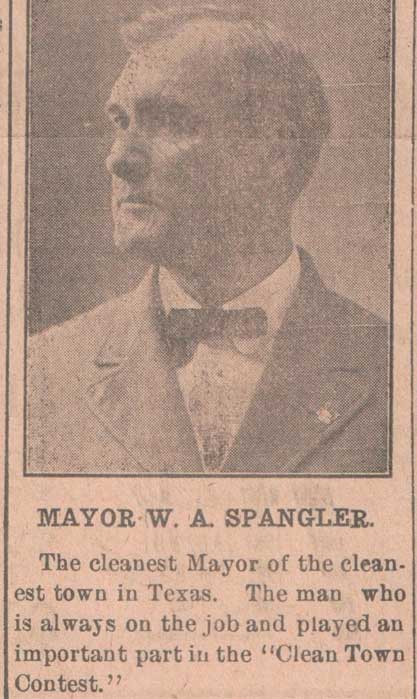
When W.A. Spangler took office in April 1913 as the newly elected mayor of Bonham, he sensed an interest on the part of the citizens of Bonham to make an extra effort to improve their surroundings. Beginning with the plans of landscape architect E. D. Harden for beautifying the courthouse grounds and extending to the construction of new and impressive structures in the business area, this extra effort began to grow and Mayor Spangler determined that the time was right to ensure that the momentum continued.
The first of his plans were contained in a brief notice in the middle of the front page of the July 1, 1913 edition of The Bonham News: "We are informed by the mayor that Bonham will enter a contest for a clean city and plans will soon be given to the public on how and what to do. A more extended notice of this will be given later."
This short announcement kicked off a six month flurry of activity throughout the town.
Four days after the initial announcement, a banner headline in the July 4th edition of The Bonham News spelled out for the citizens what was to be done and what was expected.
"Holland's Magazine last year offered prizes for the cleanest town in the state. Bonham did not enter the contest last year but this time she has thrown her hat into the ring and is going to work to win that prize. The Mayor and city health officials are back of the movement. They are interested not only in the appearance of the town but in the health of its citizens. The weed covered yards, gardens and alleys, the rubbish on the premises, the filthy stable lots, and foul cesspools caused by draining water into the streets go to make an unsanitary city as well as an unsightly one.
Every citizen ought to take pride in aiding to make Bonham the cleanest city in the state. The city authorities are going to do their part by furnishing wagons to haul off the refuse matter that cannot be burned. The wagons will begin to clean up their premises and abolish all unsanitary places. Those who fail to do so will have to answer to the city authorities for their failure.
Now let every man get busy and clean up and beautify his property. It is no more than his duty to his family and to the public."
Over the next few weeks, Bonham began to make specific plans and assigned particular duties. The ladies of the town organized into a special woman's committee. The businessmen of the town joined ranks. The Boy Scout Troops were to take on special duties, and all the children of the various Sunday Schools were to be organized into a clean-up brigade.
On July 29, details of the contest were announced by Holland's. Sixty-two towns in Texas and eight in Oklahoma had entered the contest and each town would be subject to surprise visits by members of the inspection teams.
To ensure a fair contest the contest was divided into five classes. In Texas the Class A division was composed of towns of 5000 and not more than 12,500. Class B was composed of towns of 2500 and not more than 5000. Class C, towns of 1250 and not more than 2500.
Details of the judging criteria for residences, public buildings, and commercial structures were published in all the local newspapers. The women's committee called on each merchant, performed a pre-inspection check and then gave that merchant their own scoring and suggestions for improvement. The criteria designated by the magazine were rather rigorous.
Mayor Spangler organized the city crews and volunteers cleaning up the streets, ditches, etc. The Bonham News reported that the mayor and the crews had been cleaning Powder Creek. "The brush has been cut* the trees have been trimmed, the work done has transformed the place into a nice grove and has improved the appearance of that part of town wonderfully.
In September Holland's announced the prizes to be awarded. The winner in each category would receive $1000. The magazine additionally stated that winning the prize would also be of great value to the town from a commercial standpoint attracting new businesses and the like and most importantly, according to the contest director, the winner will be a healthful spot where the citizens can live in happiness.
The clean-up committees remained active throughout the fall months. Bonham received its initial inspection in late August. Because of close scores, another inspection was made the last week in November.
On December 2, Dr. M.M. Carrick, contest director and head of the medial and health department for the magazine, announced that Bonham was at the head of the list in its category. All but five cities had been eliminated, Bonham, Denton, Abilene, Marshall, and Brownwood.
The city was given one final inspection in early January.
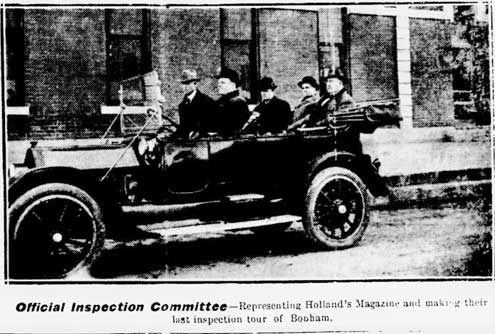
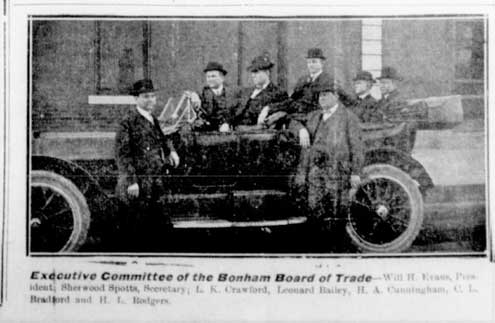
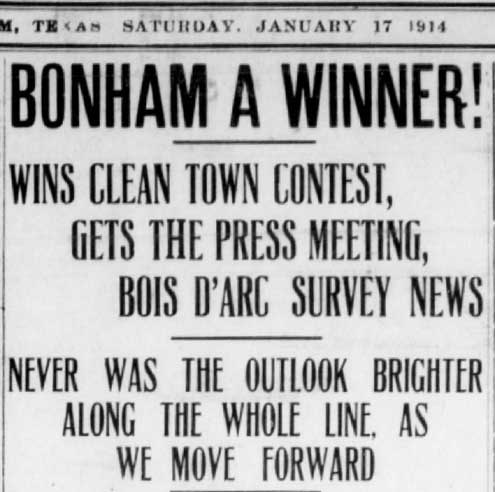
Finally the long awaited day arrived.
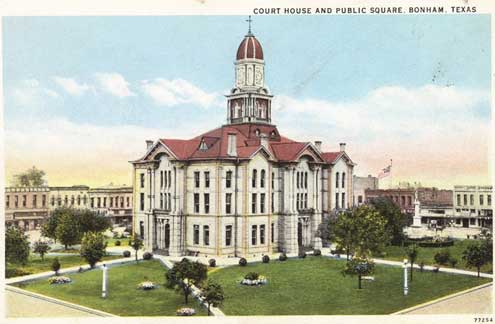
The $1000 prize money was used to purchase the ornamental lights for the Courthouse Square, which can be seen on the postcard below.
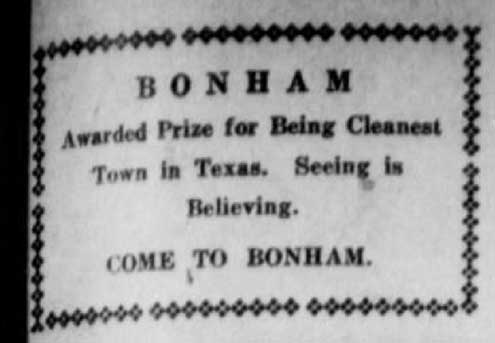
Bonham received much publicity throughout the country for its accomplishment.
Note: This article was derived in great part from an article written by Tom Scott in 1993.