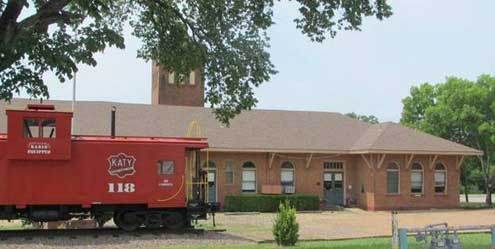
The 6th in a series of articles for the
175th Anniversary of Bonham
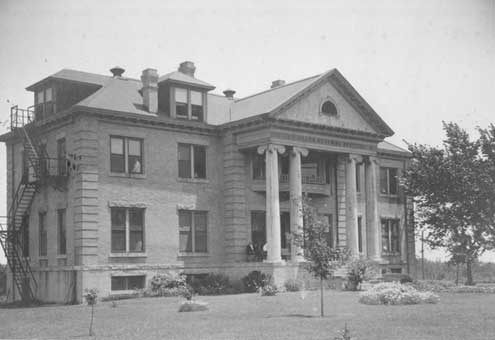
Bonham, Texas -- S.B. Allen Memorial Hospital served Bonham and Fannin County from 1903 until 1972. The Bonham News said: "It is the most magnificent gift ever made to the public by a citizen of our town."
Who made this gift and what is the story of how the hospital was built?
C. C. Alexander was one of the most successful early merchants in Bonham, coming to Texas in 1846 and to Bonham in 1851. He established a store in Bonham which sold supplies into the Texas frontier and to the Indian settlements in Oklahoma. He owned considerable property in Bonham and cotton farms in the county. He was called the "merchant prince of all North Texas," with stores in Paris as well as Bonham and Dallas.
C. C. Alexander died in 1865. He made his business associate, S. B. Allen, who had come with him to Texas, the executor of his will.
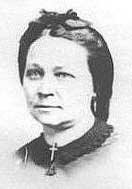
Mary later married S. B. Allen, who continued to be a businessman in Bonham. S. B. Allen died in 1902.
A story told is that Mrs. Allen, after the death of S.B. Allen, approached Episcopal Bishop Garrett with a proposal to build a new Episcopal Church in Bonham, and Bishop Garrett told her that Trinity Church did not need a new church but that what was needed was a hospital for the citizens of Bonham and Fannin County.
As a memorial to S. B. Allen, Mary erected, equipped and donated to the public at an expense of over $20,000 the beautiful hospital which bore his name. (Mary also donated the land for the Bonham Post Office and Trinity Episcopal Church in Bonham.)
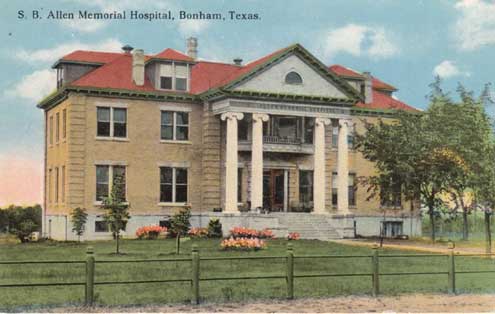
In 1903 the Bonham News described it as "a beauty almost beyond description on the inside, while the outside appearance is imposing and commanding at once. There is no better built house in Texas today."
It was located, of course, on Allen Avenue.
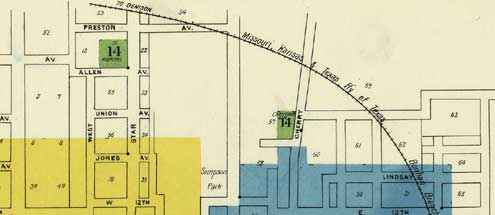
The hospital closed in 1972, with the opening of the Fannin County Hospital.
In 1992 the structure had deteriorated and was an unsafe eyesore.
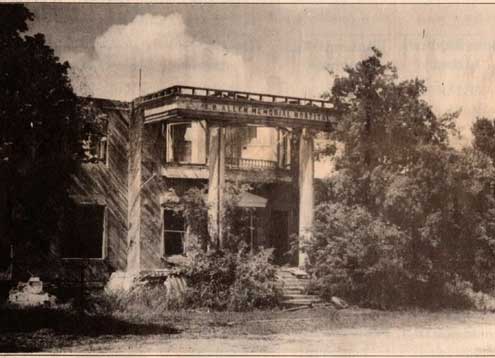
It was burned as a training exercise for the Bonham Fire Department.
The only portion which did not burn was the portico over the front door which contained the S. B. Allen Memorial sign. That sign was saved and is now displayed at the Fannin County Museum of History.
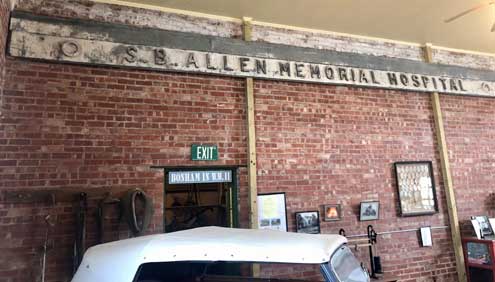
Visit the Fannin County Museum of History to see this item and many more interesting things. The Museum, just a few blocks south of the Courthouse Square on Main Street, is open Tuesday – Saturday, noon – 4 pm.