

Columbia, South Carolina -- Photographer Robert Dodson has traveled to over three dozen countries on six continents photographing wild animals and wild places. The more remote, the better. From camping in remote Alaska with brown bears to being chased up a tree by a rhinoceros, Robert is always looking to capture unique photographs.
Robert is the son of Dr. Don and Carol Dodson from Fannin County. Don graduated from BHS in 1960 and Carol taught business courses at Bonhi. Robert spent much of his childhood in Texas.
After graduating from college and law school with honors, Robert worked for the Honorable Paul Brown of the United States District Court in Sherman, Texas. Robert moved to Columbia, South Carolina in 1998 where he has maintained an active law practice for the last 25 years. But Robert’s real passion is wildlife and nature photography. In November, he plans to return to Texas to photograph unusually large white tale deer in Beeville.
In 2013 and 2022, Robert traveled to Rwanda and Uganda to photograph the critically endangered mountain gorillas. At one point, the worldwide population of mountain gorillas dwindled to around 600 and the entire species was nearly lost because of illegal poaching and habitat loss. However, conservation efforts have resulted in significant gains in the worldwide population and the mountain gorilla population is now over 1,000.
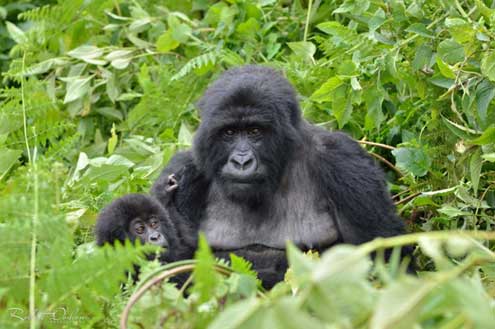
Unlike the closely related lowland gorillas, mountain gorillas have never survived in captivity. They are found only in the wild in two small areas in Africa – The Virunga Mountains in Rwanda, Uganda and the Democratic Republic of Congo (DRC) and Bwindi Impenetrable Forest in Uganda. When the governments of these countries realized that photographers and wildlife enthusiast would pay to see wild mountain gorillas, conservation efforts were started to save the gorillas natural habitat and protect them from illegal poaching.
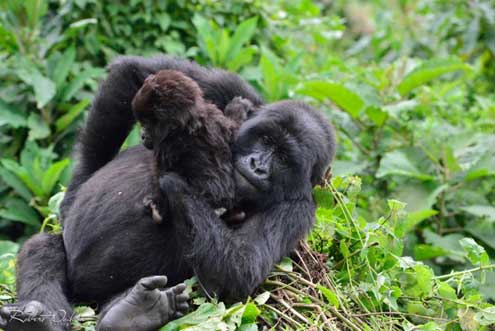
Today, fees to view and photograph the mountain gorillas are used to support the wild gorillas and the local communities that surround and protect the gorillas. The revenue from eco-tourism has not only helped save the mountain gorillas, it has resulted in pulling the local communities out of poverty. New schools, churches and medical facilities have all been funded from revenue generated from eco-tourist dollars.
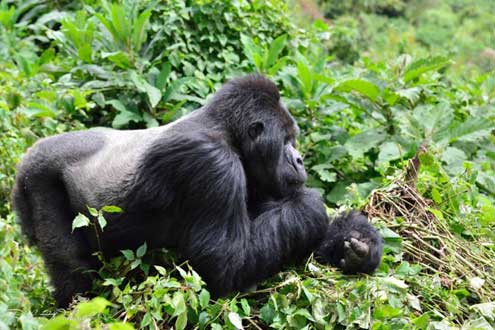
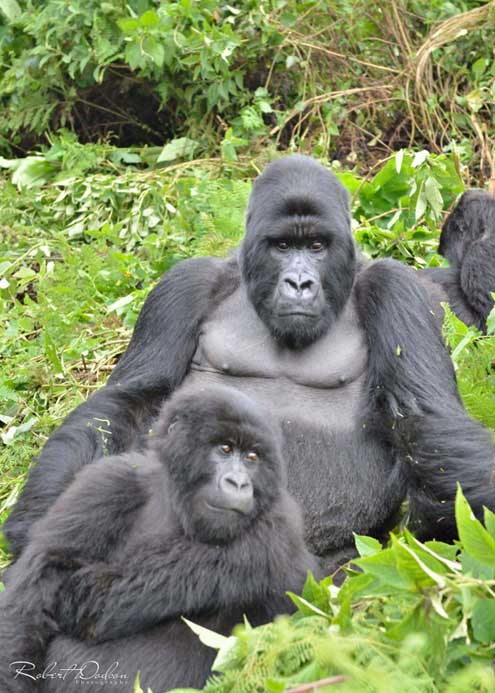
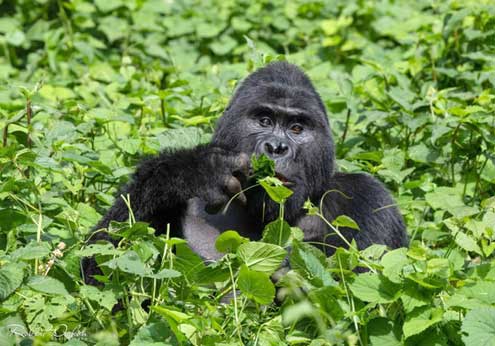
photography by Robert Dodson