

Potatoes are grown from seed potatoes. They should have several "eyes" that contain vegetative buds. Do not try to grow potatoes purchased from the grocery store because they are treated to prevent sprouting. Purchase certified disease free and blight resistant seed potatoes from a reputable farm or feed store or online.
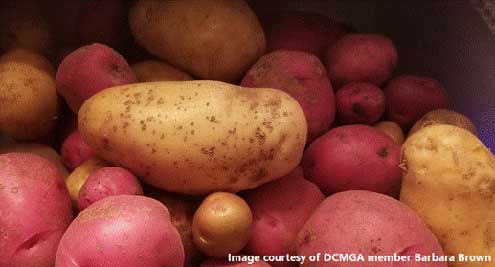
All Blue (90 days): Heirloom, deep blue skin, blue flesh
Caribou (95 days): Russet, heat, and drought-tolerant
Désirée (95 days): Red skin, yellow flesh, drought-tolerant, disease-resistant
Kennebec (80 days): Buff skin, white flesh, medium-to-late maturing
Norland (80 days): Red skin, white flesh, early maturing
Red La Soda (100 days): Deep red skin, white flesh
Russian Banana (90 days): Heirloom, fingerling, yellow skin, golden flesh
Cobbler (80 days): Buff skin, white flesh, early season
Yukon Gold (90 days): Yellow-white skin, light-yellow flesh
Containers and soil
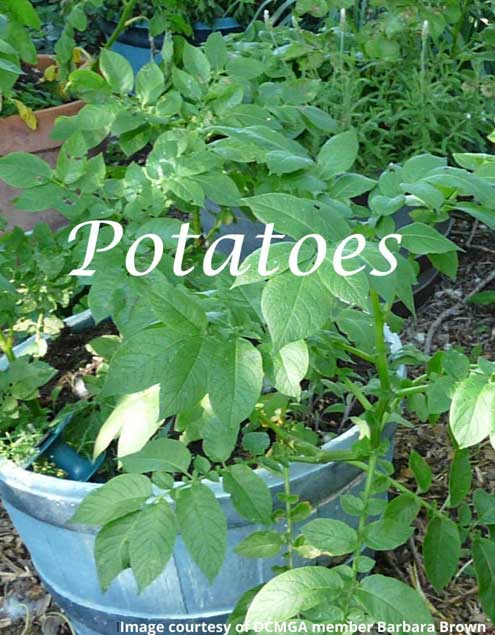
Containers with 10- 15-gallon capacity, 24 to 36 inches tall.
Must have good drainage with holes in the bottom.
Soilless or synthetic potting mixes are best for container growing. Ingredients include sawdust, peat moss, perlite, or vermiculite. On the label look for "formulated for container gardening".
Preparing and planting
One to two days before planting, cut large seed potatoes into several pieces, each with several "eyes." Lay the cut pieces on a tray to dry for 24 to 48 hours to minimize rotting. Small fingerling potatoes can be planted whole.
On planting day, add 3 to 4 inches of potting mix to the container, mixing in a handful of starter fertilizer. Place several seed potato pieces or small fingerling potatoes around the bottom of the container. Cover with 4" to 6" of potting mix and water well.
As plants grow, "hill" the plants by adding more potting mix, leaving about 3 inches of the foliage above the soil. Straw, composted leaves, or compost can be used for hilling. Add vegetable fertilizer into the hilling mix each time. Continue hilling the plants until the container is filled. Keep your potato plants well-watered, one to two times weekly in hot weather.
Harvesting and storing
Harvest "new" potatoes after the plant's flower, taking care not to damage the plants. When the leaves begin to yellow and die down mature potatoes can be harvested. At this point, you can turn over the container and your harvest will tumble out!
Store potatoes in a cool (40 degrees) dark area. Potatoes exposed to light will begin to turn green and can be mildly toxic.
Potatoes are rich in vitamins, and antioxidants. Studies have linked potatoes to improved blood sugar, and reduced heart disease. Other benefits include improved immune systems. Now that's a great reason to plant and enjoy lots of them!
Sources and resources
What is the best way to grow potatoes in containers? (March 2021). University of New Hampshire Cooperative Extension https://extension.unh.edu/blog/what-best-way-grow-potatoes-containers
Vegetable Gardening in Containers (May 2014). Texas A&M AgriLife Extension, https://cdn-ext.agnet.tamu.edu/wp-content/uploads/2016/05/EHT-062-vegetable-gardening-in-containers.pdf
Vegetable Variety Selector. Texas A&M AgriLife Extension, https://aggie-horticulture.tamu.edu/publications/veg_variety/