

Vernon, Texas – Fewer planted acres, summer drought and late-season rains caused a significant drop in peanut production around the state, according to a Texas A&M AgriLife Extension Service expert.
Dr. Emi Kimura, AgriLife Extension statewide peanut specialist, Vernon, said planted peanut acres dropped to 155,000 acres from 275,000 acres in 2017, a 43 percent reduction.
Planting was delayed due to hot, dry conditions, and heat stress contributed to lower production levels throughout much of the growing season, Kimura said.
Continuous rains started in September and have delayed harvest, she said. Rain and excessively wet conditions on peanuts and in windrows has reduced harvest efficiency and created quality issues.
Integrity of pegs weakens in the wet conditions, which increases harvest losses, she said. Also, wet peanut vines are not harvested easily.
“It was very dry early and has been very wet late,” she said. “The rains came too late to really help the plants produce peanuts. Irrigation was limited, and peanuts are a high water-use plant, so that contributed to below-average production. Wet conditions have also hampered harvests and reduced yields and quality.”
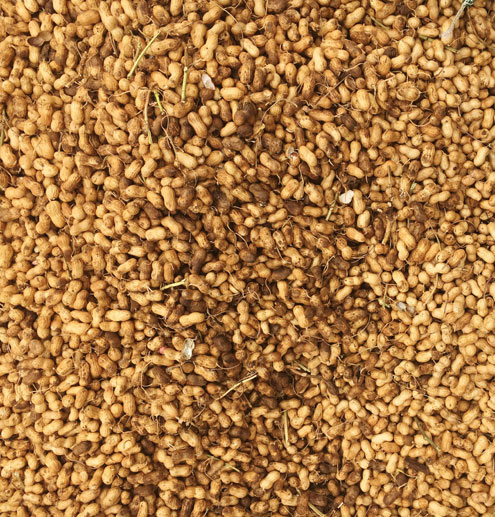
Kimura said U.S. Department of Agriculture forecasts estimated per-acre yields for Texas would be 6 percent lower, or 3,100 pounds per acre, compared to 3,300 pounds per acre for average years.
Harvest was 50-55 percent complete before the Thanksgiving holiday, Kimura said, but producers took advantage of dry, sunny conditions and should now be 70-75 percent complete.
“Harvesting has been really difficult for producers in the 2018 season with limited harvest windows between wet conditions and freezing weather,” she said.
Producers faced typical disease pressure including pod rot, she said. Potential disease problems may be found among in-shell market-types, such as Virginias, if they are in windrows under excessively wet conditions. Prolonged wet conditions in the windrow may change the brightness of the hull.
“I’ve not heard of any excessive disease issues from producers,” she said. “Producers faced several challenges this year, but disease pressure was typical.”
Kimura said data from AgriLife Extension peanut variety trials around the state were beginning to come in. She said the data is available to producers seeking varieties that perform well and are drought, disease and pest tolerant. More information can be found at http://varietytesting.tamu.edu/peanuts/