

I shall be telling this with a sigh
Somewhere ages and ages hence:
Two roads diverged in a wood, and I—
I took the one less traveled by,
And that has made all the difference.
--Robert Frost
On this leg of our journey, we coast down the Western Slope of the Rockies and into the popular tourist town of Grand Lake, Colorado on the west side of Rocky Mountain National Park, on the shore of Grand Lake, the largest natural body of water in Colorado. Tonight's destination is a room next to the Teddy Roosevelt Suite in the historic Hotel Colorado, located in Glenwood Springs.
But, as memorable as the beginning and end of this day's excursion will always be, somewhere in between is a 30-mile stretch of dirt road along a spectacular canyon and world-class trout stream -- the mighty Colorado River -- that make travelers appreciate the scope and grandeur of Colorado's famed Western Slope. It turns out Robert Frost was right; it was the road less traveled that made all the difference.
The City of Grand Lake, population 500, is a charming tourist attraction that begs a stroll along western boardwalk storefronts that line the quaint main street.
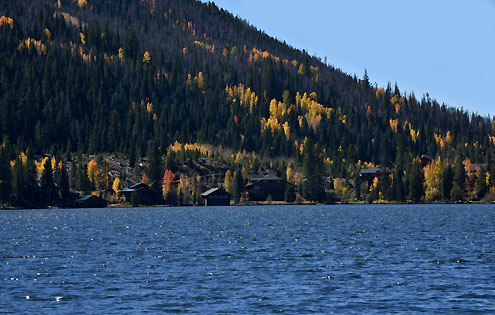
Just outside of Grand Lake, working farms hug the Colorado River and fill the valleys along the two-lane blacktop that leads west. Log trucks and hay rigs outnumber cars in the late fall. The 1,000-foot walls of Gore Canyon are beckoning in the distance when you take a left turn at the red light in Kremmling -- the only traffic light in town -- and head south to a junction with an unpaved road that parallels the Colorado River.
A right turn onto the dirt road puts the bluffs of Gore Canyon straight ahead. The road crosses over a beautiful freestone trout stream, Blue River, which empties into the Colorado River less than a mile downstream. The unpaved through road gently gains elevation and bighorn sheep are often seen climbing rocky cliffs on the south side of the road.
The California Zephyr, an Amtrak passenger train that makes the 2,438-mile trek between Chicago, Illinois, and Emeryville, California also climbs through this formidable canyon. Once referred to as "the most talked about train in America" when service started in 1949, the California Zephyr is enjoying something of a resurgence, with a reported 410,000 passengers in 2016, a 10.8% increase over 2015.
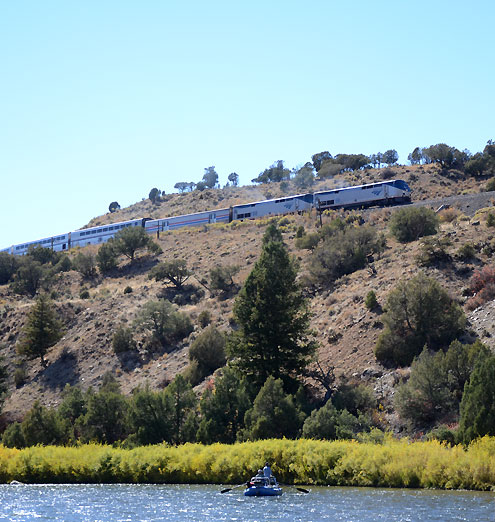
After spending hours scrambling along the rocky edge of the Colorado River and tossing spinners into promising holes, the first glimpse of the historic Hotel Colorado in Glenwood Springs is a welcome respite.
Construction of Hotel Colorado began in 1891, with an architectural design reminiscent of Villa de Medici in Rome, and went on to earn the nickname "little White House of the West" because of Teddy Roosevelt's extended stays during the noted outdoorsman's hunting trips into the Flattop Mountains north of Glenwood Springs.
Some old hotels just feel worn and unaccommodating; not so with Hotel Colorado.
Although locals tell us Hotel Colorado has earned a reputation for ghostly occurrences, the only apparitions that took shape during this visit were a memorable dinner at the historic hotel's Baron Restaurant, and then spectacular coffee and breakfast from Legend's Expresso Bar as we headed out early the next morning to continue our journey along the Western Slope.


photos by Allen Rich and Cindy Skelton