

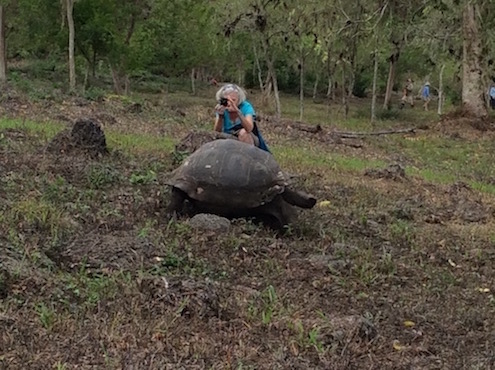
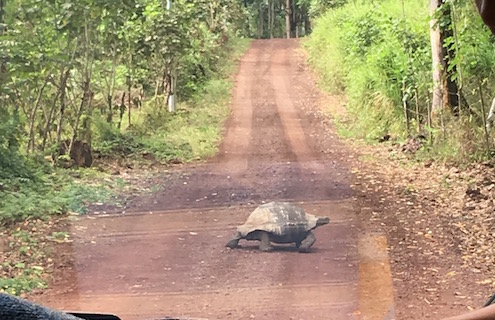
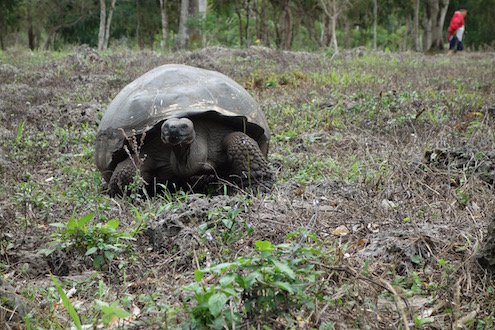
The group reassembled at a lovely restaurant for lunch before boarding busses to Rancho Manzanillo and our “tortoise” hunt. Actually, it’s not very hard to find 400+ pound creatures who move at a snail’s pace along their migratory route. We spotted them from the bus. We had to stop to let one cross (sort of) the road.
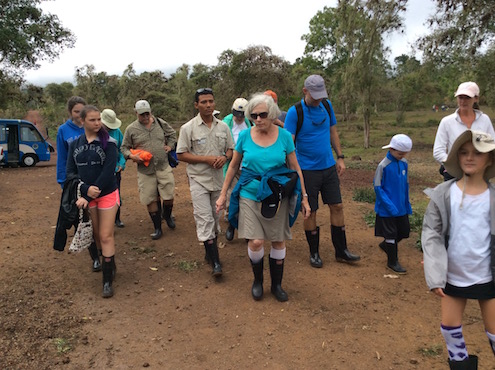
Because the terrain was uneven and it had been drizzling, we had been advised to bring our packed knee high socks so we could comfortably trade our shoes for rubber boots. I don’t know that the boots ended up being necessary, but the photos are certainly more interesting with us walking around the tortoises in shorts, with socks sticking above our boots!
That evening before dinner we had a presentation from the scientists at the Charles Darwin Research Station. After dinner, local dancers and musicians entertained in a swirl of color.
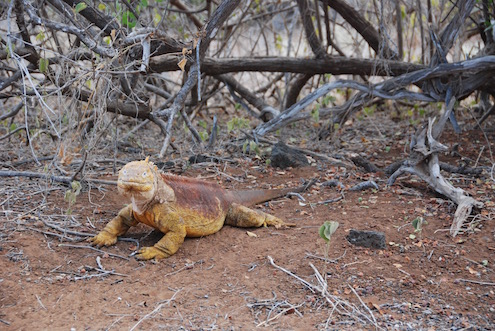
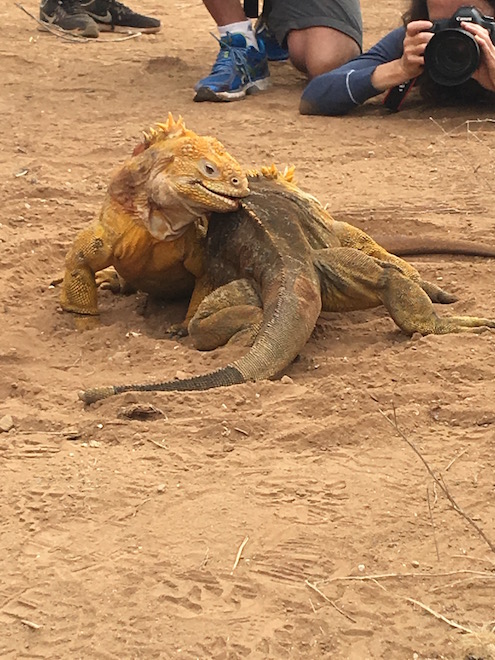
Wednesday found us still at Santa Cruz Island, but this time on the arid northwest coast. Our destination was Dragon Hill, with its resident “dragons,” the Galapagos land iguana. Once near extinction, successful captive breeding programs have saved them. It was “looking for a mate” season and the males were out in force, part of our group finding two of them in a twenty-minute tailspin battle.
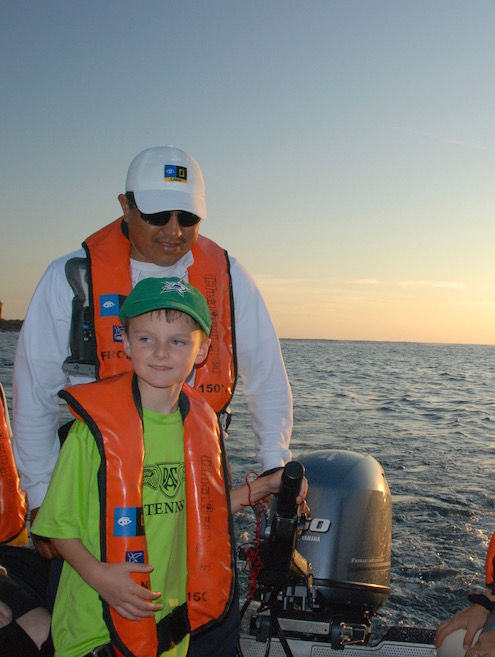
For lunch, we had a special Ecuadorean buffet, as we were introduced to some of the dishes of the mainland. The afternoon was occupied with snorkeling and kayaking, and the kids were given Zodiac driving lessons.
That evening we gathered on the foredeck as we circumnavigated a small islet and enjoyed a wine-tasting of the South American wines served on the ship.
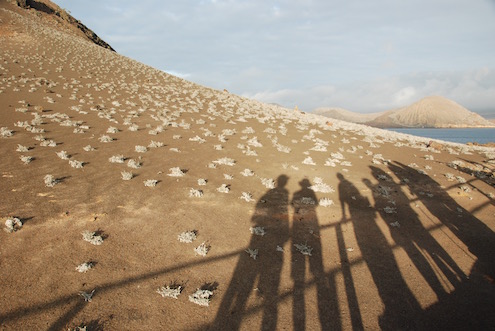
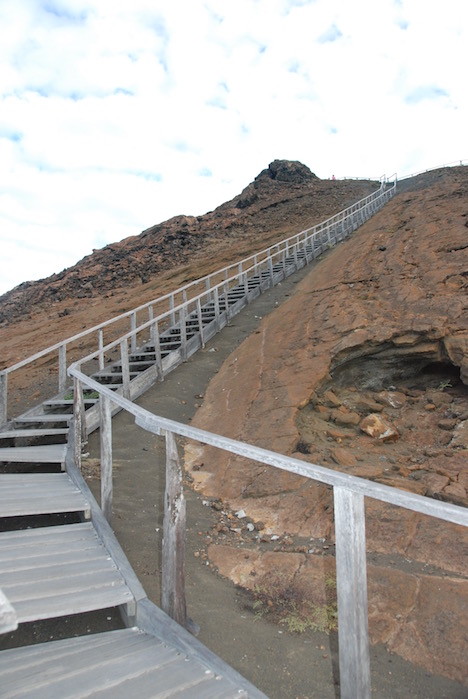
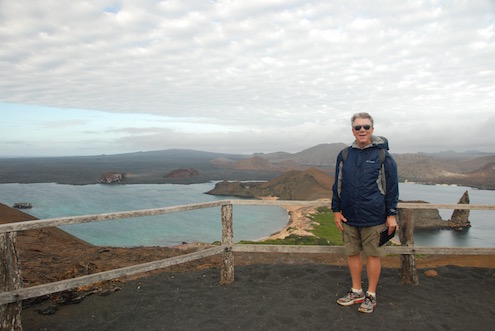
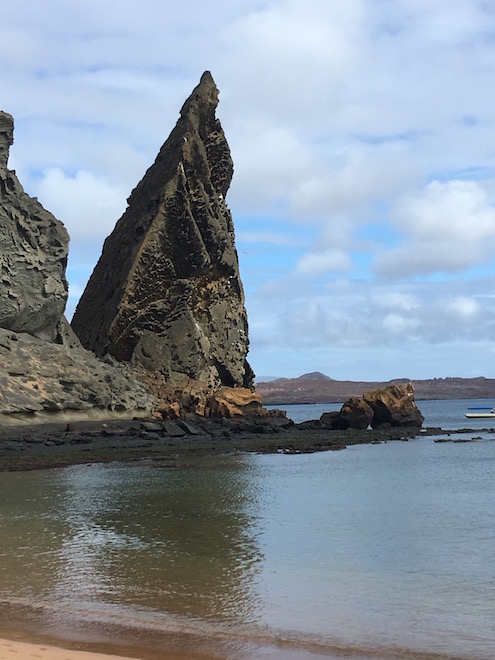
Thursday found us anchored at volcanic islet Bartolome with the option for an early morning walk to the top. In order to save the tender and scarce vegetation, the Galapagos National Park Service erected a long, steep wooden staircase with—thankfully—stops along the way. It was huff and puff time for the final climb to the 359 foot peak, but the panoramic view of both sides of the windy islet and the ship was worth it.
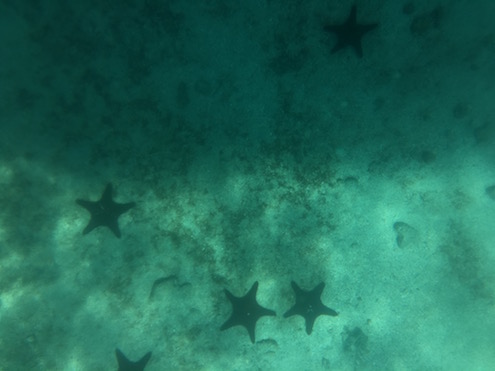
This morning’s glass bottom boat trip proved exciting, as we saw sea star after sea star, including the chocolate chip sea star.
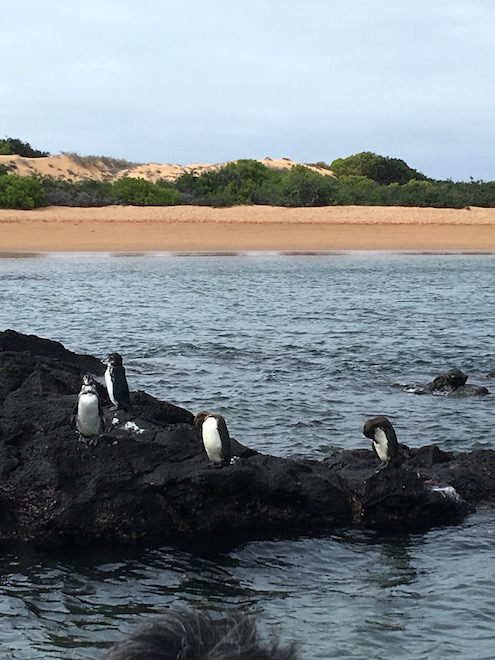
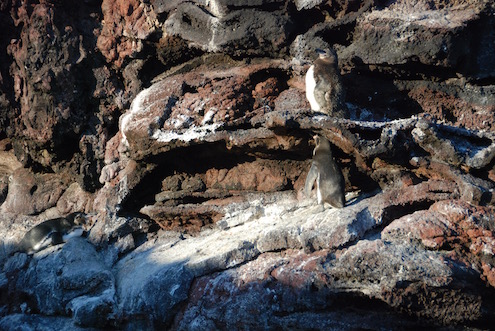
Zodiac cruises found the Galapagos penguin, second smallest in the world (smallest is the fairy penguin of Australia/New Zealand if you must know) amid a desert backdrop. Penguins and cactus.
That evening we gathered after dinner on the foredeck and had a star gazing lesson from one of the naturalists. The Southern Cross and the Big Dipper were both visible if you were, quite literally, pointed in the right direction.
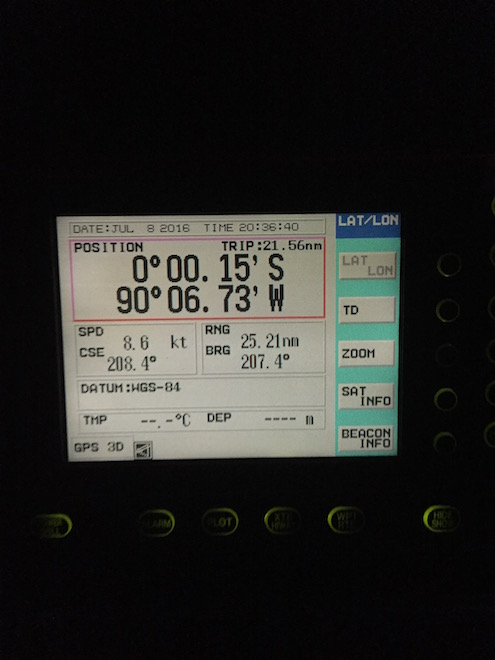
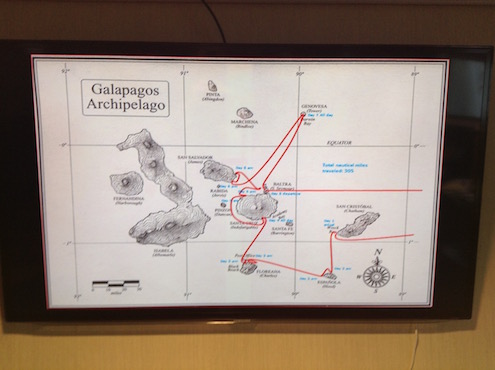
Say it isn’t so: Friday, our last day aboard ship! We sailed at sunrise into Darwin Bay, the submerged caldera of a dormant volcano of the northern island of Genovesa. Because of the fragility of the landscape we are divided into two groups to visit the two points of interest, the Darwin Bay trail and Prince Philip’s Steps trail.
We were in the morning wet landing Darwin Bay trail group. Once ashore, we change from water sandals into solid walking shoes, leaving our things on the beach.
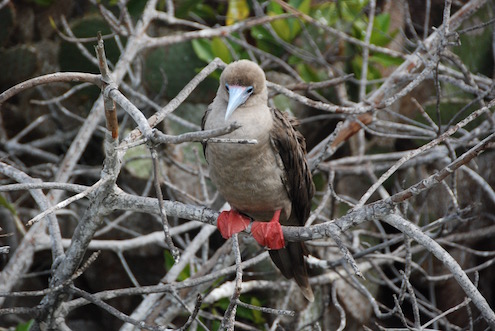
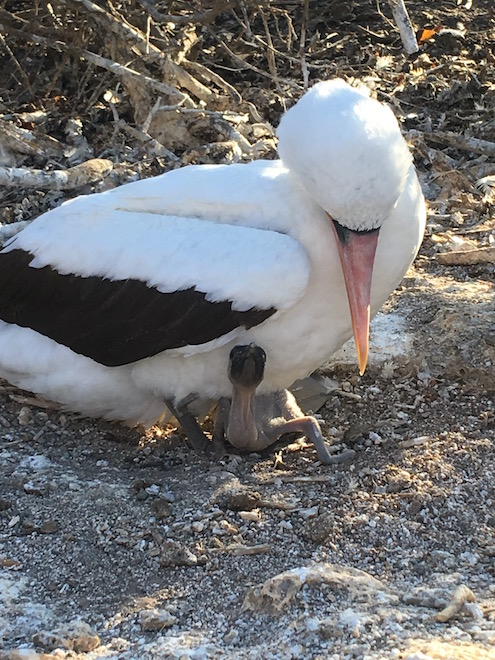
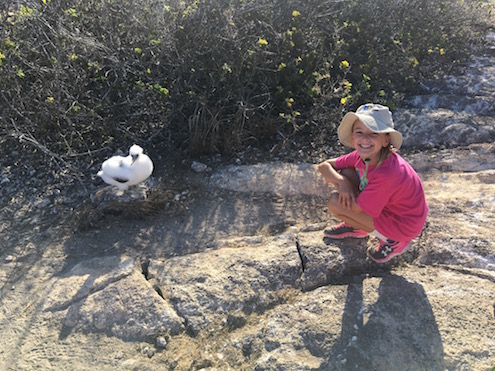
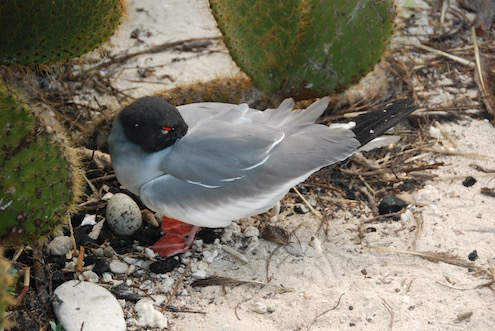
Then the wonderment began. The birds, red-footed boobies, blue-footed, Nazca, frigate birds, doves, gulls… nesting just feet from us, unconcerned with our presence or shutter clicks because this is the photo-worthy moment.
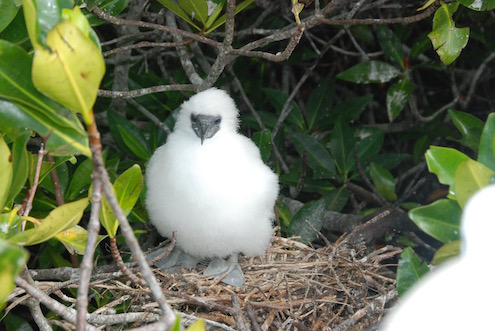
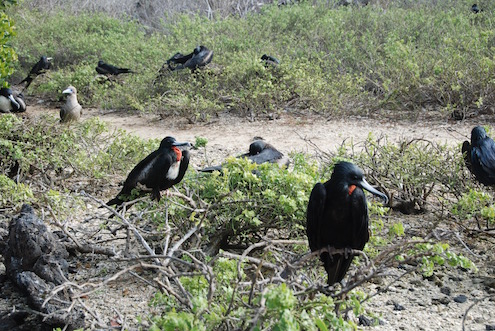
A sea lion cavorts in a tidal pool and we stop to watch it, then climb over uneven lava rocks to a spectacular view of the ocean-filled caldera.
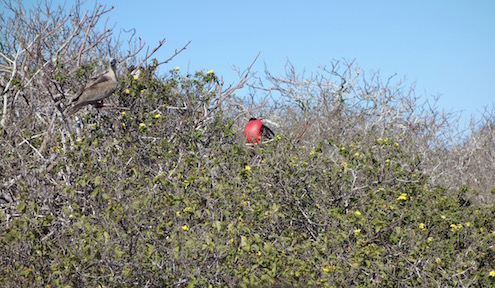
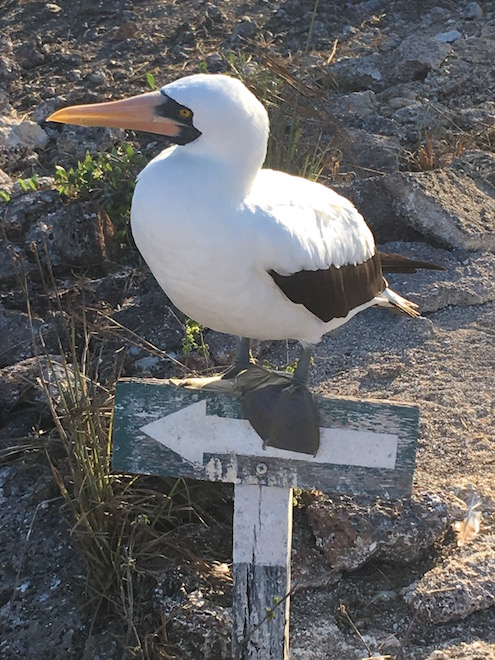
In the afternoon, it’s our turn to climb the 90 foot fissure to the top of the Prince Philip’s Steps trail where we are met by a frigate bird in female-attracting mode. As we walk along the path, a friendly Nazca booby points the way to the top of the cliff where we see the archipelago’s second avian predator, the short-eared owl. In fact, we see several including two who take exception to each other and whirl and circle through our group!
Then, there’s that dreaded piece of paper (no, not the bill!) in our room, the disembarkation details. That means, it’s over and we have to go home. Say goodbye to the Endeavor, the crew, the naturalists. Pack our suitcases and have them ready to go at an early hour. Eat breakfast, await our Zodiac call to land on Baltra, a former US World War II base, get our boarding passes, go through security and await our flight back to Guayacil. Except the plane coming in, the one bringing the next set of lucky passengers to the Endeavor and taking us away, is late. And late. And late.
So late in fact that the ship sends us lunches, and rebooks those of us with immediate connecting flights out of Guayacil rather than staying the night as we are scheduled to do. So late that we have yoga and stretch class and the kids start running tag team races. Six hours late and our group and a few security are all that’s left in the airport. Finally the plane arrives. This time we have a chance for a five-hour sleep before our 3 AM wake-up call, 4 AM leave for the airport, 6:45 AM flight to Miami.
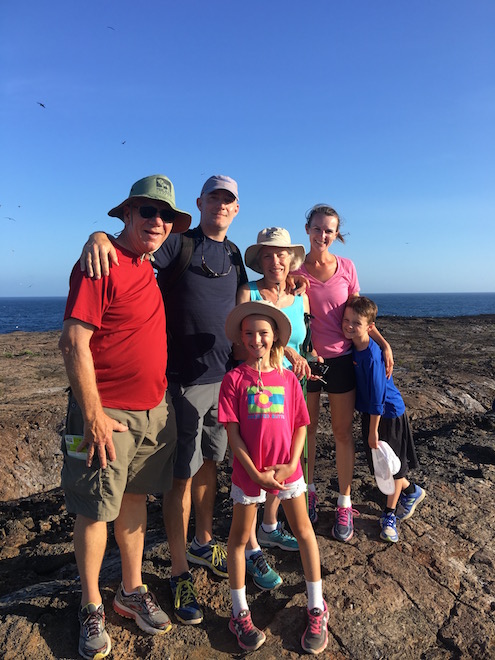
And then we’re home. Where did our week go? New experiences, wonderful memories with our family, meeting people all interested in what we are: family time, conservation, and seeing one of the greatest wonders of the earth. Travel brings all these things to the fore and I am forever grateful that I have been able to experience them.
Note on the history of Lindblad Expeditions and National Geographic from the expeditions.com website:
Embodying “respectful tourism,” Lindblad Expeditions and National Geographic joined forces in 2004, “Inspiring people to explore and care about the planet.”
“The mission of the Lindblad Expeditions National Geographic alliance, simply stated above, is the natural extension of our respective passions to show people and teach them about the wonders of our fragile world.”
www.expeditions.com
www.darwinfoundation.org
www.Galapagos.org