

In our weekly visits, you’ve discovered I often refer to cycles and “patterns” in the outdoors. Everything in the natural world revolves around naturally occurring patterns. The timing might differ a bit year to year because of weather and other factors but the patterns are pretty consistent. Through the years, we humans have scheduled our hunting and fishing to concur with these patterns. Thus the reason whitetail deer season occurs in the fall during the rut or breeding season. Likewise, waterfowl seasons take advantage of the fall/winter migrations and are scheduled to coincide with the period when the largest number of migrating waterfowl is in a given area.
The next month or so provides some of the very best fishing here in Texas for several species, but why? There are several reasons that fishing is so good this time of year. Threadfin and Gizzard shad by the kazillions pull into the warmer shallows along shore lines and deposit their eggs. On most of our lakes, this is occurring right now. Shad are an easy target in the shallows and predator fish of all species move in for the easy pickings. With a shoreline to block 180 degrees of the forage fishes’ retreat, catfish, bass, stripers and white bass move shallow, usually at night and during the first few hours of daylight and go on a daily feeding binge.
Early spawning species such as white bass and stripers that depend upon moving water for their eggs to spawn are finished with the rigors of spawning and back in the main lakes; hungry. They are feeding upon the abundant shad and regaining strength and weight lost during the spawn. During mid day, these big schools of stripers/white bass pull out into the deeper water, often staging around humps and the ends of deep main lake points, making occasional forays shallow to feed. But once the sun goes down, they move into the shallow with a vengeance, feeding upon the hapless shad. This is one reason that savvy anglers that enjoy catching white bass, stripers and catfish like to be on station at first light to enjoy the last couple hours of this feeding binge. Soft plastic shad imitation artificials on a jig head will produce stripers and white bass during this period but if catfish are your target, absolutely nothing beats freshly caught shad. A four-foot cast net that opens to eight-foot diameter is easy to learn to throw and with so many bait fish in the shallows, it often takes only a few tosses of the net to catch enough bait for a few hours of shallow water fishing.
A catfish trips last week that I enjoyed with my friend guide David Hanson at Tawakoni is a good case in point. A few throws of the net provided all the bait we needed for a morning’s catfishing. The blue catfish were in the shallows, feeding upon the shad but so were the hybrid stripers. Our cut bait offerings also produced several nice size hybrids.
In a matter of weeks, the newly hatched shad will leave the shallows and disperse into the lake. During this period, we will encounter huge schools of white bass, stripers and hybrid stripers chasing shad all over the mid to lower lake. During this period, lead slabs and spoons will begin to out produce the soft plastics, simply because they get down to the strike zone faster and do a better job of mimicking an injured shad, especially when they are allowed to fall and flutter down through the school of baitfish.
If catfish are your targeted fish, now is a time of plenty! The blue catfish bite is at its peak right now as detailed in last week’s column. Fresh shad cast into shallow water along wind blown shorelines is the ticket to some fast paced blue catfish action. This bite should continue for several weeks. Several of my guide friends informed me that they are beginning to catch channel catfish from water 4 foot or less.
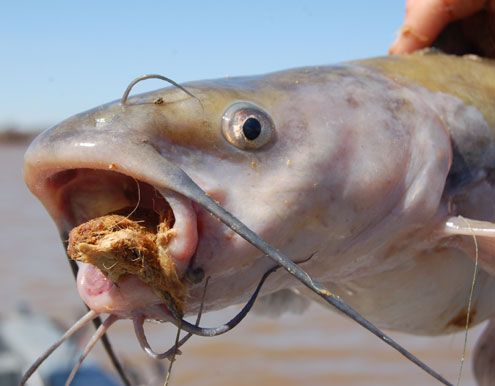
At Fork, guide Seth Vanover says he and his clients began catching these shallow water fish a couple weeks ago. In a matter of days, this shallow water channel catfish bite should be excellent on many lakes. While blue catfish prefer baits to be suspended up from bottom, channel catfish often bit best on baits on or very near bottom. Stinky “punch baits” are best for catching these shallow water catfish, simply because of it’s effectiveness and ease of baiting but baits such as chicken liver, nightcrawlers, bloodbait, shrimp and even crickets will also produce lots of shallow water channel catfish.
Channel catfish are suckers for coming to “baited holes.” Any type of soured grain will disperse scent into the water and attract schools of channel catfish, during the spawn and later when the whiskerfish move back into deeper water. So, consider soaking some maize of chicken scratch in water two or three days before your next fishing trip. Cattle range cubes are also widely used to “chum” channel catfish and in my opinion, they work just as well but it seems to take a bit longer for the scent from the cubes to disperse into the water.
We haven’t mentioned crappie in today’s visit. As recent as a couple weeks ago, large numbers of spawning crappie were coming from very shallow water but many of the fish have now moved out into intermediate depths of water; 10-15 feet. Look for crappie in or around heavy cover such as sunken brush or standing timber.
Yep, fishing is at its best right now. Here’s hoping you can plan a trip soon and take advantage of this time of plenty.
Listen to Luke’s radio show, “Outdoors with Luke Clayton and Friends on radio stations from Nebraska to Texas or anytime online at www.catfishradio.com. While on the site, check out Luke’s new book, Kill to Grill, the Ultimate Guide to Wild Hog Hunting.. and Cooking!