

As stated earlier, there is often no easy way to get from point A to point B in New Zealand, especially in the mountainous South Island, so we started at the Blenheim airport in a 20-seater Beechcraft. There was no overhead storage, so my little red bag which had faithfully followed me everywhere was taken into custody and put in the back somewhere. The co-pilot, a lovely young woman, was also our attendant, welcoming us aboard and giving us our instructions, pointing to my red bag on the tarmac when we exited an hour later. There was not a door between passengers and cockpit and we could lean into the aisle and watch ourselves land at Christchurch, our intermediate stop before transferring planes and going across the ranges to Queenstown on the west coast.
While I can’t say that we hadn’t felt at home during the rest of our time in New Zealand, arriving in Queenstown was being in the familiar, if that familiar is a Colorado ski town in summer. While we were told it had been an unusually cold and wet summer so far, the look of the town, the surrounding mountains, the hostels, the backpacker shops, and the very international cuisine all combined to provide a sense of home. There was even a Starbucks in this town of just under 20,000. Call it the outdoor capital of New Zealand, you couldn’t walk for the stores offering outdoor adventures and guidance. This is, after all, the birthplace of the bungy jump.
We, in the meantime, were at the Queenstown Park Boutique Hotel. The cheval mirror turned 180 degrees to reveal the television and the lights were controlled by switches at the bed. Each evening the staff served local wine and hor d’oeurves to the guests in the lobby. We enjoyed visiting with Australians, English, Irish, and even an American or two! Such a remote place and yet so many people found it.
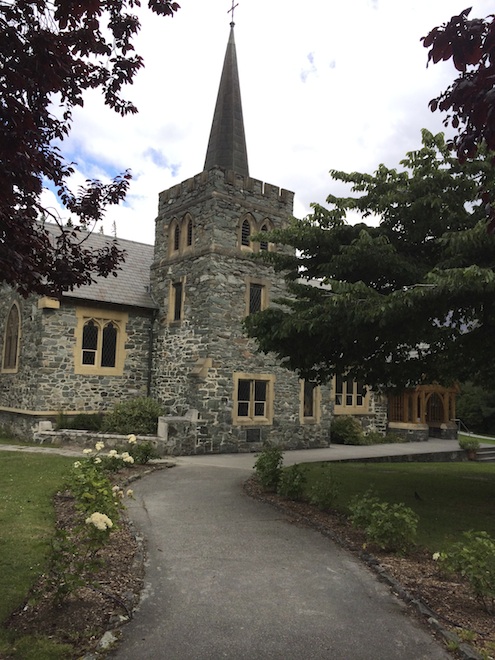
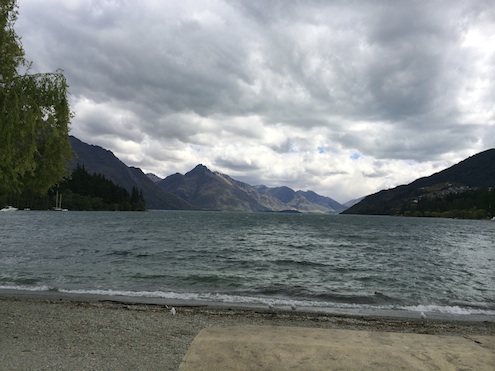
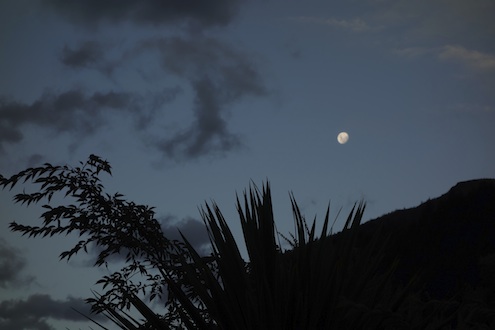
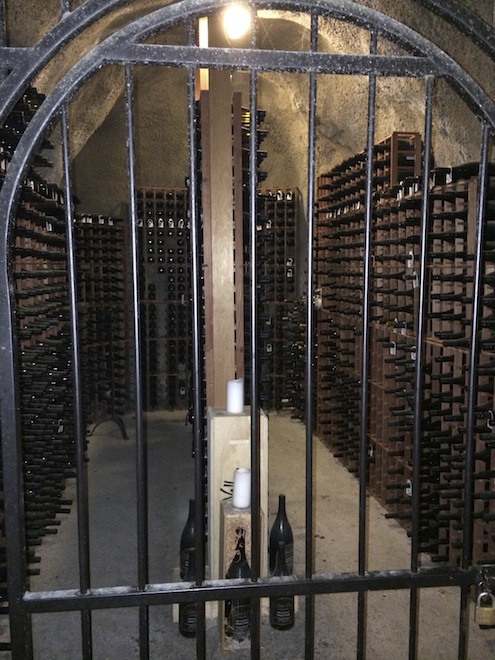
It was windy and cool when we began our tour into the surrounding mountains and Central Otago wine region. Here, so much further south than the North Island and even the Marlborough region, the grapes were tiny by comparison. We started at Gibbston Valley Wines, one of the first boutique wineries in the region. Here, blasted out of the solid schist, is the wine cave, making an ideal temperature environment in which to mature the wines. Founder Alan Brady wasn’t discouraged from developing a vineyard where it hadn’t been done before and in 1987 produced the first commercial wine from the area. We fell in love with the Riesling, much dryer than the German version.
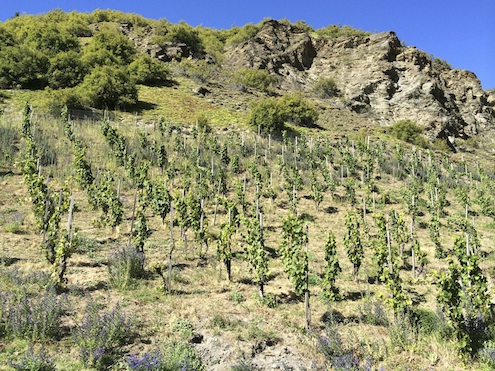
We visited other wineries in this small region and enjoyed them. The problem we found here and indeed all over New Zealand, was that so often the production is too small for export to the States. With the exception of the large wineries in Marlborough, it’s a search for Martinborough and Central Otago wines. Don’t even think about getting some from Waiheke.
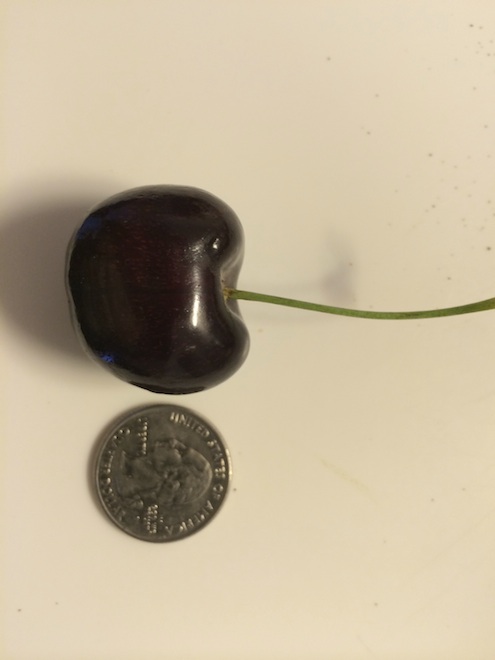
We finished our day by touring through the countryside, visiting a cherry orchard, and learning about the Easter Bunny Hunt. Alas, the rabbit is a pest in New Zealand and there is an annual one-day hunt for them in Otago. In 2013, over 18,000 were killed. Here’s the lead-off article:
http://www.odt.co.New Zealand/your-town/alexandra/250956/shoot-its-bunny-hunt-time-again
On the upside, our guide shared the good weather report for the next day and we were buoyed by the fact that we might actually get to the “weather permitting” part of our vacation, the helicopter tour of the glaciers and Milford Sound.
As we had traveled north to south, we had crossed paths with fellow travelers going the opposite direction. We had heard tales of cold, wind, rain and days spent in a motel or the local pub. We had merrily skipped our way through warm, wind, and sunshine. We didn’t brag about it, but we sure hoped our luck held. And it did.
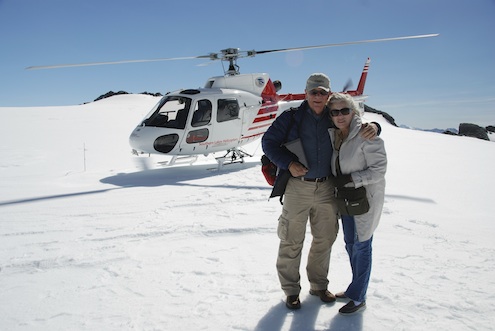
The day of our helicopter adventure began sunny and clear. We were scheduled for a midmorning flight which was to include a set-down on a glacier, a cruise of Milford Sound and lunch.
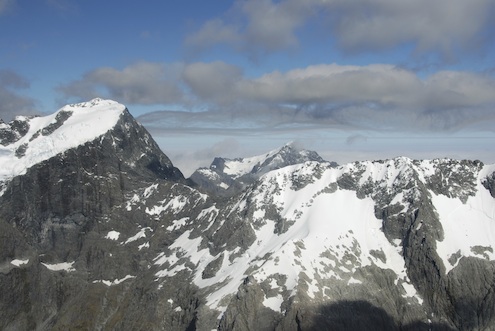
We were two of six passengers in the helicopter. I didn’t question our pilot on his credentials, just buckled up and put on my headset. As we headed over the mountains and into the glacial area, he explained where the ski slopes were and pointed out a very chi-chi resort. None of us were staying there. We bounced along on the thermals and I tried to take photos from my middle seat position. (I’ll give the pilot this: every time we stopped, he rearranged us into front and back so we had equal time at the windows. Thank you.)
We weren’t long into the flight when he suggested we rearrange our itinerary. The winds were picking up and if we wanted to land on the glacier, we’d have to do it first which would mean we’d miss the cruise. In its stead, he’d bop us over to the Tasman Sea and then set down at Milford Sound.
While I found the glacier in Canada to be much more exciting, even if we did get there by SnowCat and not helicopter, the young couple who’d been stuck in motel and pub for a week due to inclement weather, were thrilled. It was windy and cold but the photos are good.
The Tasman Sea “beach” was full of round rocks and pesky little black flies which could really only be seen in the swarms they stayed in. That was a quick stop.
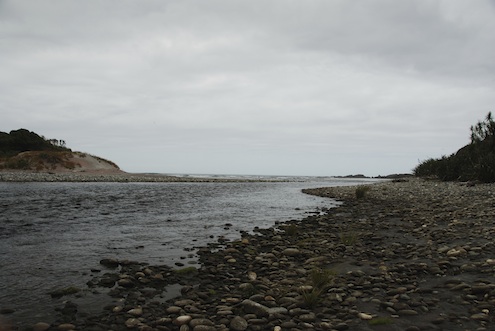
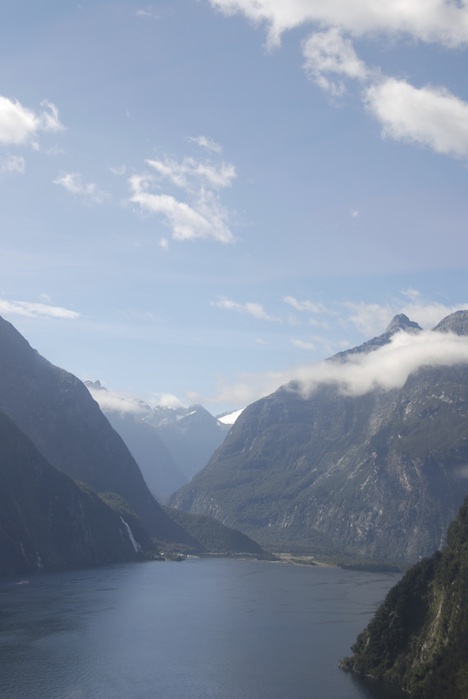
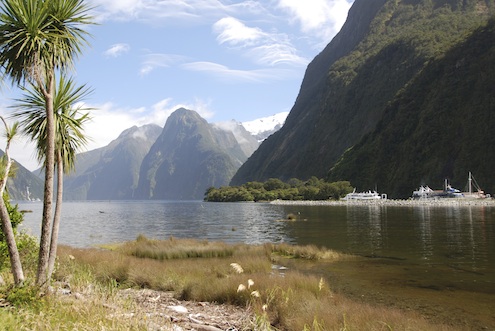
Then we entered Milford Sound. I didn’t see any seals from the air (which had been hinted at in the cruise itinerary) and anyway the argument could be made that I’d seen them in South America last year. We set down, were led on a short hike about the shore and garnered the best photos of the trip.
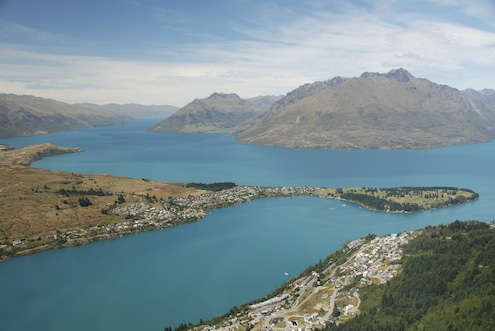
Having foregone the cruise, we arrived back very quickly to the airport, with time to admire the blue-green waters of the glacial lakes surrounding Queenstown from the air. Given the unexpected great weather, an art fair was setting up on the pier and we admired local artists and helped the economy. We couldn’t believe we had but one more stop in our New Zealand adventure.
Our original itinerary didn’t call for time in Christchurch, also known as the “English city of the South.” However, we couldn’t see going so far without visiting one of the major cities. I am so glad we did.
In February 2011, an earthquake devastated the central business district (CBD) of Christchurch, killing 181 people and bringing to mind images of a war zone. It is three years gone and still portions of the CBD are uninhabitable.
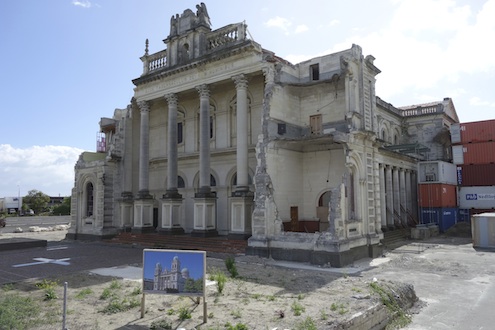
Although three-quarters of New Zealand’s population of 4.5 million live on the North Island where it is warmer and more geographically hospitable, the South Island is larger. Not only is the manpower not in evidence to quickly put Christchurch back together again, but the city government, building/land owners, and insurance companies have not yet come to a mutual vision for the city. A case in point is the Christchurch Cathedral.
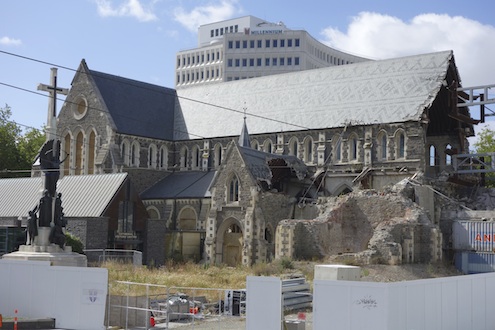
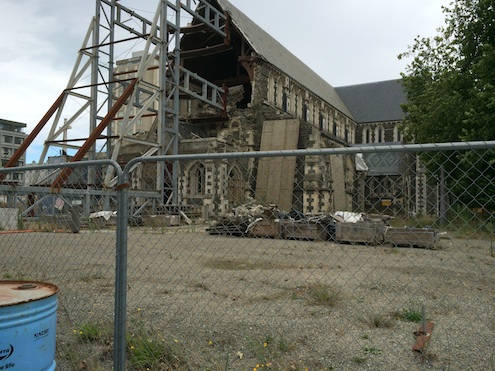
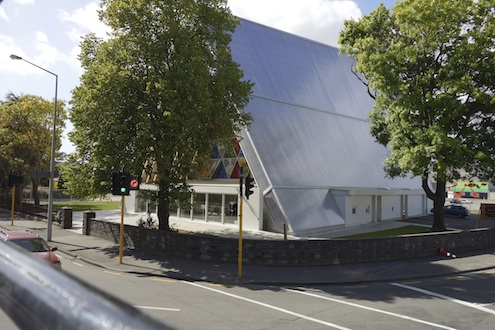
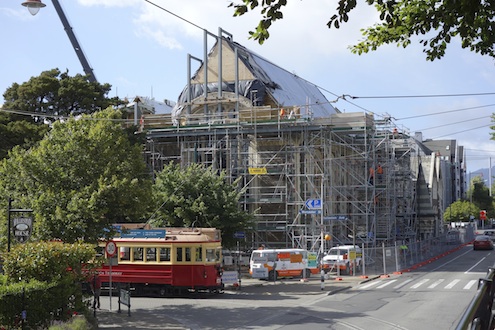
While the Cathedral had been damaged in previous earthquakes, the February 2011 quake destroyed the spire and severely damaged the rest of the building. The Diocese wished to destroy it and demolition began. It was halted by the High Court of New Zealand when heritage groups from around the world protested any further demolition. So it stands now surrounded by fencing, an open wound. A Transitional Cardboard Cathedral is located just minutes from the damaged one. Designed by Shigeru Ban, a Japanese architect, it is predominately made from cardboard tubes.
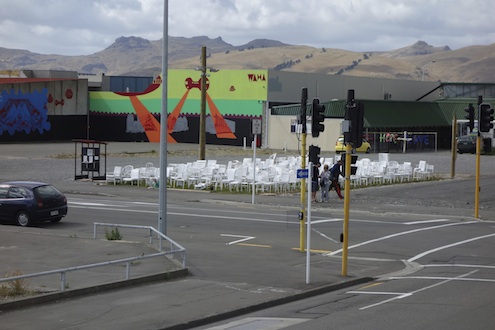
Across the street from it is a temporary memorial to those that perished, a unique white chair for each unique person. We were reminded of Oklahoma City.
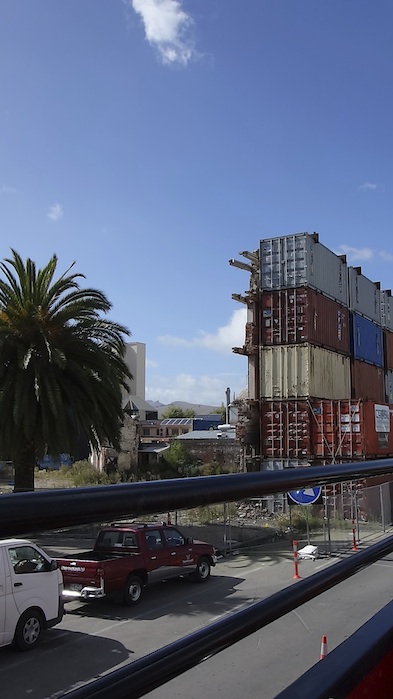
While shipping containers are put in place to hold up buildings which have yet to be demolished, they are also used for commerce. The brightly painted containers are part of Re:START Mall in the center of the city.
Put us in front of a museum and our feet just go through the front door. The Canterbury Museum was just a few blocks from the hotel. We learned a bit more about the Maori culture, the extinction of the moa, the early settlement of the South Island and the exploration of Antarctica. Not to mention the special exhibit of street art featuring original works by the British street artist, Banksy, as well as BMD, artists of our cat shipping container in Auckland and the shark wall in Wellington.
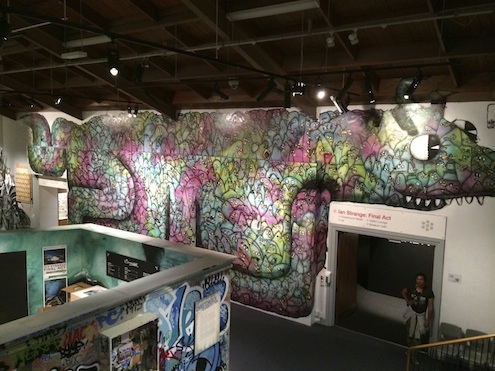
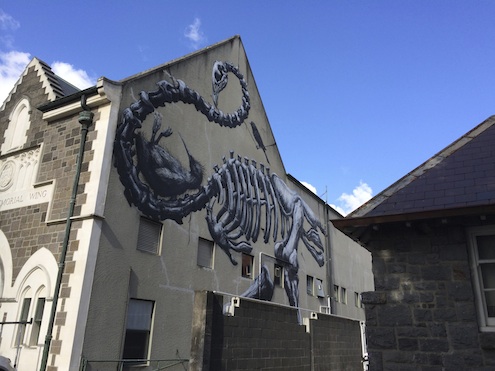
Where did our days go we asked as we started the trek home by flying from Christchurch to Auckland and then to San Francisco. We arrived back on our shores before we left Christchurch, so essentially had two Saturdays where we’d skipped a day at the beginning.
Would we go back? Yes! There are still so many wonderful and different places to see in New Zealand: the west coast of the North Island, the south coast of the South. Dunedin, the Canterbury wine district, Fjordland. But we were blessed to meet friendly people and see fantastic things on the other side of the world, quite literally, a day away.
Kay Layton Sisk's latest is a woman's fiction novel, After the Thunder Rolls Away, available for Kindle, Nook, and iOS devices. Visit Amazon, Barnes and Noble, and iBooks for your copy.