

Have you ever been somewhere you thought you’d never be and found yourself wondering—in a good way, not a where’s-my-attorney sort of way—whoa, this is fantastic! I can’t believe I’m here!
If so, then you know the feeling we had as we figuratively “rounded the Horn” of South America in January. I say “figuratively” because one doesn’t really go south of the Horn on a cruise like ours. One slides through the Strait of Magellan and the Beagle Channel. But I’m ahead of myself by about a week.
A year ago, our in-laws Chris and Ian from across the Pond invited us to join them on a retirement celebration which included a Silversea cruise from Santiago de Chile to Buenos Aires, Argentina, with stops in Uruguay and the Falkland Islands. I may have thought I’d see Buenos Aires someday, or perhaps even venture to Chile, but Uruguay and the Falklands? Never made it onto my radar.
But how can you possibly say no to trading three weeks of questionable Texas January weather for three weeks of South American summer? We called the travel agent.
Much to our surprise, Dallas to both of our gateway cities are non-stop, overnight flights. With only a three hour time difference, and despite being in the back of the plane (we land just a bit after everyone else), we garnered sleep both ways. After paying our reciprocal $160 each fee to Chilean immigration, we were met by a Silversea representative and taken to our hotel where we began to meet our fellow passengers. We quickly signed up for an afternoon city tour, hooked onto the free wifi to tell everyone we had arrived, and grabbed the camera.
The best thing a three-hour tour of a city does is to show you what all you are missing by not sticking around for another day. Had we but known… Instead, we were treated to a history lesson, a tour of colonial architecture, and a newfound appreciation for our first host country.
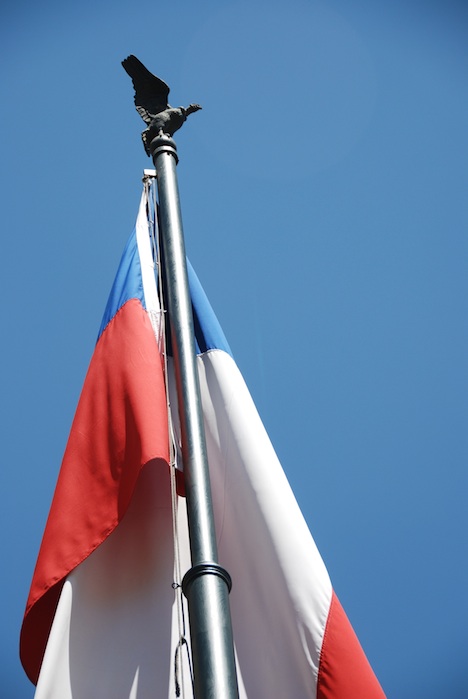
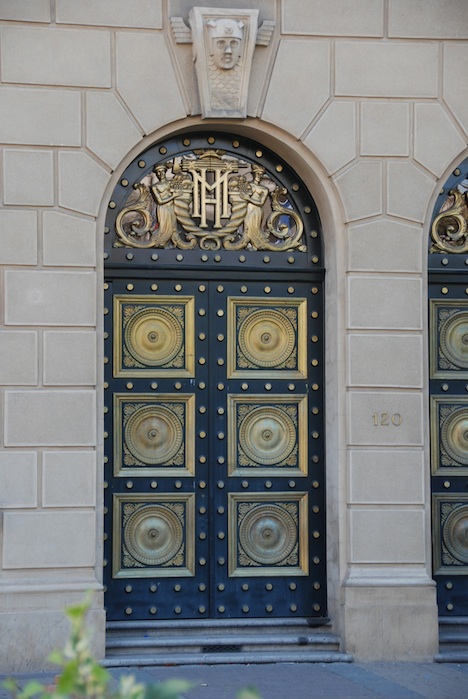
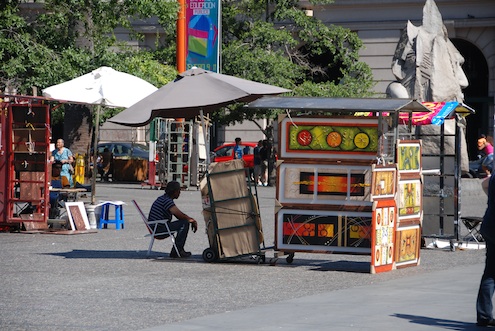
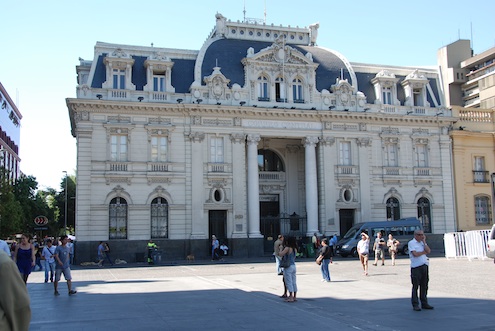
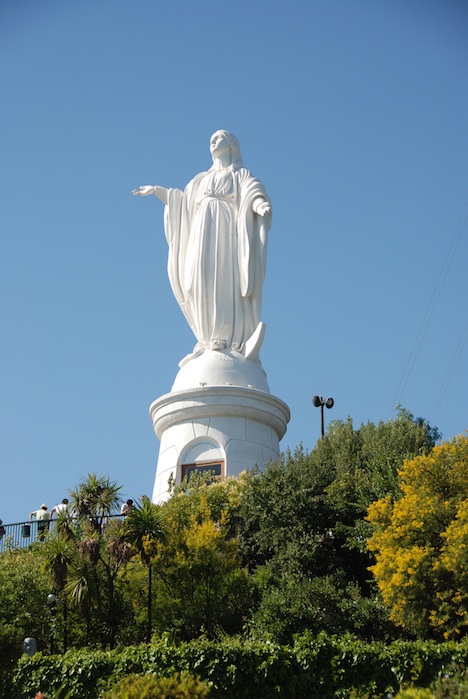
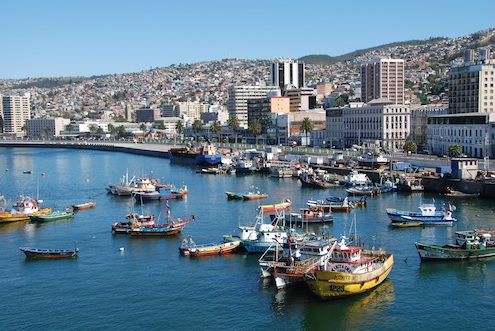
Not unlike other major cities, Santiago’s port is not in Santiago, but a two-hour bus trip away to Valparaiso. We were given the scenic tour when our bus driver and our tour guide miscommunicated and instead of going straight, we turned right. Not that the ship was going to leave without us, but it did make for some interesting conversation coming from the front of the bus.
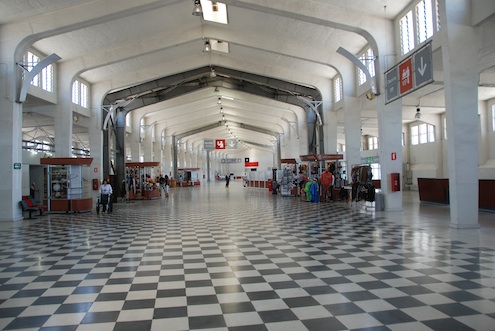
How exciting! Standing in line in the passenger terminal, producing the cruise ticket, swearing you have nothing communicable, then getting your ship’s ID card. Even more exciting—finding all your luggage at your suite door!
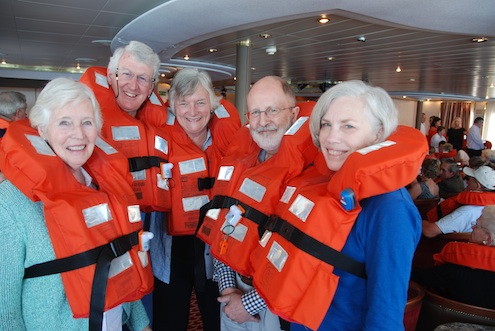
Alas, but perhaps it was for the best in the long run, our first night at sea was rough. The Pacific Ocean wa¬s not kind to us and we swayed about the Silver Cloud, a small vessel with a capacity of 296 passengers. However, we only numbered 226, barely outnumbering the crew. A small ship in a bouncy ocean did not make for happiness among any of us. I have fair sea legs and am unlikely to get seasick, but even I was mentally debating the merits of this adventure. When we made our first port of call two days after leaving Valparaiso, we had entered into the waterway bounded by the Andes and the coastal mountains. Calm seas and, for the next two weeks, no one took them for granted.
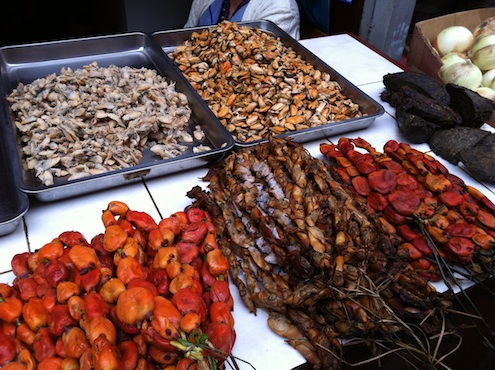
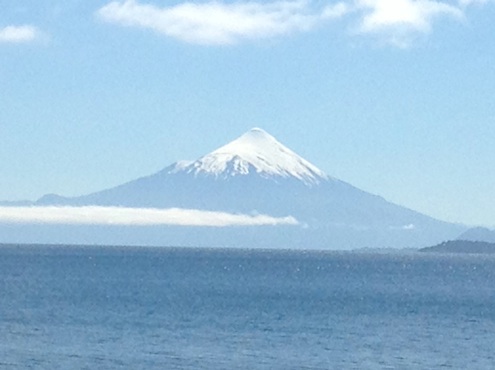
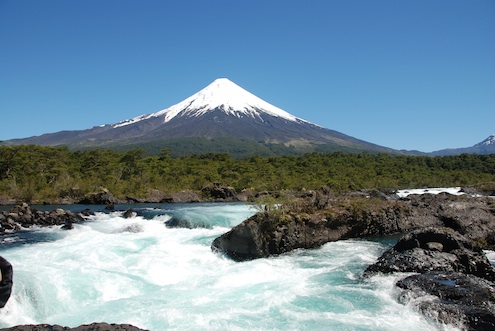
Puerto Montt. Seems no one could agree on an excursion so our little group went on three different ones. I took the culinary route, visiting a local market and then going to a restaurant to cook our meal. I found this to be great fun and ate some members of the seafood category I usually shun, like clams and mussels. This region is known for its volcanoes, and one near the town of Puerto Varas was so unreal in its appearance as to make us think the visitor’s bureau would put it up and take it down, dependent on the number of tourists in the area.

Everything in the southern hemisphere is “upside down”, so the further south we went, the colder it became, although it was never intolerable. It was summer, after all. Think Alaska in July. But, as you will see from photos later, the wind! So, if it’s becoming colder, there’s the possibility of ice and glaciers, and a regular stop on the cruise is the San Valentin Glacier, the northern anchor of the Patagonian Ice Field, its latitude comparable to Seattle’s. Imagine if Seattle had a glacier which stretched 25 miles inland.
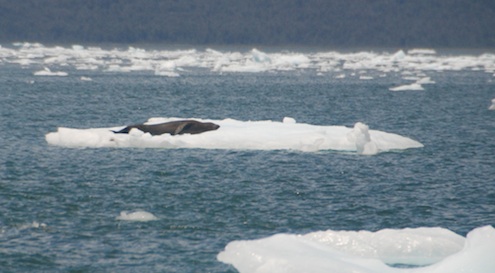
Only one excursion was available in this middle of nowhere, and we were fortunate enough to be assigned to the afternoon catamaran tour to the Laguna San Rafael, a north-south fjord. The sky was clear, the weather warmer than the morning, and the seas less upset. We cruised through an inlet and started seeing ice floes of various incredible shades of blue. And one had a passenger.
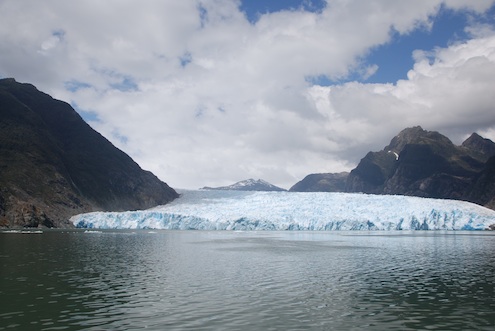
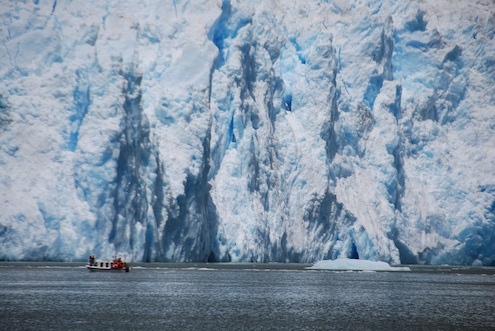
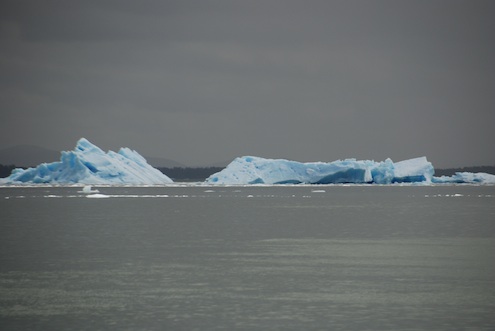
We stayed about 45 minutes at the glacier so everyone could indulge their fantasy of taking the best glacier photo ever or catching the glacier calve. Very loud. Quite fun and everyone was a good sport, taking their fill of photos, then backing away so the rest of us could try our hands at being Ansel Adams.
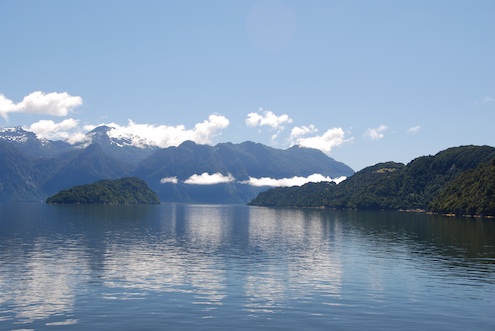
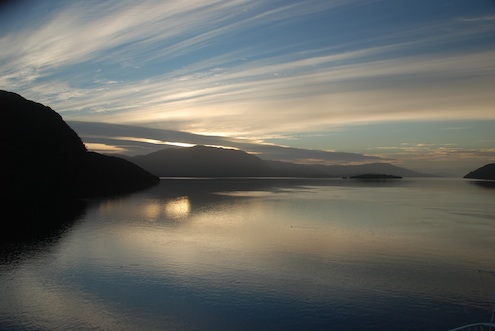
The next two days were at sea. We had to venture back out to the Pacific before re-entering the coastal waters and their relative calm. This not being the cruise line’s first rodeo, there was ample to occupy us. The shore director spoke about the next ports of call, there was a cooking demo and a kitchen tour. We had two lecturers onboard, a retired sociology professor with a strong base in Latin America studies who apprised us of the history of the countries we were visiting, and a former British Ambassador who familiarized us with the political aspects of our journey. There was bridge and a highly addictive game of afternoon trivia. And did I mention the cuisine?
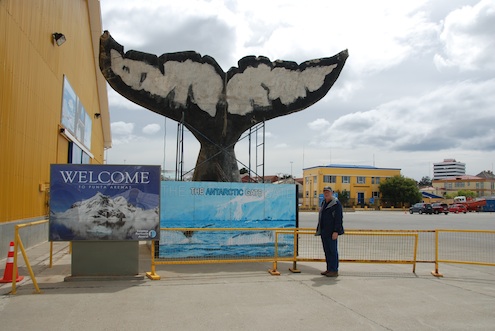
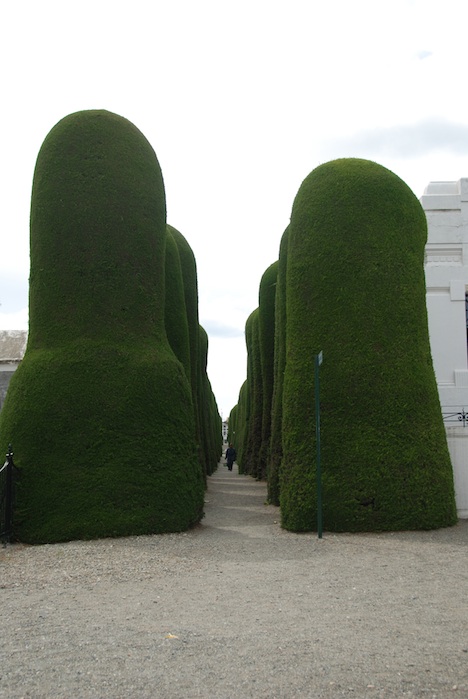
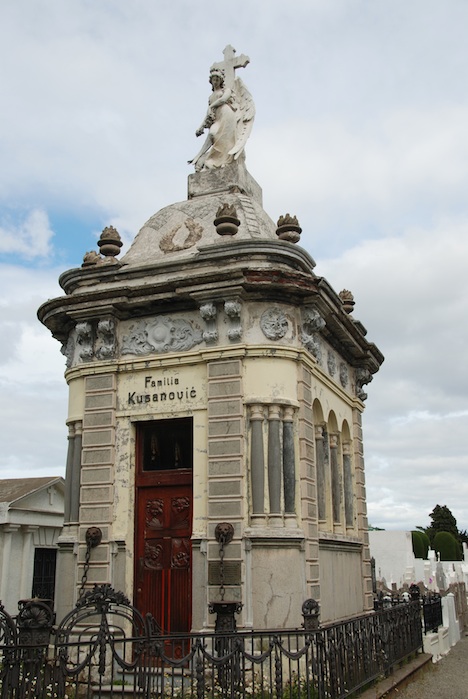
We finally arrived at Punta Arenas, Chile’s “end of the world”, and at 53 degrees south latitude, that’s a believable claim. I’ve found out since that Punta Arenas is cited in USA Today’s Weather report. How interesting is that? We did the city tour and visited a most unusual cemetery with sculpted cypress trees and impressive monuments to the founding families, many of whom were from Croatia.
Our visit to the Salesian Museum (Museo Salesiano Maggiorino Borgatello) captured my imagination in a big way. Among the history of the native peoples were also mounted condors, Patagonian pumas, and guanacos, a relative of the llama. We were only allowed 45 minutes—way too short, another example of needing to come back. However, I doubt we will because we didn’t kiss the Indian’s toe.
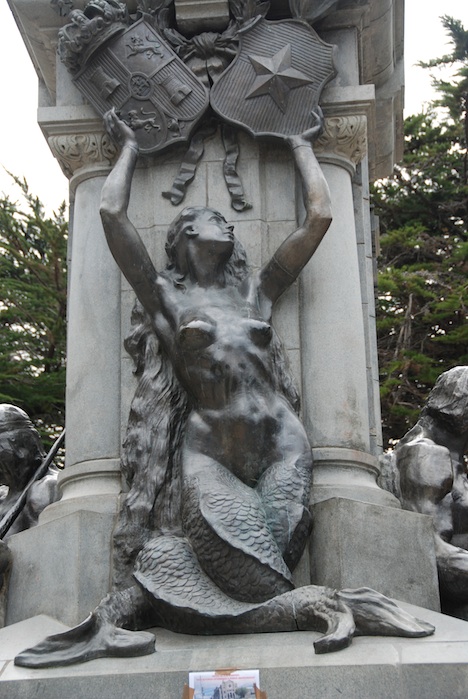
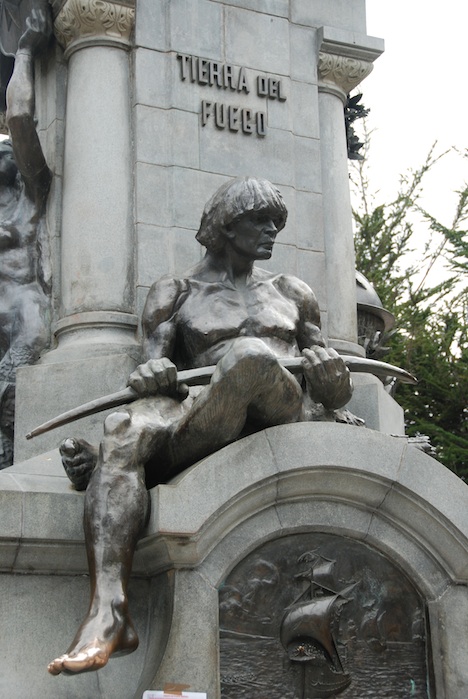
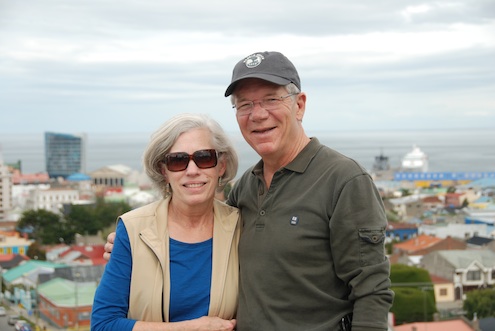
The statue of Hernando Magellan in the town square celebrates his “rounding the Horn” (finding the Strait of Magellan) in 1520. Legend, on the other hand, states that if you kiss the Fuegian Indian’s toe, you will return. I just photographed it. Not that I wouldn’t come back, but “been there, done that”, you know?
http://www.welcomechile.com/puntaarenas/punta-arenas-cemetery.html
http://www.interpatagonia.com/paseos/maggiorino/index_i.html
http://www.frommers.com/destinations/puntaarenas/A29964.html
http://www.silversea.com