Turkey: Ephesus, wine, and the obligatory rug factory
I’m not sure what I expected of Turkey. Certainly not the spotless port of Kusadasi, the road medians filled with roses, the flowers flowing from balconies, the friendliness of it. This first day was a Biale excursion. We were to see the ancient city of Ephesus, visit a winery, have a tasting of Turkish wines, lunch, and stop at a rug factory on the way back to the ship. It was a full day and we hadn’t even started!
Our bus ride to Ephesus took forty minutes and although we were visiting with our fellow Biale fans (we’d met most of them at the reception wine tasting the night before), I realized I should have brought my Kindle. From this excursion on, it accompanied me.
When we arrived at Ephesus, the driver pointed us in the direction of the public toilets. Across the highway, past the vendors, pay your half euro, in you go! Paying for the facilities was a common theme throughout our excursions and in general they were in better shape than any free facilities (save at restaurants). Let’s hear it for the seventy-five cent potty break. We gathered back across the highway, were handed our ticket, went through the turnstile, and entered the ruins of the city I’d only read about in the Bible.
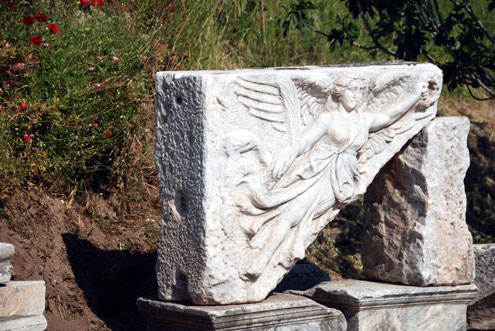
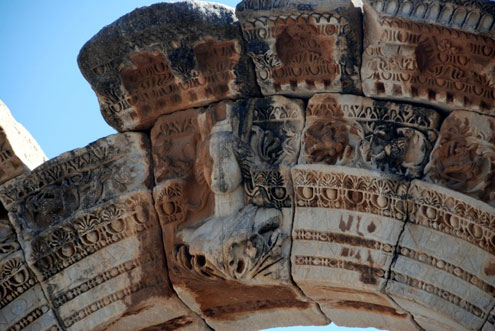
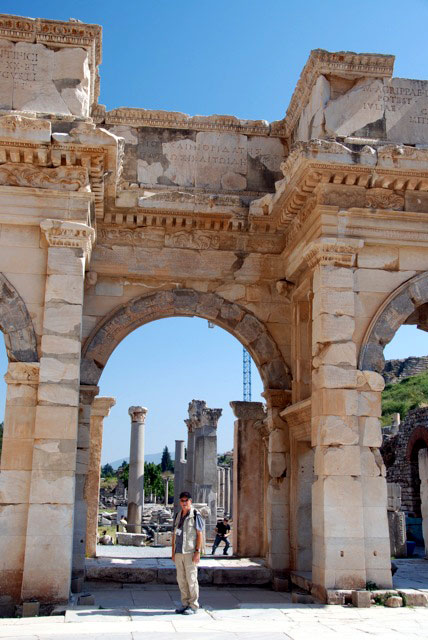
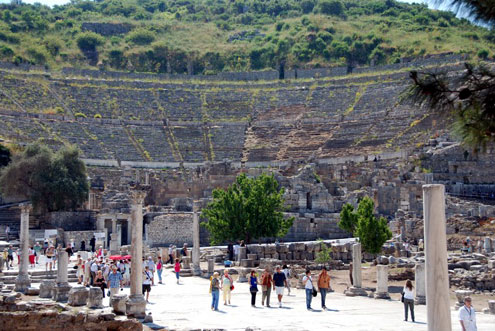
Originally Greek, originally a port, Ephesus became the second largest city in the Roman Empire in the 1st century BC. War, earthquakes, and time all took their toll. A river silted in and the port was gone. What is left has been cyclically restored and destroyed through the centuries and it took us two hours to walk… and walk and walk… from entrance to exit. It’s hard to say what was the most impressive: the Library of Celsus, the Greek statuary, the men’s public facilities. (One can only hope that, as there weren’t any women’s public facilities, the men had to pay a euro equivalent to get in.) Or, perhaps the amphitheatre. Built to hold 25,000, or 10% of the population, it stretches up and up in a semi-circle about a stage. We sat and watched as groups and individuals cavorted on it, mugging for the camera one member of the party was aiming. And then, we were witness to a goose-bump moment.
A group of 25 or so, multi-generational, got their turn on the stage. One started singing and then another. They circled, joined hands, swayed. They lowered their voices for a verse, raised them in a chorus. It had the timbre of a national anthem and it was beautiful. We were guessing at their nationality and none of us were correct. We learned they were from Poland and they were proudly carrying small flags. We wished them well.
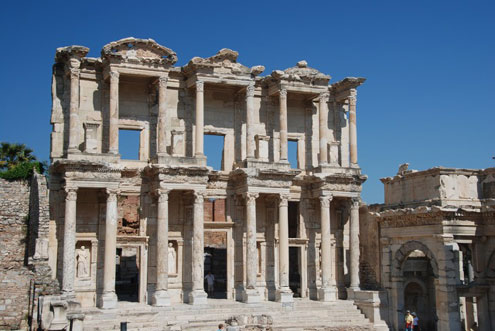
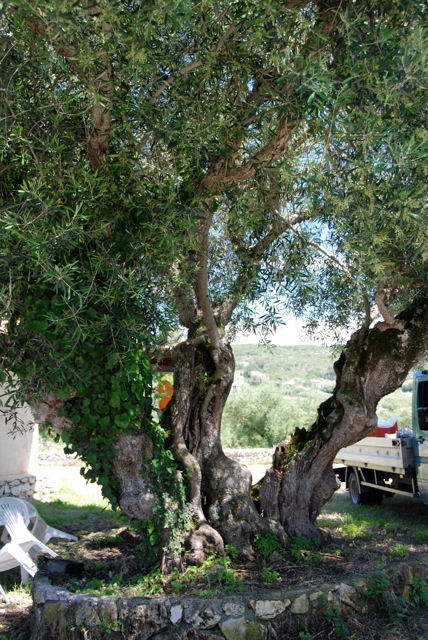
Lunch turned out to be a three-hour, seven course affair under a 300-year-old sycamore in a restaurant/winery garden. We tasted seven Turkish wines from Sevilen, both unfamiliar varietals and a Mediterranean slant on the known.
It’s no wonder half of us slept on the way to the rug factory, a side trip which was probably mandatory but not exactly welcome. Still, I enjoyed seeing the artistry of the women who were fashioning the rugs. Appreciation of color and design knows no national boundaries.
Santorini: What a Greek Isle is supposed to be
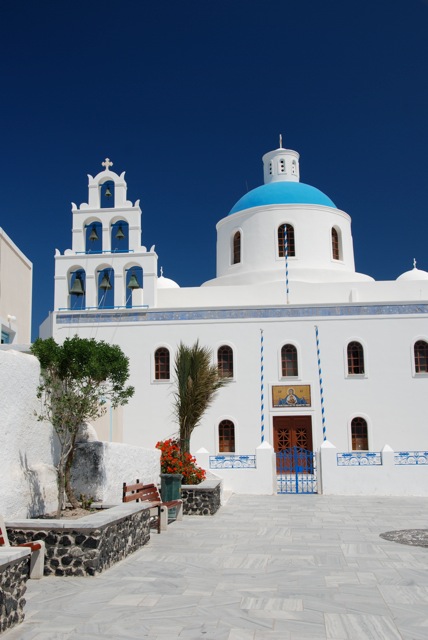
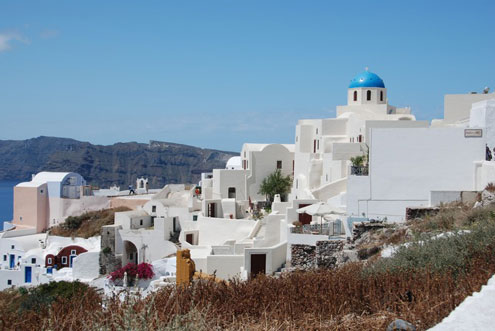
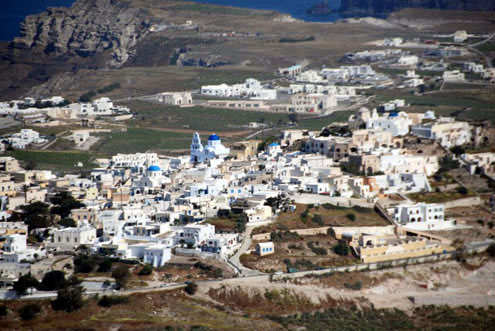
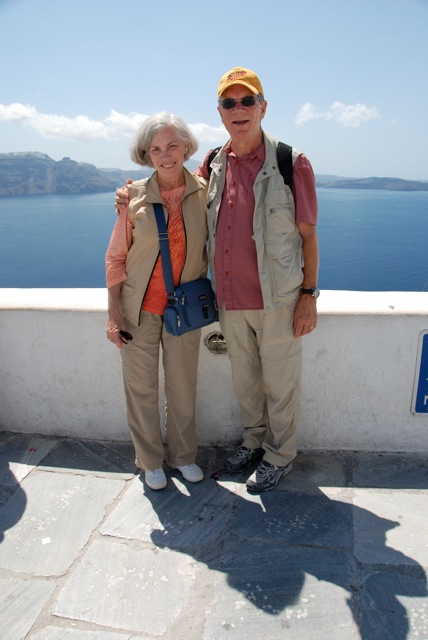
Day three of the cruise found us off the coast of Santorini, the epitome of a Greek island, all white buildings and blue-bluer-bluest rooftops. Formed by a volcanic eruption around 1500 BC, the island’s resulting soil of ash and pumice is the basis of their wine industry. The towns cling to the side of the cliffs which surround the caldera where the ships anchor. There were five cruise ships in port the same day we were; no wonder Santorini’s main industry is tourism. No wonder it took so long to get down from the heights to the dock via cable car. Braver souls took the 589 steps of the donkey stairs. Think the Grand Canyon’s Bright Angel Trail but made of concrete. But first, we visited a winery with spectacular views, then the town of Oia. (ee-ah) When I had my digital photos printed, the clerk asked where we’d been. It wasn’t the photography which had her in awe; it was the scenery itself.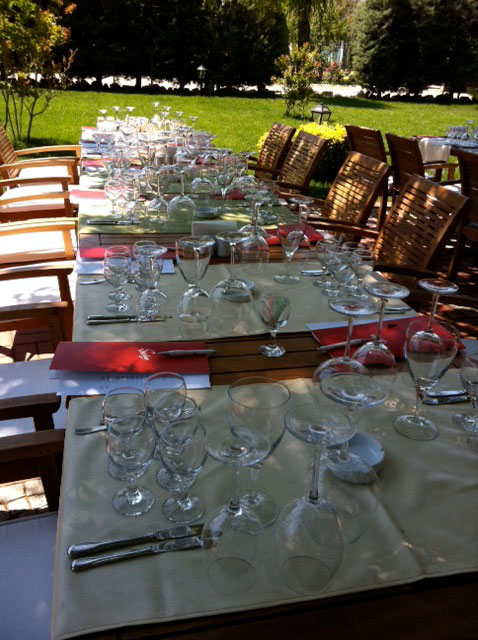
Zakynthos: Land of the Caretta caretta and the Zante currant
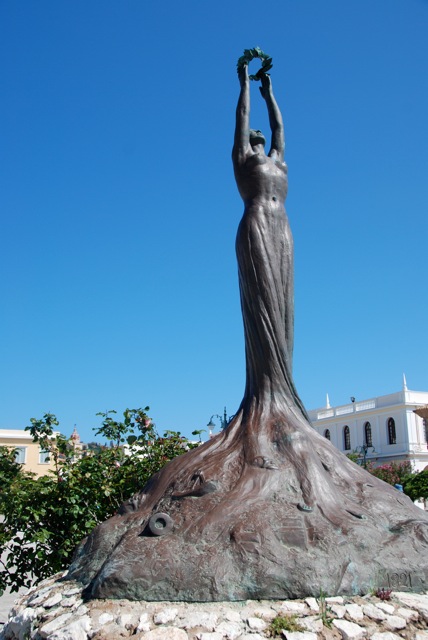
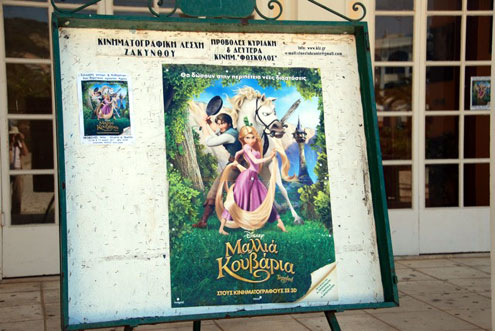
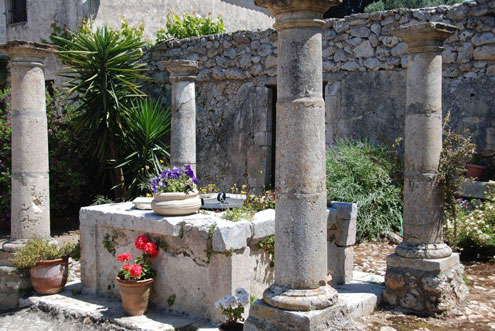
If one Greek isle is fun, what about two? No climbing down from cliffs here. We’re met by our guide and given a brief introduction to the town of Zakynthos before we take off to a 14th century monastery. Along the way we learn about the Caretta caretta, or loggerhead sea turtle, which nests on the beaches of Zakynthos in June. As such, there’s no airport nighttime arrivals or departures on the island, so the endangered turtles are not disturbed. Along with a breathtaking coast and beaches, the island is known for olive oil and the Zante currant.