

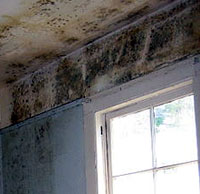
Barbara Storz, an AgriLife Extension agent in Hidalgo County, has personally seen the harmful effects household mold can have on human health. She recommends professionals and homeowners alike take a series of online courses being offered next year to prevent and eradicate molds and allergens.
“My next door neighbors had to tear down their home because unseen mold had saturated their walls and attic and was making their young son seriously ill,” she said. “When he walked into one room in particular, his nose would start to bleed.”
After many medical tests and exams, doctors finally determined it was the house that was making the boy so sick, Storz said.
“Fortunately, this happened when homeowner insurers were still paying for mold remediation,” Storz said. “But once they stopped paying, so did the headlines. Unfortunately, mold is still a serious and widespread issue.”
To become educated about mold and how to prevent it, Storz recommends taking an online course being offered throughout 2010 by Dr. Mani Skaria, a mold expert at the Texas A&M-Kingsville Citrus Center at Weslaco.
“As serious as mold can be to human health, there is a huge lack of awareness about mold,” Skaria said. “People know it’s a negative thing, a bad thing, but they don’t know what it is, where to look for it or how to avoid it.”
Unlike cars that alert the driver when it needs an oil change, homes don’t have such warning devices, Skaria said. “We have to know what to look for.”
The online class, "Four Internet classes on asthma and allergy control in built environments," starts Jan. 30. The classes include "Asthma and allergen control in the home," "Construction strategies for allergy and asthma control," "Why our schools fail in mold and allergens: analysis and solutions" and "Dozens of case studies."
The cost of each class is $295 and three continuing education units will be available. The courses include some hands-on training.
“This online classes will be available throughout 2010 beginning in January,”Skaria said. “Students have three months to complete each class at their own pace. And thanks to the Internet, this is a worldwide class; anybody anywhere in the world with access to the Internet can take it.”
On their Web site, the Centers for Disease Control and Prevention notes that molds are “microorganisms that are found virtually everywhere, indoors and outdoors. The potential health effects of exposure to indoor mold are of increasing concern.”
Their growth, the Web site adds, is encouraged by warm and humid conditions. For people sensitive to mold, it can cause symptoms such as nasal stuffiness, eye irritation, wheezing or skin irritation.
Those with serious allergies to mold may have more severe reactions including fever and shortness of breath. Those with chronic lung illnesses can even develop mold infections in their lungs.
Storz is convinced that mold became a structural issue when homes were no longer built to be ventilated by breezes.
“A few decades ago we closed our houses to allow for air conditioning,” she said. “The basics of home construction should have changed too, but it didn’t. Our homes were once open to accept breezes, but now that we shut them in, we’ve created a perfect breeding ground for all kinds of mold.”
She said it’s important for people to know how to properly build an enclosed home that doesn’t allow for mold growth.
“This class if for everyone,” Storz said, “from people who suffer from allergies to contractors, engineers, nurses, school officials, real estate agents, insurance adjustors and especially people interested in building a house. Mold may be out of the headlines, but they are not out of people’s homes.”
For more information, contact Dr. Skaria at 956-447-3368 or 956-212-9776, or e-mail MSkaria@ag.tamu.edu .