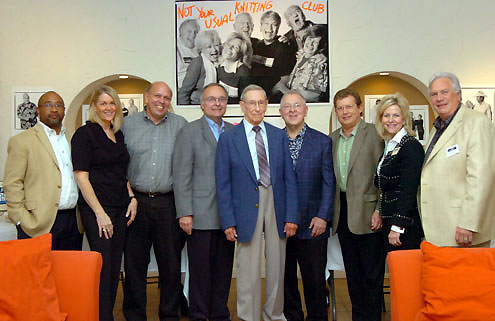
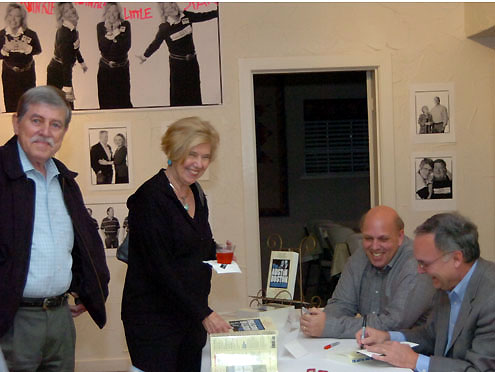
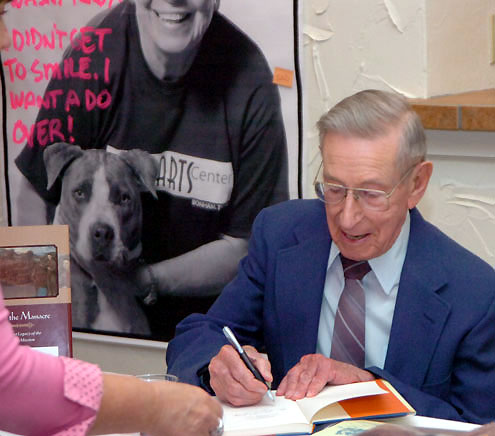
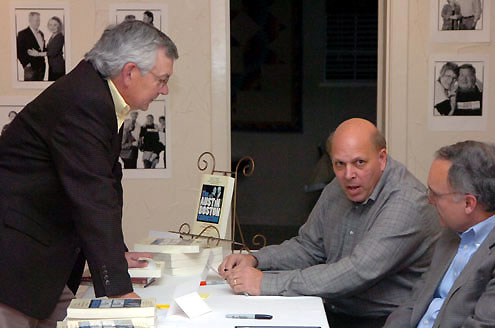
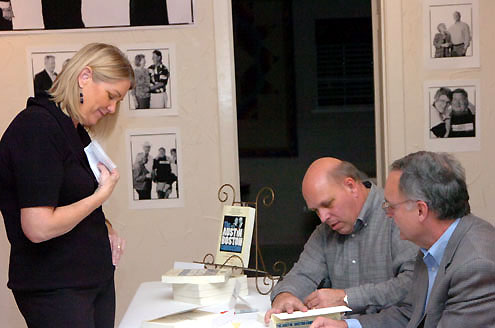
Two of the dynamic cultural forces currently shaping Bonham, the Friends of Sam Rayburn and the Creative Arts Center, put their heads together Thursday evening to turn back the hands of time with two enlightening historical discussions followed by a book signing.
The first presentation, given by Dr. Anthony Champagne and Dr. James Riddlesperger, Jr., focused on U.S. politics in the mid 20th Century and, in particular, the alliance between Texas and Massachusetts that manifested itself in 50 years of Democratic leadership in the U.S. House of Representatives.
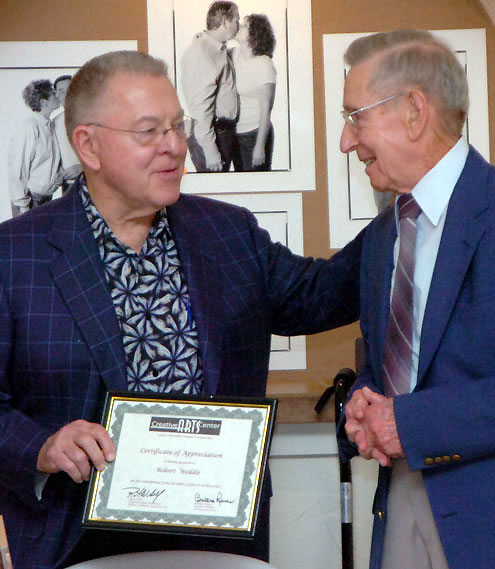
The second half of the program, featuring Robert Weddle, delved into the disastrous attempt by Robert De La Salle to colonize South Texas on behalf of Louis XIV.
La Salle left France in 1684 with four ships and 300 people with plans to establish a strategic presence at the mouth of the Mississippi River, but a combination of crude maps and poor navigation sent his expedition ashore in Matagorda Bay on the Texas Coast.
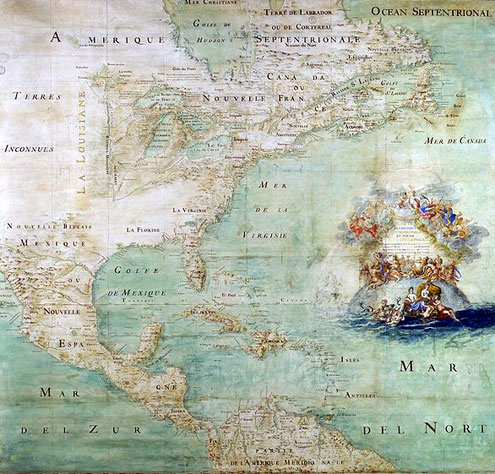 1681 map by Claude Bernou
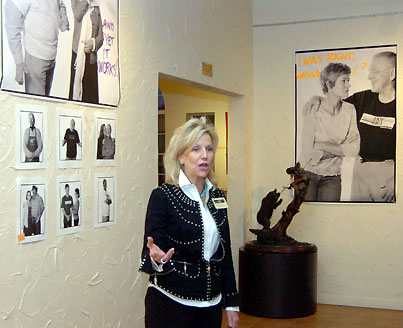
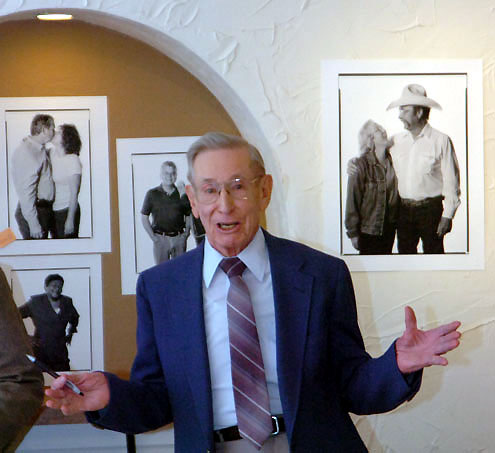
Dr. Patrick Cox, Associate Director at the Dolph Briscoe Center for American History at the University of Texas at Austin and administrative director of the Sam Rayburn Library and Museum, greeted the crowd with his customary "Hook 'em Horns."
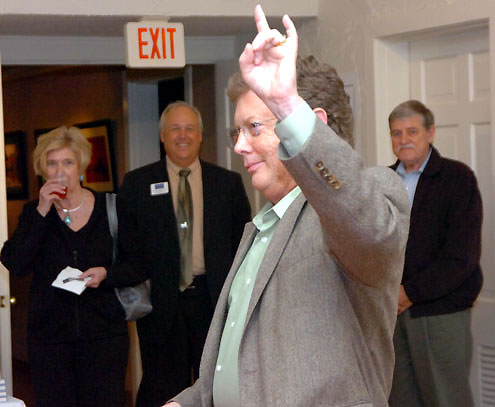 Dr. Patrick Cox greets the crowd.
"This is a collaborative exhibit we're doing with Creative Arts Center," Dr. Cox explained, "and a continuation of the partnership that started last year."
Cox then introduced the three authors.
"I think it is appropriate we're having this book signing in Bonham because Sam Rayburn is so prominent in this book," Dr. Champagne said of The Austin/Boston Connection, which was something of a north/south collaboration in it's own right. The authors were Dr. Champagne, UT-Dallas; Dr. Riddlesperger, Texas Christian University; Dr. Douglas Harris, Loyola University in Maryland; and Dr. Garrison Nelson, University of Vermont.
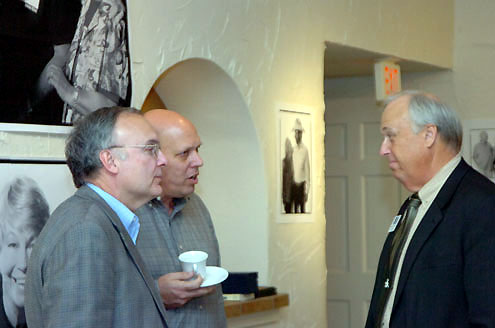
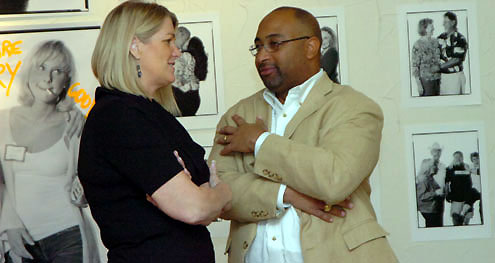
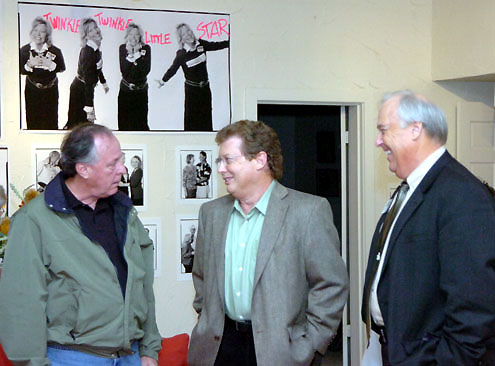
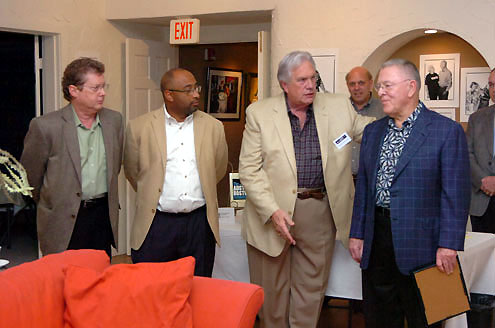
Contributing authors to The Austin/Boston Connection, Dr. Anthony Champagne (left) and Dr. James Riddlesperger, Jr. (center) visit with Dr. Randy McBroom, vice president at Texas A&M University Commerce.
"Sam Rayburn's Majority Leader all those years was John McCormack, a Boston, Massachusetts native," Champagne continued. "When Tip O’Neill was Speaker, Jim Wright was Majority Leader. There's The Austin/Boston Connection."
The dynamics behind this alliance of moderate southern Democrats and the north wing of the Democratic Party began when Joe Bailey, a resident of Gainesville, Texas was elected to the U.S. House of Representatives in 1891. Champagne described Bailey as "a hero of Sam Rayburn," and Bailey was also instrumental in furthering the career of John Nance Garner when Garner joined Bailey in the U.S. House of Representatives in 1901. In turn, Garner was a mentor to Rayburn when Rayburn went to Washington in 1913.
"I tell my students," Dr. Riddlesperger added, "that if you make a list of the most effective legislators in U.S. history, the debate starts at number 2. Number one has been taken. His name was from Bonham and his name was Sam Rayburn."
Riddlesperger says that today's Congressional leaders on both sides of the aisle would be well advised to understand the mechanics that make the north-south alliance so effective for half a century.
"It's about setting out to get the job done," Riddlesperger remarked in closing, "not who gets the glory."
More information about The Austin/Boston Connection is available online at http://www.tamupress.com/product/Austin-Boston-Connection.5220.aspx
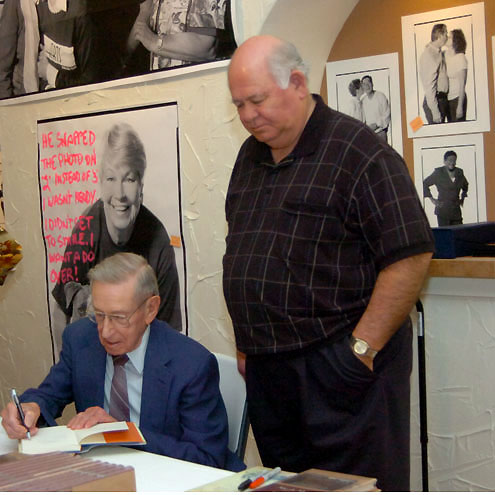
Mr. Weddle, a prolific author whose 15 books have earned him the title of "the dean of Texas Colonial history," had two books available at the book signing.
Appreciation for Weddle's research knows no boundaries. His book about the violent demise of a Spanish mission in central Texas, After the Massacre: The Violent Legacy of the San Sabá Mission, was named Best Book of the Year by the Historical Society of Oklahoma. That's because, after the massacre, the Spanish pursued the Taovaya Indians all the way to Red River to punish the tribe and their allies.
"The Indians were on one side of the river," Weddle explained. "The Spanish were on the other side. And you never know when history is going to jump the river."
To learn more about After the Massacre, visit http://www.ttup.ttu.edu/BookPages/0896725960.html
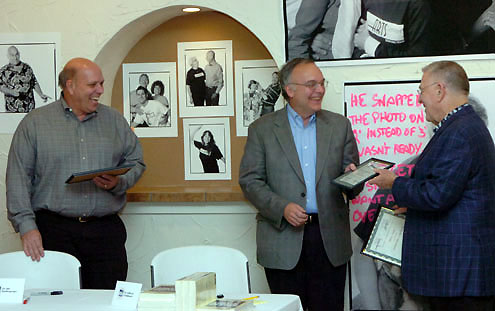
Appreciation for Weddle's work has even traveled as far as the explorers he wrote about. In 2001, King Juan Carlos of Spain knighted Weddle in the Order of Isabel la Católica, Spain’s highest honor bestowed on a non-citizen, for meticulously documenting Spanish Colonial history and contributing to international relations.
In The Wrecking of La Salle's Ship Aimable and the Trial of Claude Aigron, Weddle uses court documents that cleared Aigon of any malicious intent after the Aimable was stuck on a sandbar and eventually destroyed. La Salle had claimed the pilot intentionally grounded the ship, which, in effect, doomed the colony. Of the four ships in the expedition, one had fallen into the hands of Spanish pirates, one had been wrecked on a sandbar upon arriving at Matagorda Bay and one had returned to Spain. In 1686, the fourth ship ran aground on Matagorda Peninsula. Stranded, La Salle knew his only hope was to go overland to the French settlement in Illinois Territory. He would eventually be killed by one of his own men when infighting ravaged the few remaining destitute survivors. Of the original colony, six men did successfully make the trek to Illinois Territory and in 1688 they arrived back in France.
It is interesting to note just how much history occurred on the spot La Salle selected for a settlement after landing in Matagorda Bay. The site was 50 miles inland on a creek that offered fresh water and fish. Buffalo were plentiful. The settlement is often referred to as Fort St. Louis, but Weddle describes that moniker as an "historical error." The Spanish got word of the French intruders and finally found the deserted garrison in 1689. The settlement was in ruins, but the Spanish would eventually build Presidio La Bahia on the same site. The presidio was relocated to the Guadalupe River and then the San Antonio River where it was fortified and became the singular Spanish fort along the Gulf Coast between the Mississippi and Rio Grande rivers. The early remnants of what would be the Texas city of Goliad began to take shape around the fort. As the Texas Revolution began unfolding, Presidio La Bahia was taken over by Texians on October 9, 1835. The initial declaration of independence for Texas was signed there a little over two months later. And the commander of the garrison? That would be James Fannin. Fannin County, Texas and Fannin County, Georgia were named in honor of Fannin.