

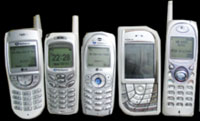
A University of North Texas faculty member, however, believes the right type of cell phone — a smart phone with complete computer functionality — may be the answer to schools’ computing needs.
Dr. Cathleen Norris, UNT Regents Professor of learning technologies, points out some school districts’ programs to provide laptop computers to their students are being abandoned, with district administrators citing the high cost.
“It can cost $6,000 for one laptop, including the initial purchase cost, batteries and maintenance. Districts often don’t have that kind of money,” Norris said. “Most schools also cannot afford personnel to maintain wireless networks, and building out wireless is a real problem for many schools.”
In addition, laptops, which weigh six or seven pounds, aren’t as portable as smart phones and other mobile learning devices, she said.
“There’s a belief on the part of some people that older students — high school students — have to have big computer screens, but even business professionals have started to leave their laptops behind and use mobile computing devices,” Norris said. “One study showed that laptops are being used for word processing, e-mail, chat and surfing the Internet. You can do all those things with handheld devices.”
Norris and Dr. Elliot Soloway, the Arthur F. Thurnau Professor in computer science and engineering at the University of Michigan, founded GoKnow, a provider of educational resources for mobile computing in elementary and secondary school classrooms. The two created Mobile Learning Environment — educational software that is being used to turn smart phones into personal computers.
Norris said that in addition to purchasing Mobile Learning Environment, districts can also purchase programs that will give teachers control of the phones, thus preventing students from making or receiving calls or texting during class. She added that the advantages of the handheld devices outweigh any possible distractions they may cause in the classroom.
“Finding information is a new skill for the 21st century. Teachers should provide direction so students learn to find information on their own, instead of giving them all of the facts,” she said, noting that by teaching only the facts, U.S. schools “are stuck in the 19th century.”
When a Google search delivers large amounts of information in seconds, Norris said, “a fact-focused, memorization-based curriculum is no longer appropriate.”
Several school districts in Texas have adapted GoKnow software in some classrooms. This spring semester, fifth graders at Trinity Meadows Intermediate School in the Keller Independent School District near Fort Worth are using smart phones with the technology in two classrooms. Students participating in the project, known as the Keller Mobile Initiative, received free phones, with Verizon Wireless donating phone service. Norris is a consultant to the project.
Matt Cook, a math and science teacher at Trinity Meadows, proposed the Keller Mobile Initiative after noticing widespread cell phone use by his students during the 2007-08 academic year.
“Probably 60 percent of the students had their own cell phones, and others used their parents’ phones,” he said.
Cook decided to have the students use the phones for science assignments. They took photos to document phototropism in plants — how plants grow in the direction of the sun — and erosion.
After hearing Norris and Soloway speak at an education technology conference last summer, Cook said he realized that students could do much more with mobile phone technology.
“I knew that handheld devices are the way to go. They are the cheapest long-term solution for technology in the classroom,” said Cook, who hopes the Keller Mobile Initiative will serve as a national model for other school districts.
Since the project began in late January, students have used the phones to pull up web sites mentioned by a park ranger from New Mexico. The ranger spoke to the students via Skype, and students could refer to the sites during a lecture, Cook said.
In another lesson, students are using the technology to create animated drawings of erosion. Students may use the phones to view educational videos, listen to podcasts and classroom audio projects and track homework and assignment due dates on the phones’ calendars.
The Alvin Independent School District and the Goose Creek Consolidated School District, both near Houston, also use GoKnow software in mobile computers.
Norris and Soloway are featured in a video produced by the Pearson Foundation, the philanthropic arm of a leading media and education company, in its Mobile Learning Institute Film Series on 21st century education. In the video, the two professors take a road trip through Texas to show how mobile devices are being used in schools. The video is available at www.mobiledigitalarts.com/21stCenturyEducation.htm.
In addition, Norris is a consultant to a two-year program at an elementary school in Singapore. The nation’s Nanyang Technological University received a grant from Singapore’s Ministry of Education to provide mobile technology to third graders.
During a pilot study with second graders last year, Norris said, students used their smart phones to go to a playground and take photos that represented prepositions. Then they wrote sentences that corresponded to the photos.
“They also created an animated story about a red ball that used all of the prepositions they had learned,” she said. “The students took to the technology immediately, enabling them to complete the lesson successfully. Many children are comfortable with using mobile devices outside of school, so not using them at school wastes resources and causes a disconnect.”
The University of North Texas is a student-centered public research university and the flagship of the UNT System. One of Texas' largest universities, UNT offers 99 bachelor's, 104 master's and 49 doctoral degree programs, many nationally and internationally recognized. UNT is the choice of nearly 35,000 students.
Discover the power of ideas.