

DALLAS, Texas, February 11, 2009 – On January 20, The Trinity Trust Foundation welcomed Larry Beasley and Christopher Leinberger for The Trinity Trust ALON USA Trinity Speaker Series. They spoke about “Urban Living in the 21st Century” at The Trinity Center to about 150 people. This event was co-sponsored by The Real Estate Council. Also, on January 19, Beasley gave a similar presentation to 90 people at Methodist Dallas Medical Center’s Hitt Auditorium.
“Larry and Chris are two of the world’s experts on urban land development and redevelopment. Their insights and experiences were what we needed to hear as we’re developing the Trinity River Project,” said Dr. Gail Thomas, president of The Trinity Trust Foundation.
On January 21, the City of Dallas sponsored a workshop for the Dallas City Council at the Dallas Central Library involving Beasley and Leinberger and joined by Los Angeles transportation planner James Rojas and Maurice Cox, former mayor of Charlottesville, Va. The urban planners briefed the Dallas City Council on developing walkable urban neighborhoods with housing, retail, offices and transportation options. The timing is important as the Dallas City Council will review and consider a form-based zoning ordinance.
A $2 billion public works project, the Trinity River Project is one of the largest such projects in the nation. Plans include a meandering river, downtown lakes, an island, wetlands, a 6,000-acre forest, hike and bike trails, a whitewater course, riding paths and nature walks.
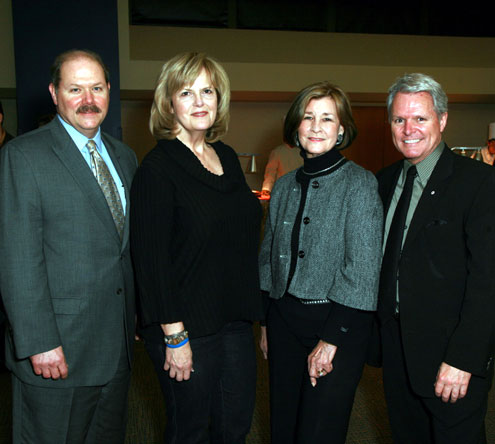
Beasley, one of the world’s top urban planners, is current special adviser to the Emirate of Abu Dhabi and former director of the Vancouver Planning Department. He helped establish the City of Vancouver as one of the most livable cities in the world. He is a distinguished practice professor of planning at the University of British Columbia, founding principal of Beasley and Associates, an international planning consultancy.
Beasley spoke about elements of a successful city.
1. Choice and balance. “We’ve had to use the carrot and stick approach with a strong policy to limit auto growth in the city. The best transit plan is a good land use plan.”
2. Density, mixed use and quality. “We want the city to be compact, but it must be managed with noise restrictions, security, preservation initiatives and good architectural solutions. Elements include housing, retail, parks, schools, art institutions, libraries, community centers, walkways, bikeways, green spaces and daycares. “With good urban planning, Vancouver doubled its population in a decade to 95,000, but we made sure we had affordable housing including 20% in low-income housing and 25% for families.”
3. Built Form. “Row houses can further domesticate neighborhoods, as well as added doorways, street front windows and gates along the street to provide access.” Beasley called Vancouver as becoming an “eco-density” city meaning that it has a concentrated population amidst open green space, parks and gardens that are all public spaces.
4. Civic governance and growth management. “You need good urban policies to underpin the planning of a livable city. Everyone has to work together to depoliticize all the processes involved, both political and public, and engage the public during all phases of the process.”
5. Unique spirit and ambience. “It’s a quality of fascination, of mystery, even magic. It’s the spirit of a place that makes people want to visit.” Beasley mentioned GHI, the Gross Happiness Index, as a way to measure it.
Beasley gave his advice to the audience for connecting downtown Dallas and the Trinity River area. Because of the way downtown and the Trinity are separated, he suggested building possibly some towers for housing, and then lining smaller row housing near the river for connectivity. As he spanned his last slide of Vancouver in 1983 to 2003 to show the remarkable differences, he reminded everyone that it took at least 20 years in Vancouver and to keep working on it.
After Beasley finished, Leinberger spoke. Leinberger is a land use strategist, developer, professor, consultant, author and a Visiting Fellow at The Brookings Institution in Washington, D.C., doing research and developing strategies to develop or redevelop walkable urban places. “The North Texas region needs about 30 to 35 walkable urban cores, and right now you have maybe six, including Mockingbird Station, Addison Circle and Uptown.” He added, “I urge you in three areas: 1. Develop your rail transit, and get some of the federal stimulus package for it. 2. Figure out where the next 25 to 30 places will be, and get that zoning in place. 3. Set up management organizations to get these places to work.”
About The Trinity Trust Foundation and The Trinity Center:
The Trinity Trust raises private funds to implement the Balanced Vision Plan for the Trinity River Corridor Project in conjunction with the City of Dallas. The Trinity Trust has established The Trinity Center as the gathering place for all civic and non-profit groups working to revitalize the Trinity River in Dallas. It houses the offices of The Trinity Trust Foundation, Texas Horse Park, Groundwork Dallas and Trinity Strand Trail; and hosts meetings, workshops and events for these organizations and the Trinity Commons Foundation. The Trinity Center facilitates collaboration between these entities and the City of Dallas and encourages seamless integration of all the components of the Trinity River Corridor Project. More information can be found by calling 214.740.1616, by emailing info@thetrinitytrust.org, or by visiting www.thetrinitytrust.org.
About the Trinity River Corridor Project:
The projected $2 billion Trinity River Corridor Project is the largest public works and urban development project in the history of Dallas, and one of the largest of its type in the nation. It will reduce flood damage, provide recreational amenities and important environmental benefits, improve downtown traffic congestion, and encourage development along the Trinity River. The Margaret Hunt Hill Bridge, designed by internationally known architect Santiago Calatrava, is now under construction; and in 2011, construction will begin on the second Calatrava designed bridge, the Margaret McDermott Bridge (I-30).
The new Trinity River Audubon Center, located 6500 South Loop 12 (IH-45 South to Loop 12 East), is open to the public. For further information about this new center in the Great Trinity Forest, call 214-370-9967 or visit www.trinityriveraudubon.org.