


This morning, I was sharing the blind with a great wingshot who I had watched on many previous hunts make some astounding shots. Between the two of us, we strapped a total of four ducks today. Granted, we both missed a couple of shots that should have been made, but that always seems to be the case. The morning was foggy with just enough wind to keep the decoys moving, pretty close to perfect conditions for duck hunting. They were plenty of birds in the air, especially within the first hour of shooting time.
Gadwalls, teal, widgeon and a few ringnecks looked our decoys over from just out of range but very few cupped their wings and presented slam dunk shots, as decoying ducks are suppose to do. Several flights made three or four passed above the spread but failed to glide within shotgun range. Why, one might ask, would our harvest go down so drastically from the majority of previous hunts? The reason is simple and one that I find challenging during late season every year: the birds have seen it all during their migration down from Canada and the pothole regions of the northern U.S.; they are much more educated than they were during the first of the season.
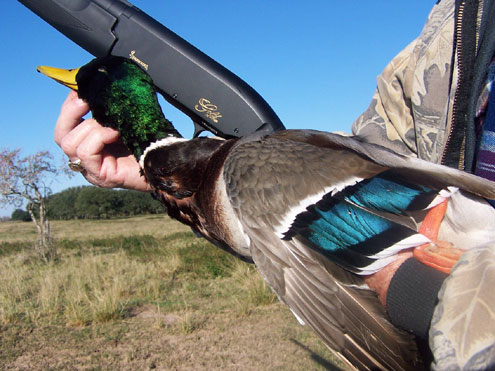
During early season, decoy placement doesn’t seem nearly as important as for late season shooting. I’m currently shooting over 14 mallard decoys but, mallards are the scarcest bird in the area, on this morning’s hunt, we never spotted a single greenhead. Gadwall and widgeon were the major players on this morning’s hunt and I’m convinced if the decoy spread had been mixed species, instead of all mallards, it would have looked more natural to the birds. I plan to incorporate a few teal, gadwall and widgeon decoys into the set up before tomorrow’s hunt.
Birds in our area are flying in relatively small flocks, 10-15 birds being the most common. The smaller number of decoys we’re using currently closely replicates the number of birds seen rafting up on the waters during mid day. Otherwise, with today’s low success rate, I would be tempted to double the number of decoys and set out a couple dozen.
I’ve noted that adjustment to the style and frequency of calling is necessary for smart, late season ducks. That old hen mallard highball or comeback call that might have work on species such as teal and gadwall a month ago is beginning to lose its effectiveness. I’ve been listening to passing birds closely and calling to specific species. If widgeon are present, I leave the ‘quacking’ hen mallard on the lanyard and reach for the whistle.
For the first time this year, I’ve been using a call made specifically for gadwall and so far, it’s been working like a charm. We’re seeing an increased number of green wing teal this season and I’m wondering if the relatively mild winter caused large numbers of teal to hang up in the in the northern climes rather than spending the winter on the coast as is usually the case. In years past, teal became very scarce in the region during the second split. I’ve hunted on the coast this time of year and the marshes and coastal bays are usually full of greenwings.
Each hard cold front pushes more and more ducks south and numbers, at least in the area I hunt, are high but these birds are veterans of the flyway. Hide better, change up your decoy spread until you find the formula the birds respond best to, and try using a spinning wind decoy, I’ve found them very effective, especially during periods of fog or little wind.
HOG HUNTING - If there were an official hog hunting season in Texas, it would be now at the close of deer season. Those corn feeders that distributed corn for deer also attract wild porkers and changes are very good, regardless where you hunt, there are hogs coming to your feeder.
Granted, many will be coming after dark or very late in the evening. I’ve used a unit called a FEEDLIGHT (www.ultramaticfeeders.com) with great results when hog become nocturnal. The light attached to your corn feeder or on a nearby tree or post and illuminates the area under the feeder.
The solar panels insure the battery remains charged. The unit emits just enough light to illuminate the area around the feeder but not so much as to spook the hogs. It’s a good idea to notify the game warden in your area when hunting hogs at night.
OUTDOOR TIP OF THE WEEK: The trophy winter blue catfish bite is going strong on every lake with a healthy population of blues. Drift fishing is a great way to cover lots of water and locate fish. Many pro catters prefer using 5 ought circle hooks for this type fishing. When a catfish picks up the bait and closes it’s mouth, the circle hook simply threads itself into the corner of the fish's mouth. Hard hooksets are not necessary and usually result in pulling the bait out of the fish's mouth. When the rod bows heavily toward the water, simply pull back, the hook will usually be set.
Nothing beats fresh bait for catching blues, fresh shad or fillets from roughfish such as carp of buffalofish work best, the fresher and oiler the better when fishing in cold water. Use a basic Carolina rig with a 4-6 foot leader and place a small floater 6 inches above the hook. This greatly reduces hang ups and makes the bait much easier for the catfish to pick up. Luke Clayton
Listen to OUTDOORS WITH LUKE CLAYTON at www.catfishradio.com . Contact Luke at lukeclayton@prodigy.net