 |
Real Estate
Trinity River Audubon Center debuts with a dedication
By Juliette Coulter, The Coulter Group
Dec 30, 2008
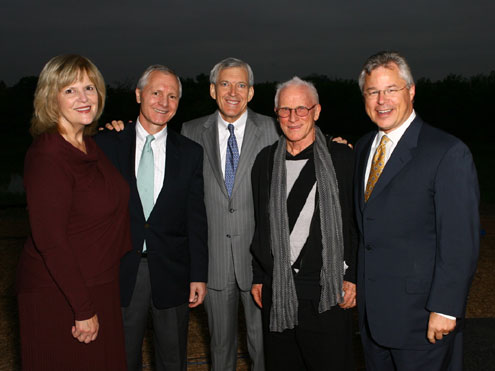
DALLAS, Texas – On October 17, National Audubon Society President John Flicker, Dallas Mayor Tom Leppert, state representatives, city officials and 150 invited guests cut the ribbon and dedicated the new Trinity River Audubon Center (TRAC). On October 18-19, more than 10,000 people attended Natural Connections, a grand opening celebration that included workshops, tours, trail hikes and children’s nature play activities.
Anne Brown, vice president of National Audubon Society, said, “We had an amazing turnout opening weekend as the community was ready to see the Center and to enjoy all the activities that we’ve planned. Also, the building is uniquely designed so that everywhere you are, you are drawn to the outside, with the Blackland Prairie, bottomland hardwood forest and surrounding wetlands. It’s amazing that this site was once an eyesore, but now is helping nature come back to life.”
Built on top of a reclaimed, former landfill, the Trinity River Audubon Center is the first major signature development for the Trinity River Corridor Project, a $2 billion City of Dallas public works project.
A flagship location for the National Audubon Society, TRAC is located just eight minutes from downtown Dallas on 120 acres of the Great Trinity Forest—the largest urban bottomland hardwood forest in the United States. The Center will serve as the gateway to the Great Trinity Forest, which is more than 6,000 acres in all.
In addition to bird watching and outdoor conservation programs and clubs, the Center serves as a teaching facility for 25,000 students, providing them with the option of wet laboratory as well as field-based experiences to help them learn difficult-to-grasp math and scientific concepts.
Already, a couple hundred public school students have attended a field trip at the center since it opened, and their teachers are pleased to have this resource available.
David Martin, 7th grade science teacher at Quintanilla Middle School, said, “I thought the Trinity River Audubon Center hit on some great ways of learning. The students did actual field labs. They got their hands dirty collecting and testing information using real equipment. The students were asked to look for details on our hike; really look at their surroundings and sketch them. The sketching was one of my favorite activities because kids are quick to look and judge. Kids need to learn to be patient, take their time, really use their senses, and be observant.”
Flicker said, “One of my passions and a key priority for Audubon is connecting people with nature, whether they live in urban, suburban or rural areas.” To achieve this goal, and as part of Audubon's effort to engage broader and more diverse audiences, Flicker has overseen the addition of more than two dozen Audubon Centers, including 10 in urban areas such as Los Angeles, Brooklyn and now Dallas. “I envision each Center as the environmental equivalent of a local library, serving as a community resource for enjoying and learning about nature, and a hands-on laboratory for building environmental stewardship.”
“The completion of the Trinity River Audubon Center is a major milestone for Dallas and the Trinity River Corridor Project,” said Mayor Tom Leppert. “It uses reclaimed land that was once an illegal dumping ground, it conserves a 120-acre area of nature in the city, and it provides a living laboratory—an outdoor classroom—for students to have field experiences that will hopefully boost their interest in biology, nature and science.”
A Bird Takes Form
With its roots in bird watching, Audubon wanted a building that reflected its history, but also one that conserves resources and serves as a site for outdoor exploration and education. Designed by Antoine Predock, renowned AIA Gold medal award-winning architect, the Center is sustainably built and LEED® (Leadership in Energy and Environmental Design) Gold level certified, the first Dallas Park and Recreation building to strive for this designation. The building mimics a bird with outstretched wings rising into flight.
Some of the building’s innovative green features:
• Rainwater harvesting system for irrigation
• Energy and water efficiency
• Recycled construction materials (271,000 pairs of blue jeans recycled as insulation and 2.1 million milk jugs recycled into boardwalks)
• Use of Texas-made products
• Green roof on administrative wing of building
• Drought tolerant landscaping with native plants
In addition to educational initiatives and bird watching, the Center offers something for everyone including guided nature walks for visitors of all ages, academic lectures, workshops, nature yoga, exhibits, nature clubs and more. For a complete list of activities, visit www.trinityriveraudubon.org.
Special thanks goes to the following foundations for their generous gifts for the building’s sustainability features: The Meadows Foundation (also for educational programs), The Boone Family Foundation and the Eugene McDermott Foundation.
The Trinity River Audubon Center is open Tuesday-Saturday, 9 a.m.-4 p.m.; Sunday, 10 a.m.-5 p.m. On the third Thursday of each month, the hours are 9 a.m.-9 p.m., with free admission. The Center is closed Mondays and major holidays. Admission is $3 children (ages 3-12); $4 seniors (ages 60+); $6 adults (ages 13-59), and free on the third Thursday of each month. Memberships start at $60.
About The Trinity River Audubon Center:
Sustainably built and LEED-certified gold, the Trinity River Audubon Center is situated on 120 acres of the Great Trinity Forest, the largest urban bottomland hardwood forest in the U.S. TRAC represents a combined $37 million restoration and capital improvement project that was funded and built by the City of Dallas. The Center is a partnership between the City of Dallas and the National Audubon Society. Located just eight minutes from downtown Dallas, TRAC is the flagship for Audubon’s science education and conservation initiatives in Texas. The Center is located at 6500 S. Loop 12, Dallas, TX 75217. More information can be found by calling 214-398-TRAC or at www.trinityriveraudubon.org.