DENTON (UNT), Texas – If you have ever given your pet a bath, then you may be able to imagine how challenging it could be to bathe and handle a wild animal; yet, zookeepers and naturalists regularly need to bathe and provide medical treatment for animals to ensure that they have a safe and happy life.
Students from the Organization for Reinforcement Contingencies with Animals, a student organization at the University of North Texas, are learning about challenges associated with caring for wild animals at the Heard Natural Science Museum & Wildlife Sanctuary in McKinney. ORCA and the Heard Museum have partnered to support the Heard’s non-native animal exhibit. The relationship creates a positive, hands-on learning environment for ORCA students while providing the museum with animal behavior training.
ORCA, which serves as a practicum for graduate students in the Department of Behavior Analysis at UNT, was established nearly a decade ago when Dr. Jesus Rosales-Ruiz, associate professor of behavior analysis, was looking for a way to apply the principles that he was teaching in his classes.
“I did not have a rat lab or a pigeon lab, so I needed a way to illustrate the principles that I was lecturing on in class. So, I suggested that we use the students’ pets, and ORCA grew from there,” said Rosales-Ruiz. “ORCA is now a well-established student association open to all students at UNT. ORCA’s mission is to enhance the lives of animals and their guardians through behavior analytic research and to inform the public about the discoveries.”
Since the creation of the organization, students have provided animal training services to a number of local organizations including the Frank Buck Zoo in Gainesville, the Fort Worth Zoo, Animal Edutainment and the Dallas ASCPA.
Students find the experiences provided by ORCA invaluable. Rosales-Ruiz said that many ORCA students go on to doctoral programs and eventually become professors. Others become behavior specialists for zoos or other animal related organizations. Regardless of their career path, Rosales-Ruiz said that the experiences accumulated in ORCA give students a clear advantage as they apply for jobs and doctorate programs.
Erica Feuerbacher, who served as the 2007-2008 ORCA president, said that she was drawn to the UNT behavior analysis program after meeting Dr. Rosales-Ruiz at an animal training conference. Feuerbacher, who received her undergraduate degree from Arizona State University and attended graduate school at the University of California at Berkley before enrolling at UNT, said that UNT’s program is truly unique. She said that after hearing about ORCA from Dr. Rosales-Ruiz, she knew that she needed to enroll in the behavior analysis program at UNT.
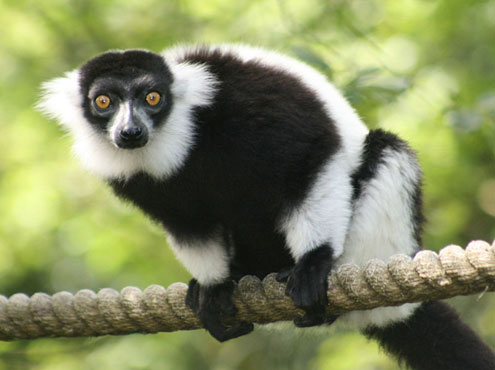
Feuerbacher currently is helping socialize the Heard Museum’s lemurs, particularly one that had an injury to her tail and has needed continuous medical attention.
ORCA’s partnership with the Heard Museum, which began during the fall 2008 semester, has already yielded results including calmer kinkajous and more social lemurs.
“In the long run their efforts will make daily maintenance and medical treatment of our animals more efficient and cost effective,” said Michele Dudas, Lead Naturalist/Animal Curator at the Heard Museum. “The work of the students will also help save the staff a lot of time and reduce anxiety in the animals during handling.”
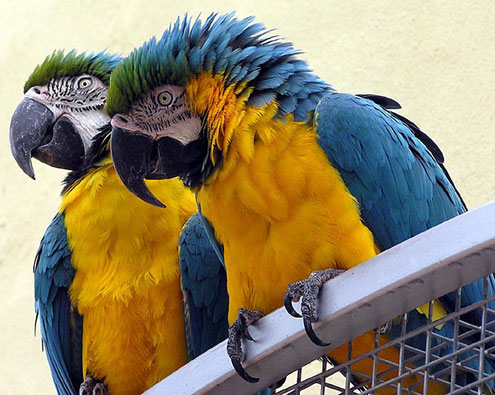
ORCA students are also training the museum’s macaws and handlers so that large birds and other animals may someday be used for educational presentations.
The Heard Museum education staff is being trained so that they will be able to continue animal training, even when the students are not present.
In addition to their volunteer work, ORCA students also participate in research and community service. Once a semester the students invite a well-known behavior analyst to campus to present. The students also present their own research to their guest, so that they can get feedback from a top professional in the industry.
This semester the students will host Alexandra Kurland, a professional horse trainer and a pre-eminent clicker trainer. Kurland will give a presentation on the utility of clicker training horses to build more confident, eager and willing horses. Kurland will speak Dec. 5 (Friday) from 4 to 7 p.m. in Room 125 of the Environmental Education, Science and Technology Building, which is located on the west side of Avenue C between Mulberry and Hickory.
Along with the lecture, which is free for UNT students, faculty and staff, she will be giving a two-day introductory clicker training clinic at a local barn. For information regarding Kurland’s lecture or clinic contact Feuerbacher at orca.unt@gmail.com.
The University of North Texas is a student-centered public research university and the flagship of the UNT System. One of Texas' largest universities, UNT offers 99 bachelor's, 104 master's and 49 doctoral degree programs, many nationally and internationally recognized. UNT is the choice of nearly 35,000 students. Discover the power of ideas.