
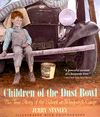
If you have read and found John Steinbeck’s The Grapes of Wrath compelling, I urge you to read Children of the Dust Bowl: The True Story of the School at Weedpatch Camp. This fascinating true story by Jerry Stanley was the 1993 winner of the Orbis-Pictus Award for Children’s Nonfiction. Set in the 1930s at the emergency farm-labor camp immortalized in Steinbeck's The Grapes of Wrath,
Okie travelers were looking for paradise in California, a place where they could find the work so enticingly described in handbills that had been distributed all over Oklahoma. Instead, after driving for months in broken-down jalopies, they were met with shouts of “Okie, go home!” and assaulted with signs that said: NO JOBS HERE! IF YOU ARE LOOKING FOR WORK—KEEP OUT! Young girls were called “Maggie,” a disparaging term meant to incorporate two words: migrant and maggot. “Because they spoke differently and wore shabby clothes, the Okies couldn’t hide who they were, even if they wanted to, and surely there were times when some Okies wished they weren’t Okies.” (p. 36)
The Okies’ lives began to change with the help of one man who cared about them. Leo Hart had seen the effect of the Okie children attending public school. They were constantly treated with disdain by students, parents and even teachers, who made them sit on the floor at the back of the classroom. Leo’s plan was to have the Okie children build their own school in a field next to the farm labor camp.

Weedpatch children preparing their meals
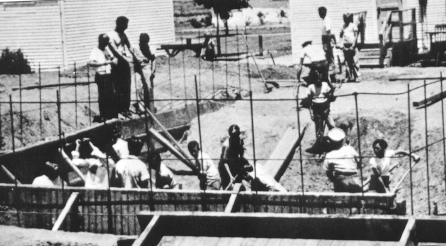
Weedpatch children digging the first public swimming pool in Kern County, at Weedpatch Camp (photos from http://www.weedpatchcamp.com/)
I have read The Grapes of Wrath, but was not as moved by Steinbeck’s book as I was by the real stories and authentic photographs of people who lived through this ordeal. The last chapter is perhaps more revealing than any of the others as Stanley outlines the successful lives created by some of the children of Weedpatch School as they grew up to be attorneys, business owners, teachers, and other productive members of the state that so despised them in the thirties.