

As Lake Tawakoni guide George Rule eased the throttle back on his boat and we approached Two Mile Bridge, a huge flock of Cormorants (water turkeys) were visible in the northern sky. Each year, these voracious fish-eating birds winter on lakes in North Texas and most of the southern states.
As is the case with everything in the natural world, Cormorant are neither good nor bad, they just do what they were genetically programmed to do: eat fish and LOTS of fish! Granted, small pond owners despise these birds when they move in to chow down on stocked bass or catfish, and rightly so but understanding the habits of Cormorants on the larger reservoirs is a definite plus for the catfish angler.
Rule has them figured out!
“There are several hundred birds getting up from their roost trees,” Rule said, pointing to the big flocks a mile or so distant. “We could have been here at daylight and fished under the roosts and caught lots of fish for the first hour or so of light. This is pretty much finesse fishing, using the trolling motor to quietly approach the trees that are situated in shallow water, then casting baits up close to the trunks. The ‘splat’ made by the bait mimics the sound of the bird’s droppings hitting the water and serves as a dinner bell to the fish. The catfish are there, under the trees, feeding on dropping from the Cormorants but they are extremely spooky. Many of the catfish stage under roost trees in water 15-18 feet deep along the submerged Sabine River channel. These are the fish we will be targeting today.” Rule added.
My friend Buck Criner was fishing with us this morning and this was his first time to experience the awesome catfish bite that usually occurs around the Cormorant roosts. Buck is a rabid golfer but I’ve spend some time fishing with him on past occasional and learned he’s also pretty darned good at setting the hood on a catfish or striper! Probably those many years he spent as a fire fighter for the City of Farmers Branch that honed his reflexes! Whatever the reason, he put three fish in the boat for every one Rule and I landed. Of course Rule and I, both veterans of fishing the Cormorant roosts, kidded that we were only giving instructions, not seriously fishing!
The day before our trip, Rule’s two clients limited out on channel catfish (50 total) in 48 minutes and limits of fish in a couple hours has been the norm for the past month or so. Yes, George keeps tack of such things. The season’s first stiff northern had blown in the night before our trip and the wind was still whistling at about 15 knots.
“This might slow the bite a little but the fish should be active," Rule said. "We’re fishing in about 18 feet of water and birds have been roosting in this tree we tied to for a couple weeks. The river channel, situated a short cast away, serves as a travel route for the catfish as they move from shallow to deep water. We ought to do pretty well here.”
Rule fishes exclusively with Danny Kings Catfish Punch bait, which comes in original, blood and garlic flavors. Rule instructed Buck on the proper way to ‘bait up’ with punch bait and we noted Buck was doing battle with the first fish of the morning before our baits and settled down close to bottom.
The bite was very steady but with the passage of the strong cold front, subtle changes were observed by the veteran guide.
“Just yesterday, the fish were hitting the baits hard. Today, they are just grabbing the baits in their mouths. As soon as you feel the most slight tap or if your line goes slack, set the hood hard," instructed Rule.
Rule prefers a rod with a soft tip for catfishing. To be successful catching tentative biting fish, one has to keep an eye on both the rod tip and the line. Catfish often move under a bait and come up with it, resulting in slack line. This is probably the most difficult thing to learn about setting the hook on catfish. It’s human nature to jerk back when a fish is actually pulling on the line. Setting the hook on a slack line seems to go against everything we have learned about fishing but learning this one trick will increases one’s catfish prowess by about thirty percent.
After a couple hours of steady action, we reached out limit and we untied the boat’s bow rope from the ‘water turkey’ roost tree. In the ice chest were fifty chunky channel catfish that would equate to 100 fillets back at the cleaning station.
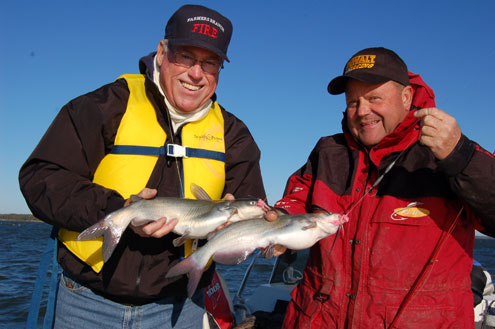
Catfish are on an awesome bite at Lake Tawakoni. Guide George Rule (rt) and Buck Criner landed limits of these ‘good eaters’ in a couple of hours. photo by Luke Clayton
Most of the fish were in the 2-4 pound range, perfect for eating. Rule also runs trophy blue catfish trips where fish in the 20-30 pound range are an everyday occurrence. Most trips produce at least one 40-pound plus trophy. Rule’s clients have the option for the nonstop action we experienced on our outing or ‘trophy hunting’ for the giant blues the lake is famous for.
“Some of my clients like to tie up and fish under the roost trees like we did today and catch a box of eating fish, then do some drifting for the big blues," Rule remarked. "Others like to head straight for the submerged humps and fish strictly for the big fish.”
I’ve fished with Rule for the trophies and for the eater catfish and enjoy one trip as much as the other. Anytime I can feel the tug of a catfish on my line, that I know will later be the centerpiece of a big fish fry, I’m a happy camper. Buck and I left Rule there at Anchor Marina making plans for out next outing. We each had a big freezer bag filled with fillets. Life is good!
To book a trip with guide George Rule, call 214-202-6641 or go online to www.trophycats.com.
Listen to Luke’s weekly outdoors radio show at www.catfishgold.com