

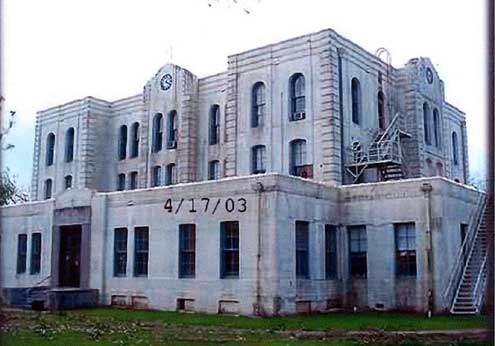
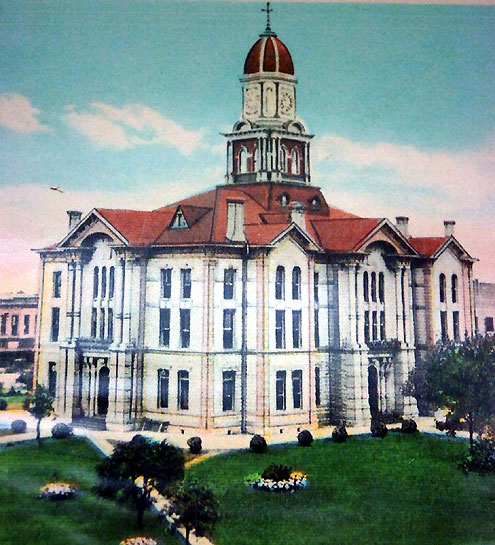
If someday a majestic, fully restored 1888 Fannin County Courthouse once again draws visitors from near and far to downtown Bonham, people can point to the regular meeting of the Fannin County Commissioners Court Monday morning as the day the process began.
Fannin County Commissioners voted unanimously to create a special fund for donations to restore a courthouse designed by prominent architect W.C. Dodson and built in the 1880s, a period described as the golden age of Texas courthouse construction.
According to the Texas Historical Commission, Texas has more historic courthouses that any other state, with 225 courthouses over 50 years old and 80 built before the turn of the century.
When the National Trust for Historic Preservation included Texas courthouses on its 1998 list of “America's 11 Most Endangered Historic Places," the Texas Historic Courthouse Preservation Program was set up to award grants that could save these regal "Temples of Justice" from falling into disrepair and eventual abandonment.
The Fannin County Historical Commission will now work with the Commissioners Court to study how Fannin County can become eligible to receive grants.
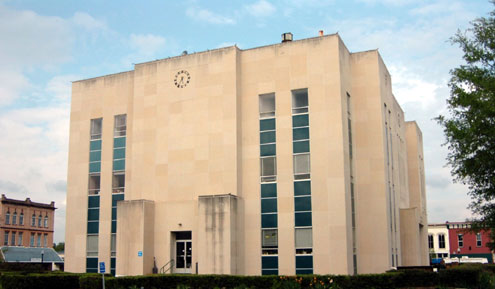
When Red River County recently renovated their courthouse, the county's historical commission played an important role in the process. All donations earmarked for the restoration of the courthouse were deposited into a dedicated account by the Red River Historical Commission, a 501 (c)(3) organization, so the donations could be deducted as charitable contributions. When the appropriate time came, these funds were then transferred to Red River County for the sole use of restoration of the courthouse.
Counties typically must raise 15% of the funds required for renovation and state grants account for 85% of the money.
Early estimates indicate it would take approximately $6 million to completely restore the Fannin County Courthouse to the impressive structure's original splendor. That would mean the residents and former residents of Fannin County would need to raise $900,000 from donations and fundraisers.
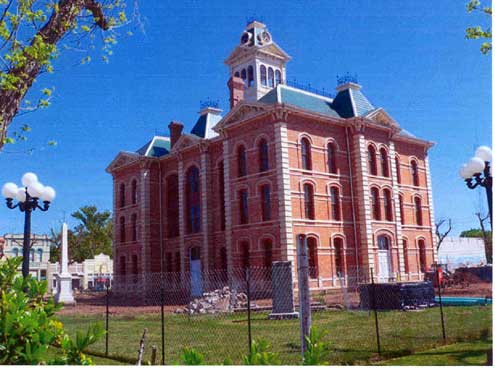
Once courthouses are restored to historic status, traffic increases to downtown businesses and in Wharton County, for example, businesses then began renovating storefronts to match a magnificent courthouse that had become the flagship of the county.
Many challenges will need to be addressed during this process. But if the residents of Red River County, Lamar County and Wharton County were equal to the challenge, someday the same may be said of Fannin County.
To find a shining example of rising to the challenge, look no farther than Bonham Public Library. The library's board of directors and patrons decided the city deserved a great library and they set about making it happen, but the total cost of renovating the library was estimated to be $736,000.
People said it couldn't be done.
In a remarkable display of teamwork, the City of Bonham contributed $275,000 while a dedicated library board managed to raise over $460,000 to make their dream a become reality. Bonham now has a public library any town would be proud of and a lot of people learned a valuable lesson: Don't ever tell a determined group of women something can't be done.
Restoring the Fannin County Courthouse will take teamwork and hard work. It will require donations of all sizes and endless fundraisers. It will take determination. And maybe those that will say it can't be done just need a ride down East 5th Street to visit the Bonham Public Library.
Fannin County Commissioners also discussed the sale of TXU to Kohlberg Kravis Roberts & Co. and Texas Pacific Group.
"It seems like a move in the right direction," Fannin County Judge Derrell Hall remarked. "I would urge this court to support this resolution."
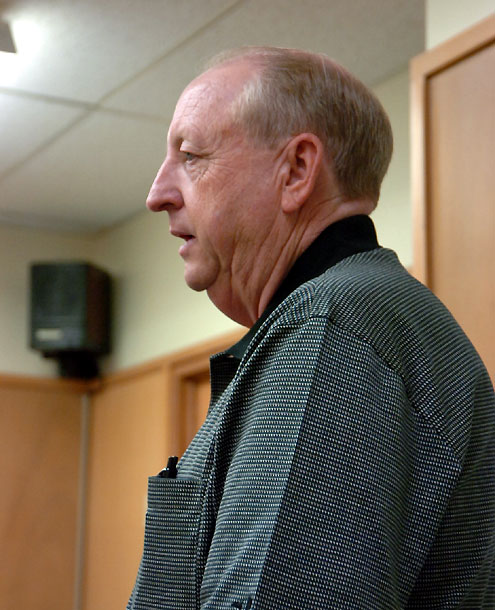
The resolution passed by a unanimous vote.
Commissioners also discussed a topic many counties are grappling with now; Groundwater Management Districts mandated by TCEQ. Although the underlying reasons behind the TCEQ mandate are commendable, Fannin County is rather unique in that our aquifer levels have been stable for 50 years. In addition, Fannin County is sacrificing 20,000 acres to the formation of a reservoir that will guarantee surface water supplies not only for the county, but for much of North Texas as well.
However, it would cost as much to scientifically document and verify the aquifer status as it would cost Fannin County to join with Grayson and Cooke counties to form a three-county Groundwater Management District.
Although Fannin County would prefer to "opt-out" of the Groundwater management District provisions, if that option doesn't exist the second choice would be to work with counties that have a history of working well with Fannin County. The worst-case scenario would have TCEQ forcing Fannin County into a 19-county Groundwater management District with counties that don't share our interests.