With an ample supply of Texas-grown Virginia pine and imported varieties like Fraser fir from other U.S. states, Texans should have plentiful options to choose from as they select this year’s live Christmas tree, according to Texas A&M AgriLife experts.
"I've visited a couple of farmers, and their crops look excellent,” said Fred Raley, Ph.D., Texas A&M Forest Service tree improvement and nurseries department head, Bryan-College Station. “Despite summer drought conditions, we had a really wet spring that resulted in a lot of good growth.”
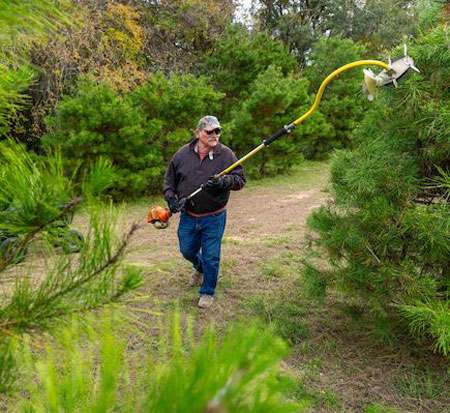
In addition to timely spring rains, many Texas Christmas tree farms also rely on irrigation to mitigate stress during the state’s notoriously dry, hot summers, said Andrew King, Ph.D. Texas A&M AgriLife Research ornamental specialist and assistant professor in the Texas A&M Department of Horticultural Sciences, Overton.
Ongoing demand for live trees expected to continue
Raley leads the Texas A&M Forest Service’s Virginia Pine Tree Improvement Program, which provides members of the Texas Christmas Tree Growers Association with a steady supply of improved seed stock selected for survival, growth rates and marketability across various ecoregions.
“We have doubled the size of our seed orchard to meet the needs of the Texas Christmas Tree Growers Association,” Raley said. “New grafted trees were also established this year and more will be established next year.”
Raley said an estimated 26,000 native-grown Christmas trees were cut in Texas last year.
To ensure Texas Christmas tree growers can replenish their inventory, Raley and his team annually harvest around 150,000 seeds to supply the state’s more than 200 farms.
“Over the next five-year period, projected sales of live trees remain steady, and I’m working to build up our inventory,” he said.
Expanding options beyond Virginia pine
Raley said Virginia pine remains the standard for most Texas Christmas tree growers, with about 20-25% also growing Leyland or Murray cypress.
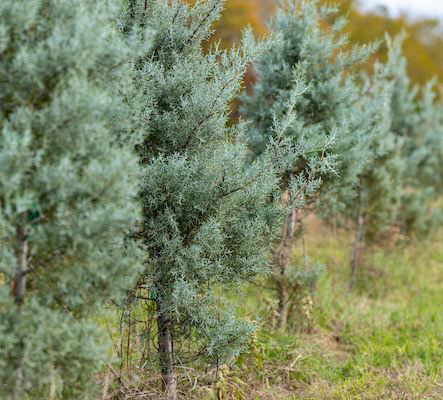
To expand consumer options, Raley said about one-third of Texas growers also import Fraser firs to sell alongside Virginia pine.
“It is difficult to expand species choices, mostly due to the susceptibility of potential alternatives to cotton root rot,” he said.
Raley said cotton root rot is a limiting factor for Afghan pine, a species well suited for the soil and climate of Central and Southwest Texas.
Currently, Christmas tree producers growing Afghan pines in the Hill Country are struggling with cotton root rot, but he hopes to find a potentially resistant strain to support the expansion of this species as a viable tree crop.
King said these alternative species can help producers fill a niche and satisfy customers who may prefer a non-pine tree for the holiday season.
Aging producers, ongoing demand provide opportunities for new growers
Reflecting demographic trends across much of the agriculture industry, some Christmas tree producers are aging out of the business.
Raley and King said that while this may result in a small decline in Christmas tree farms at some point, it also provides an opportunity for younger individuals or families interested in participating in Texas’ $39 billion ornamental horticulture or “green” industry.
Because Christmas tree farms can operate on as little as 5-10 acres, producers can incorporate this crop into broader operations.
King said some of the most successful Christmas tree farms go beyond simply growing trees to provide a full agriculture tourism experience across seasons — from pumpkin patches and train rides in the fall and winter, to cut flowers and pick-your-own produce in the spring and summer.
“The key thing is that there is ongoing demand and potential for growth and diversification in the Texas Christmas tree industry,” King said. “There is a lot of opportunity looking forward.”