Fall is prime season for one of gardening’s most common crimes: improper tree planting. You’ve probably seen it. A beautiful new tree planted in a perfect circle of mulch piled high against the trunk like a chocolate lava cake. It may look tidy, but that “volcano mulch” is actually harming the tree.
When mulch piles up against the trunk, moisture gets trapped against the bark. This can lead to decay, insect problems, fungal diseases, and roots that circle the trunk instead of growing outward. Over time, these girdling roots can slowly strangle the tree they were meant to support.
Instead, spread mulch in a wide, flat ring around the tree, keeping it three to six inches away from the trunk. Think “donut,” not “volcano.” The mulch should be 2 to 3 inches deep and extend as far out as possible—ideally to the tree’s drip line, the area beneath the outermost reach of the branches. Most of a tree’s absorbing roots are in the top eight to twelve inches of soil, where oxygen, water, and nutrients are most readily available.
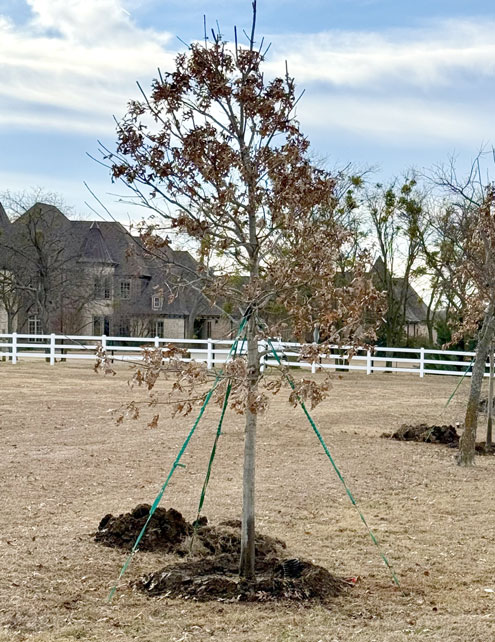
Trees should never be planted too deeply. Before planting, locate the root flare—the place where the trunk widens and transitions into roots. That flare should be visible at or slightly above the soil surface after planting. If you can’t see the root flare when you purchase the tree, don’t assume it isn’t there. Many nursery-grown trees arrive with excess soil or potting media covering the flare.
Plant the tree in a hole two to three times wider than the root ball but no deeper than the root ball’s height. One of the most common mistakes gardeners make is digging a hole too deep, allowing the root flare to be buried below grade. Trees may survive this mistake for years, but they rarely thrive.
Another surprise for many gardeners: research shows that using the native soil removed from the planting hole often produces better long-term results than creating a pocket of rich soil. When roots encounter a dramatic difference between the planting hole and surrounding soil, they may be reluctant to venture outward.
Once planted, water thoroughly and consistently. Fall-planted trees and shrubs benefit from cooler temperatures, but they still need regular watering through winter and into spring while establishing their root systems. Use a cycle-and-soak approach on clay soils and maintain moisture to a depth of eight to twelve inches the first year and twelve to sixteen inches the second year.
Think of planting as an investment. The extra minutes spent finding the root flare, digging the proper hole, and applying mulch correctly can add decades to the life of a tree.
References:
How do I care for my tree? Properly watering trees. (n.d.). Denton County Master Gardeners Association. Retrieved September 10, 2026, from https://www.dcmga.com/al-caring-for-trees-properly-watering-tree
How to plant a tree - Texas A&M Forest Service. (2026, September 8). Texas A&M Forest Service. https://tfsweb.tamu.edu/about/news/texas-arbor-day/how-to-plant-a-tree/
TreePlantingTools. (n.d.). https://texastreeplanting.tamu.edu/TreePlantingTools.html
Happy Gardening!