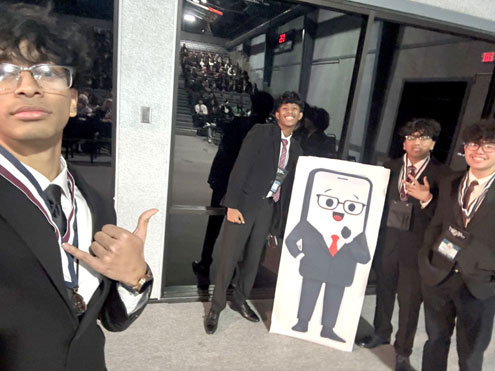
Technology has become an important part of everyday life for young people. Students use laptops for school, phones to communicate with friends and family, and screens for entertainment. While technology can be useful, spending too much time on screens can make it harder for young people to focus on other important parts of life. A group of North Texas students recognized this issue and created Descreened, a student-led nonprofit that encourages healthier and more intentional relationships with technology.
Descreened does not believe that technology itself is bad. Instead, the organization focuses on finding a healthy balance between digital and offline activities. Its leaders encourage young people to continue using technology for education, communication, and creativity while also making time for hobbies, physical activity, friendships, and other experiences that do not involve screens. This approach is different from simply telling teenagers to stop using their phones because it gives them meaningful alternatives.
One of Descreened's major projects is its screen-free activity kit initiative. The organization has donated approximately 40 kits through Health Services of North Texas. These kits give children activities they can enjoy without a phone, tablet, or television. The idea is that reducing screen time is easier when children have interesting activities to replace it. These activities can encourage creativity, problem-solving, movement, and interaction with other people.
Descreened has also worked to understand how students themselves experience technology. The organization has surveyed more than 1,000 students about their technology habits. Through its programs and initiatives, Descreened reports that approximately 250 students have reduced their screen time, with participants reporting an average decrease of about one hour and 49 minutes. These results show how students can take an active role in addressing an issue that directly affects their generation.
Another important part of Descreened's mission is encouraging young people to spend time in community spaces, sometimes called "third places." Libraries, parks, recreation centers, and other public spaces give young people opportunities to socialize and build relationships outside of home and school. Descreened believes these spaces are especially valuable as more communication and entertainment move online. Activities such as playing sports, creating art, playing board games, spending time outdoors, or simply having a conversation can help young people reconnect with the world around them.
Ultimately, Descreened is trying to create a different conversation about technology. The organization does not ask young people to give up smartphones or return to a world without technology. Instead, its student leaders encourage their peers to be more thoughtful about when they use technology and when they should put it down.
As Descreened continues to grow, it plans to expand its screen-free programs, create more educational resources, strengthen community partnerships, and reach more children and families. Its goal is not simply to reduce screen-time numbers, but to help young people make more room for meaningful experiences that cannot happen through a screen.