Behind the hashtags, survivors are still fighting not just for justice, but for belief, protection, and care in systems that too often fail them.
The ongoing fallout from the Jeffrey Epstein case has made this painfully clear. Many survivors have since described feeling “re-victimized,” not just by what happened to them, but by how systems continue to handle their trauma.
We are being reminded that time does not invalidate trauma. The recent revelation by Dolores Huerta that she experienced sexual assault decades ago and carried that experience in silence for more than 60 years has sparked conversation across generations. Predictably, it has also drawn questions: Why now? Why wait so long? But those questions miss the point.
Survivors do not owe the world a timeline.
For many, silence is not a choice, it is a form of survival. It is shaped by fear, by power imbalances, by cultural expectations, and by the very real consequences of speaking out in environments that punish rather than protect.
Sexual violence remains one of the most pervasive and underreported crises in the United States. According to the National Sexual Violence Resource Center, drawing on CDC data, approximately 1 in 5 women and 1 in 71 men in the United States will experience rape or attempted rape in their lifetime. Survivors exist in every space: students navigating unsafe school environments, employees facing harassment in workplaces, patients in hospitals and doctors’ offices, and individuals in their own homes.
And too often, when survivors come forward, they are met first not with support but with doubt and questions. That is where the harm compounds.
Beyond the act itself, one of the most devastating barriers survivors face is disbelief from family, friends, colleagues, and the very institutions meant to protect them. When a survivor is questioned, dismissed, or silenced, the trauma does not end it deepens. Healing becomes harder. Reporting becomes less likely. And perpetrators remain emboldened.
This is why trauma-informed training is not optional, it is essential.
In schools, HR department, hospitals and healthcare settings, trauma-informed care can mean the difference between a survivor receiving compassionate support or leaving feeling violated all over again.
And this work must extend beyond institutions into our personal lives. Believing survivors is not a passive act, it is an active choice. It requires listening without judgment, resisting the urge to question credibility, and understanding that trauma does not present in neat or predictable ways.
At the same time, access to care including reproductive healthcare is a critical and often overlooked part of supporting survivors. The Women’s Reproductive Rights Assistance Project (WRRAP) provides funding for abortion and emergency contraception, including for survivors of sexual assault, domestic violence, and incest ensuring that those navigating trauma are not further burdened by financial barriers or forced pregnancy. Over 10% of those WRRAP served have reported sexual assault and this figure is only of those who reported, many do not.
In a post-Roe landscape, support is more critical than ever.
Across the country, many traditional systems of care have been weakened. Clinics are overwhelmed. Funding has been cut or restricted. Survivors, particularly those who are low-income, undocumented, young, or living in abortion deserts face compounded barriers to accessing the care they need. WRRAP steps into that gap, working nationally but impacting communities locally, helping ensure that survivors can make decisions about their own bodies in the wake of trauma because autonomy is part of healing.
And yet, even as WRRAP does this work, systemic change remains slow unless it is demanded.
Denim Day reminds us that clothing is never consent. But if we stop at awareness, we risk mistaking symbolism for progress.
Because the reality is this: survivors do not need more awareness. They need action. They need to be believed whether they speak out immediately or after 60 years. They need institutions that are trained, prepared, and accountable. They need access to care, including reproductive healthcare, without barriers or judgment. And they need a system of government that reflects their reality, not one that protects power at their expense.
April is not just about Sexual Assault Awareness Month and Denim Day, it is about what we do the other eleven months of the year. So wear denim. Start the conversation. But go further.
Believe survivors when they speak on their timeline, not ours. Demand trauma-informed policies in your workplace, your child’s school, your healthcare system and elsewhere. Support organizations doing the work on the ground. And show up at the ballot box, in your community, and in coalition with others to build a system that no longer asks survivors to carry the burden alone because justice is not symbolic.
--------------------------------------
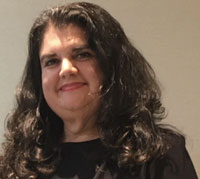
Sylvia Ghazarian is Executive Director of the Women’s Reproductive Rights Assistance Project (WRRAP), a nonprofit abortion fund that provides urgently needed financial assistance on a national level to those seeking abortion or emergency contraception. She is an active Council member on the California Future of Abortion Council and past Chair of The Commission on the Status of Women.