Anne Holt doesn’t talk about conservation as an abstract idea. For her, it’s something lived, day in and day out, across generations, landscapes, and responsibilities.
As Vice-Chair of the Pedernales Soil and Water Conservation District (SWCD) #218, Holt brings more than two decades of experience to theSWCD. But her connection to the land stretches far beyond her years of service; it’s rooted in a family legacy of stewardship, innovation, and a deep respect for the natural world.
Holt’s conservation story begins with her parents, who instilled in her a lifelong connection to the outdoors.
“I would say my father and mother,” she said when asked who laid the foundation for her success. “They were always in tune to the outdoors.”
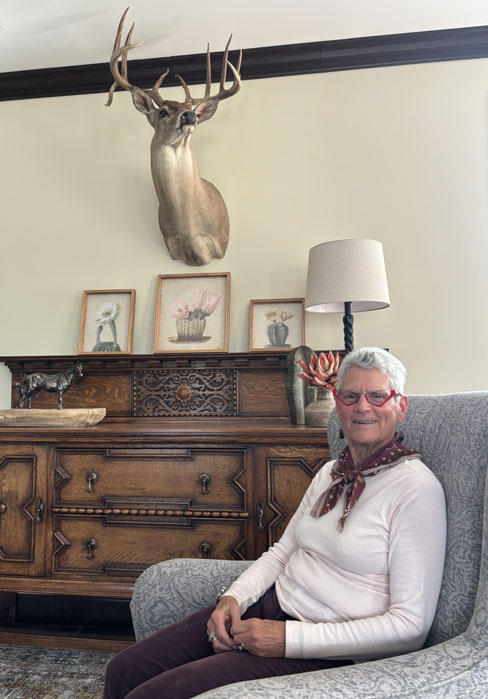
From weekends spent hunting and fishing as a family to managing working ranches across Texas today, those early experiences shaped her understanding of stewardship. The Holt family now operates ranches in Blanco, Goliad, and Presidio counties, each with its own unique challenges and ecosystems.
Despite increasing development pressures, particularly in Central Texas, Holt remains committed to keeping those lands intact.
“If you don’t have to sell a ranch, there’s no need to sell it,” she recalled her nephew saying, a sentiment that reflects the family’s shared vision for the future. That vision isn’t just about preservation, it’s about purpose. The Holt ranches are working lands, actively managed and continuously improved, with the next generation already stepping into their roles as stewards.
Holt’s perspective on conservation is also shaped by her family’s deep ties to agricultural innovation. Through Holt Caterpillar, her family played a role in advancing equipment that transformed land management across Texas. The family’swork dates back generations and includes connections to historic operations like the King Ranch.
For Holt, innovation and conservation aren’t opposing forces, they’re partners.
From multi-use equipment that allows a single operator to manage large properties, to evolving technologies in agriculture, Holt sees innovation as a necessary tool, especially as fewer people enter the industry.
At the same time, she recognizes the broader challenges facing agriculture today. “We’re growing more food on less acreage,” she said. “And that’s the key.”
Managing land across multiple regions of Texas has given Holt a unique perspective on conservation. Each ranch requires a tailored approach, from brush management in arid West Texas to wildlife habitat development in South Texas.
In Presidio County, Holt worked with the United States Department of Agriculture-Natural Resources Conservation Service (USDA-NRCS) to implement a conservation plan focused on controlling invasive creosote and promoting grass growth, an effort that required both aerial and mechanical treatments.
“It worked,” she said simply.
In Goliad County, the family took a different approach; developing a wetland in a naturally low-lying area with support from the U.S. Fish and Wildlife Service. The result is a thriving habitat that attracts a wide variety of species, from ducks and quail to sandhill cranes.
But if there’s one lesson she’s learned across all landscapes, it’s this: conservation is never finished. “It’s ongoing. It never stops,” she said.
Holt’s decision to join the Pedernales SWCD was a natural extension of her lifelong involvement in agriculture and leadership roles.
“Conservation is important to me,” she said. “ I thought I could do something to help the county.”
Over the years, she’s seen the role of local conservation districts evolve, especially as traditional agriculture gives way to smaller properties and non-traditional landowners. That shift has required districts to adapt, rethink outreach, adjust field day topics, and find new ways to connect with a changing audience.
Still, Holt believes the core purpose of SWCDs remains the same: local leadership, grounded in partnering with landowners to provide technical and financial assistance in order to protect soil and water resources.
“It’s the only way that local people are going to get information and resources from state and federal partners,” she said.
If there’s one area Holt is especially passionate about, it’s youth engagement.
“That’s the only way we’re going to pass on conservation,” she said.
From supporting educational programs to hosting annual youth hunts at her ranch in Blanco County, Holt is committed to giving young people hands-on experiences that connect them to the land. Her own experiences as a lifelong hunter have also shaped her understanding of conservation, not just as resource management, but as a relationship.
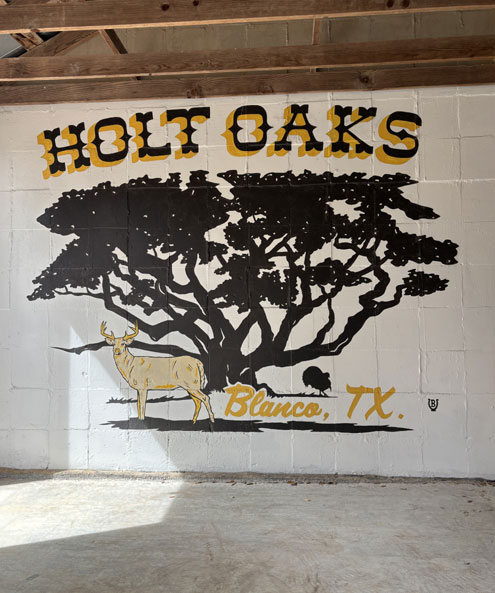
With the ever changing climate conditions, increasing population and continued land fragmentation, the challenges facing natural resources in Texas are complex. But Holt remains grounded in a simple belief: conservation starts locally, with people who care.
From her family’s legacy to her leadership on the SWCD board, Holt’s story is one of continuity, carrying forward what was built before her, while adapting to what lies ahead.
And in a rapidly changing Texas landscape, that kind of steady, thoughtful stewardship is more important than ever.