Texas A&M AgriLife experts share
how to avoid bites and coexist peacefully
As temperatures warm across Texas this spring, you may start seeing more snakes around your home and outdoor areas.
These reptiles become more active as they emerge from brumation — a state similar to hibernation in mammals. While encounters may increase this time of year, understanding snake behavior and following a few simple safety tips can help reduce fear and lower the risk of a bite.
Experts from the Texas A&M College of Agriculture and Life Sciences share five essential tips to help you stay safe while enjoying the outdoors.
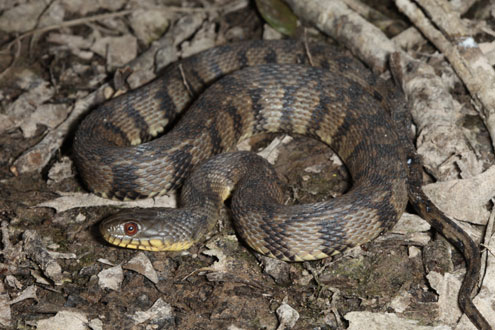
Tip 3: Make the area around your home less inviting to snakes
Hibbitts said no chemical repellants have been proven to deter snakes. However, you can make your yard less attractive to snakes with simple maintenance.
To discourage snakes from visiting your yard:
- Keep grass short and trim overgrown vegetation.
- Remove woodpiles, debris and clutter where they could hide.
- Control rodents and insects, which attract snakes looking for food.
Some species, like rat snakes, seek food in chicken coops, barns or outdoor sheds. Securing these structures can help keep snakes out.
Tip 4: Ignore the myths and appreciate snake benefits
Walkup said snakes are not naturally aggressive and prefer to avoid humans.
“You may periodically hear stories about a snake ‘chasing’ someone, but in reality it is most likely trying to flee,” Walkup said. “The person may just be standing in the way of its closest cover.”
Snakes also play an important role in nature by helping control insects and small mammals. Understanding these benefits can help reduce fear and encourage people to leave them alone.
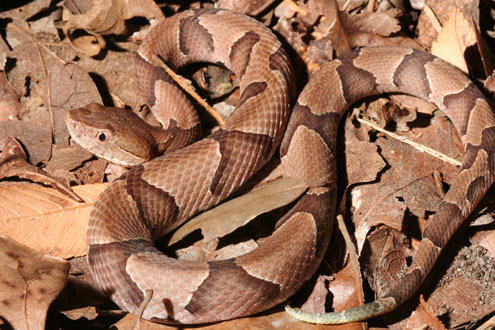
Tip 5: Understand snake habitats and behaviors to protect you and your pets
Hibbitts noted that learning where venomous snakes typically live can help you watch out for them to prevent close encounters.
Examples of where venomous snakes are commonly found:
- Copperheads often blend into leaf litter and can be found in woodlands and grasslands.
- Cottonmouths are usually found near water, such as creeks, ponds and springs.
Pet owners should also take precautions to reduce the chance of their pets encountering a snake, such as keeping them on a leash during walks.
Snakes typically bite only as a last resort when they feel threatened. Even when venomous snakes bite people, about half of those venomous bites are “dry,” according to the Texas Department of Health and Human Services. A dry bite means no venom was injected, as snakes often conserve their venom for prey.
Despite this fact, Hibbitts emphasized that all bites should be taken seriously. If bitten, seek medical attention immediately, especially if the species is unknown.
Need local, expert advice?
Speak with an AgriLife Extension agent about relevant resources and programs tailored for your county.