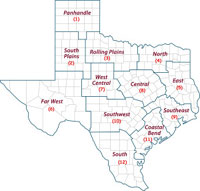
Panhandle
The district experienced another week of mostly sunny, dry and warm weather. Overall soil moisture levels were very short to short. Conditions were good for the growth and development of small grains, but winter wheat was in poor to fair condition. Growers continued with field preparation for planting. Some producers were prewatering for summer crops. Producers were beginning to relocate herds from fields with carryover corn and sorghum residue to other pastures so field preparation could resume. Pasture and range conditions were very poor to fair.
South Plains
Subsoil and topsoil moisture levels were short to adequate, but winds depleted moisture, and rainfall was needed. Producers prepared fields for planting and began fertilizing. Some irrigated acres were prewatered for corn while winter wheat and other small grains continued to receive irrigation. Herbicide applications were underway on potential corn acres, and some potato planting began. Wind and heat were expected to challenge fieldwork in the coming week. Cattle remained in good condition overall, but producers grazing stocker cattle on wheat relied on supplemental feed to maintain body condition.
Rolling Plains
Dry, windy conditions rapidly depleted topsoil moisture. Warm temperatures and persistent winds stressed wheat, though properly stocked wheat pastures continued to support stocker cattle. Some producers began topdressing wheat and planting oats. Wheat generally held up well with no rust reported. Most field preparation for cotton and hay remained limited but was expected to increase soon. Burn bans were in effect due to elevated wildfire risk. Supplemental feeding of livestock continued, and calving season progressed.
North
Counties across the region received 0.5-2 inches of rainfall this past week, with many areas recording up to 1.5 inches. Additional rainfall was projected for the coming week. Despite this improvement, conditions remained dry overall. Topsoil and subsoil moisture levels were short to adequate. Pasture and range conditions were fair to good. Rainfall helped stimulate cool-season growth, and winter wheat responded very well and looked strong. Corn planting began in several areas. Spring pastures were starting to green up, and livestock appeared to be easing slightly on hay consumption. Fruit and vegetable activity has also begun, with fruit trees like plums starting to bloom, and tomato transplants set out. A burn ban remained in effect for some counties. Livestock remained in good condition. Feral hog activity remained high.
East
Many counties remained in drought. Subsoil and topsoil conditions were adequate to short. Panola County reported rainfall that significantly improved soil moisture levels, and several others received rainfall, but not enough to restore the soil moisture. Pasture and rangeland conditions were fair. Marion County reported a tornado caused widespread damage to homes and fences, and killed or injured several cattle. Gopher and mole control was underway, and wild pig activity was reported.
Far West
Dry conditions persisted across most of the district, with only scattered light showers reported. Topsoil and subsoil moisture levels remained short, and pasture growth was limited. Producers continued field preparations for spring planting, including terminating some wheat and preparing ground for cotton. Some irrigated acres received water ahead of planting corn or cotton, and sorghum planting progressed in a few areas. Small grains such as wheat and oats remained established, with some fields grazed by livestock. Warmer temperatures triggered early vegetation growth, including budding trees and early grass development, though producers remained concerned about potential late freezes. Livestock conditions ranged from fair to good, but supplemental feeding continued due to limited forage. Lambing and kidding were underway. Wildlife activity remained steady, and predator pressure on calves was reported in some areas. Persistent winds and dry vegetation increased wildfire concerns across parts of the district.
West Central
Rainfall amounts ranged from 1-5 inches, and more rain was expected over the weekend. Despite the rain, most areas remained dry. Some trees were blooming. Small grains needed rainfall, and stock tanks were getting low. Producers were busy trying to get haygrazer planted before the rains. Growers were preparing fields for cotton, but more rain was needed before planting. Wheat fields showed little progress. Hay consumption slowed, but pastures and rangelands needed moisture to improve. Most livestock conditions were holding, but some cattle conditions were declining.
Central
Spotty showers delivered up to 1 inch of rainfall in some areas, while others received very little moisture. Warm, windy conditions quickly depleted soil moisture, and additional rainfall was needed. Pastures improved with recent moisture, and winter pastures reached desirable grazing conditions. Producers applied fertilizer to pastures and sprayed weeds in hay fields. Stock tanks remained full. Corn and grain sorghum planting neared completion, and early-planted corn emerged and appeared to be off to a good start. Fruit trees began blooming. Insect and disease pressure remained low.
Southeast
Soil moisture levels were short to surplus. Some areas reported rainfall, but not enough to improve drought conditions. Pastures were dry, but livestock remained in fair condition, and rain was expected to provide needed relief. Warm-season forages continued to grow and were coming out of dormancy. Pasture ratings were very poor to good, and producers were preparing for fertilizer and herbicide applications. Livestock conditions were fair to excellent. Corn began to emerge, and the stands appeared decent. Seasonal field activity increased across the district. Cotton fields were being prepared. Winter wheat and oats were in fair to good condition.
Coastal Bend
Rainfall was scattered, with some areas receiving showers and others remaining dry. Recent totals ranged from about 0.5-5 inches. Soil moisture remained limited in many areas, though some fields had adequate moisture at planting depth. Corn planting was nearing completion, with sorghum planting also underway in parts of the county. Some producers continued to wait for adequate rain before planting. Range and pasture conditions continued to deteriorate due to lack of moisture and windy conditions, though some wetter areas have seen slight green up. Hay remained the primary source of nutrition for cattle as forage declined, and supplies were dwindling quickly. Cattle conditions were declining, though livestock remained in fair shape.
South
Conditions were hot, humid and dry for the most part. Several counties reported severe to exceptional drought conditions. Some areas of the district received 0.4-3 inches of rainfall. The early portion of the planting season has been difficult due to drought conditions and strong winds. Most row crop farmers were at a standstill due to the drought. Strawberry production was starting to take off. Leafy greens, onions, carrots and cabbage were being harvested. Corn and sorghum crops continued to progress under irrigation, with some fields already emerging. Recently emerged corn and sorghum received sandblasting injury due to high winds, which may negatively impact early stand establishment. Some cotton producers began planting, while others will start very soon. Citrus harvest also continued, with Valencia oranges and grapefruit remaining active in the market and trees blooming and setting fruit. Hay fields will be cut and baled soon. Additionally, watermelon transplanting neared completion. Some began watering their pastures, and conditions were improving, showing regrowth, as the spring green-up was underway. Pasture and range conditions were poor and providing very little available grazing for livestock. Supplemental feeding, including hay, range cubes, sweet feed, molasses tubs, range meal and minerals continued as the body condition across all classes of beef cattle declined. Some producers were burning prickly pear cactus. Cattle volumes offered at local markets were well above average, and prices remained strong.