Texas sheep and goat producers are seeing strong prices this spring as seasonal supply patterns tighten markets while demand remains steady, said a Texas A&M AgriLife Extension Service expert.
Premium lamb and goat prices at Texas sale barns recently exceeded $4 per pound and in some cases, approached $5 per pound, said Jake Thorne, Ph.D., AgriLife Extension sheep and goat program specialist and assistant professor in the Texas A&M Department of Animal Science, San Angelo.
“Those are extremely strong prices for live animals,” Thorne said. “They reflect a time of year when supply is limited, but demand remains consistent.”
Most sheep and goat producers follow seasonal breeding patterns that naturally create fluctuations in supply. Most animals breed in the fall, so lambs and kids are born in the spring, increasing the number of animals available later in the year.
Because of that cycle, fewer animals are typically available during late winter and early spring, which drives prices higher.
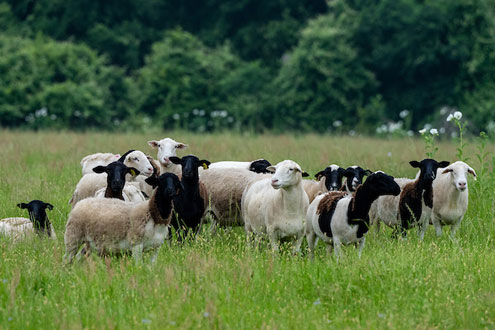
Off-season production can capture higher prices
Texas producers sometimes take advantage of the state’s relatively mild winters by adjusting breeding schedules so lambs and kids are born in the fall.
That timing allows animals to be marketed during winter and early spring, when supply is more limited across much of the U.S.
“In Texas, producers have the flexibility to shift production timing,” Thorne said. “If they can market animals during this off-season window, they often benefit from stronger prices.”
West Central Texas plays a key role in the national market. San Angelo hosts one of the largest sheep and goat auctions in the country, and several regional sale barns provide a consistent weekly supply of animals.
That steady supply attracts buyers who ship lambs and goats to major metropolitan markets, particularly along the East Coast.
Demand can also rise around cultural and religious holidays, including the Muslim observance of Ramadan, when consumption of lamb and goat meat increases.
Imports and disease concerns influence markets
Domestic producers also compete with imported lamb in the U.S. marketplace.
The U.S. does not produce enough lamb to meet consumer demand, and most imported product comes from Australia and New Zealand. Those countries often produce lamb at a lower cost, and imported product can sell for 15%-20% less than domestic meat at retail.
“Imports are necessary to meet demand,” Thorne said. “But they can also affect how high domestic prices go.”
Industry groups have discussed the possibility of tariff rate quotas that would limit the volume of imported lamb while still allowing enough product to meet U.S. demand, he said.
Producers are also monitoring the potential re-emergence of the New World screwworm near the U.S. border. The parasitic fly historically affected livestock by laying eggs in open wounds, including the navels of newborn animals.
If cases occur in Texas, animal health authorities could temporarily restrict livestock movement in affected areas, potentially disrupting livestock markets.
Prices expected to shift later in the year
Despite the strong spring market, sheep and goat prices typically change as the year progresses.
As more lambs and kids reach market during the summer and early fall, supplies increase and prices often decline.
“The prices we’re seeing right now are some of the strongest of the year,” Thorne said. “As more animals come to market later in the season, those prices will likely soften.”
Still, strong consumer demand and Texas’ dominant role in goat production continue to support the industry’s outlook.
“Texas remains the center of goat production in the U.S.,” Thorne said. “That consistent supply helps keep buyers connected to this region and supports the market year-round.”