Bonham, Texas -- On August 5, 1943, there were 3 movie theatres in Bonham showing 11 different films. Hunt’s Department Store had a sale on Porto-Ped air cushioned shoes for $7, Saunders Drug Store offered Pink Eye Powder for cattle, Humphrey Supply Company offered “Cotton Pickers’ Supplies” such as pick sacks, knee pads and water bags. War was raging across Europe and the US and British troops had just landed on Sicily. German forces had an invincible stronghold in the northern mountains of Italy and multiple US and Allied attempts to overtake the Germans had resulted in repeated failures and massive casualties.
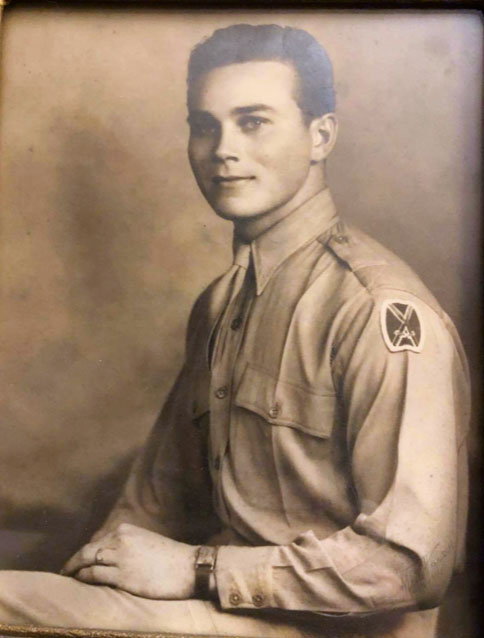
Also at that time Weldon Porter, a 23-year-old, black-dirt farm boy from Bonham, was training at the highest military camp in the world which was Camp Hale, Colorado near Leadville, Colorado, just south of Vail at an elevation of 10,000 feet above sea level.
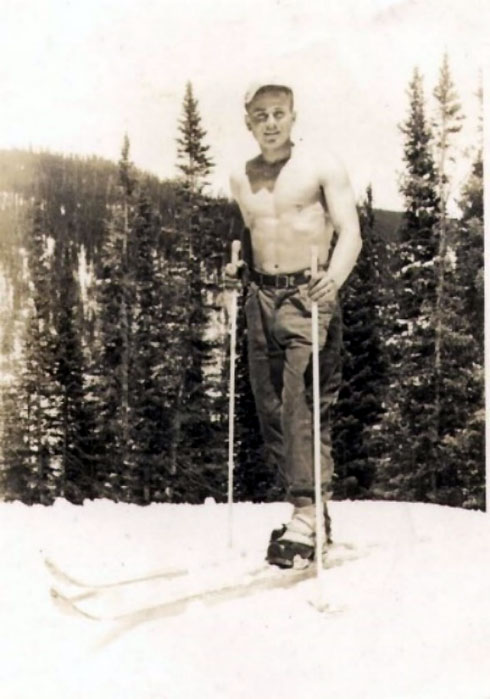
Weldon, who was often called “Steve” by his friends, had an adventuresome and entrepreneurial spirit. He was born in the same farmhouse as his two sisters and two brothers north of Ector. After graduation from Bonham High School, Weldon left the farm life of Fannin County for the opportunities of California. Weldon had always been a very athletic youngster and further pursued that by training at the well-known Olympic Club in San Francisco.
Porter had plans to become an Army Air Corp Cadet for the war effort. But in February of 1943 he found what appeared to be a “glamorous skiing opportunity” while being part of a new elite fighting force as a ski trooper with the recently developed 10th Light Division (Alpine) (later to become known as the 10th Mountain Division) under Brigadier General Loyd E. Jones at Camp Hale, Colorado.
This would be a first for the US to have a mountaineering division. The German Army had 14 mountain divisions. Recruited men required 3 letters of recommendation and skills in skiing, mountaineering or outdoor survival skills. Porter apparently learned his survival skills in the cotton fields of Fannin County, but a recommendation letter from Speaker Sam Rayburn worked favorably for Weldon along with his high level of fitness.
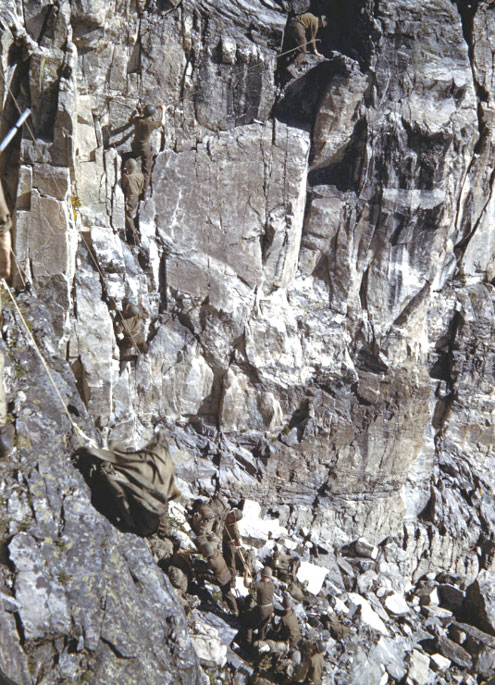
The 10th Light Division at that time had a strength of 8,500 soldiers. Army planners favored experienced skiers & mountaineers so they recruited hot-shot skiers from East Coast prep schools and Ivy League colleges. Many sergeants had been college ski coaches, instructors at resorts such as Sun Valley, or members of their college ski teams. Quite a few were foreign-born, world-class skiers and mountaineers from Norway, Switzerland, even Austria. Skiing was still new to the US and not affordable for most.
Recruits also had to pass a rigid aptitude test to insure they were mentally capable to endure the rigorous training and harsh conditions ahead. No other infantry division had a higher collective I.Q. or a higher percentage of high school and college graduates. The thought of a flat-land farm boy from North Texas joining an elite skiing and mountaineering outfit seemed preposterous.
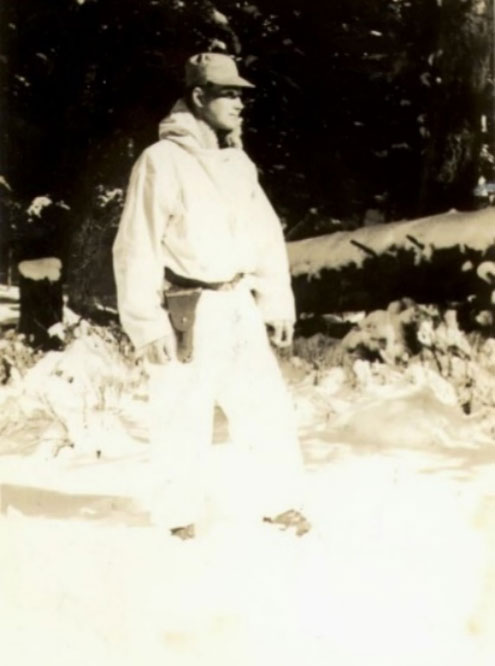
In August of 1943 Weldon took furlough from Camp Hale, Colorado after weeks of training to return to Bonham and visit his parents who by that time had moved to a farm 6 miles south of Bonham. Below is an account of some of his training at Camp Hale as told to reporter Mrs. Joe Shaw of The Bonham Herald. (It is likely that the reporter took some liberties to poetically describe the training efforts of an obviously brutal training regimen in extreme temperatures and miserable conditions.) The men of the 10th Mountain would often report that “if you can survive the training of the 10th then the war will be the easy part.” Hundreds of men were seriously injured during camp and unable to continue their military duty in the mountain unit.
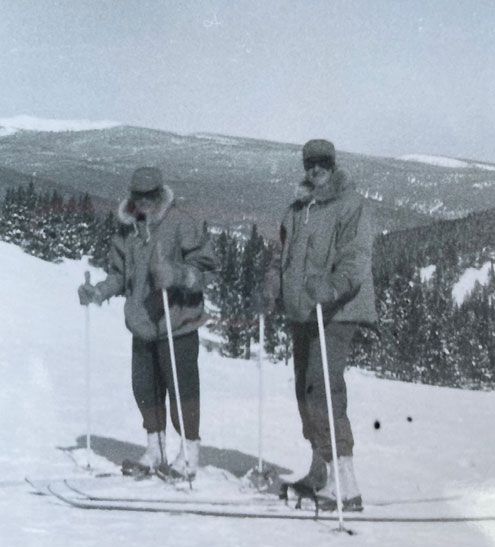
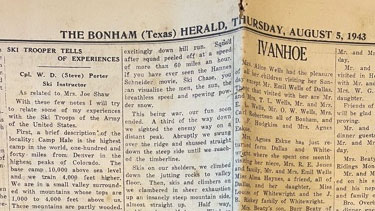
Ski Trooper tells of experiences
W.D. (Steve) Porter, Ski Instructor, As related to Mrs. Joe Shaw
With these few notes I will try to relate some of my experience with the Ski Troops of the Army of the United States.
First, a brief description of the locality: Camp Hale is the highest camp in the world, one-hundred and forty miles from Denver in the highest peaks of Colorado. The base camp is 10,000 above sea level and we train 4,000 feet higher. We are in a small valley surrounded with mountains whose tops are 1,000 to 4,000 feet above us. These mountains are partly wooded. A climb to the summit of almost anyone of them, only two or three miles from camp, gives one a magnificent view of the high peaks of Colorado which surround us. The two highest in Colorado, Mts. Massive and Elbert are just south of us. Mt. Holy Cross is west, and to the north and east are Ten Mile Range and the Mosquito Range. In addition to all these, there are many other 14,000 foot peaks.
Eight miles south of camp, up in the Tennessee Pass, on the Continental Divide, are Cooper Hills Ski Camp and our two mile long ski lift. It was at Cooper Hill that I spent eight weeks in the months of February and March.
Weldon (on right) with machine gun group. At Cooper Hill we lived rather primitively but comfortably, and we greatly enjoyed its grand location and perfect skiing. We would awake in the mornings to view two great mountain ranges to the west, usually all colored with the first rays of the sun, and literally rolled out of bed onto our skis which were waiting to crease the new fallen powder snow. Life at Cooper Hill was pleasant. We were all congenial, and skiing was our chief interest.
After a few weeks of training we had a mock war testing the capability of all of the men. We started out, some four hundred of us, looking like the big mountain climbing scene from Charlie Chaplin’s film "Gold Rush." Our packs weighed eighty pounds, and held a stove, two cans of gasoline, wax, and climbers for our skis, sleeping bag, mucklucks, ax, shovel, camouflage outfit, six pairs of arctic socks (over your knee length), rope, mountain sun glasses, sun oil, and hundreds of other little things, twelve pounds of compressed and dehydrated mountain rations (sixteen meals) ranging from pemmican to little bars of chocolate that you have to nibble on over a half hour period.
Well, after a hearty chow, we started on a glorious yet back-breaking climb. The long lines of plodding men in their white wool and fur lined ski uniforms, winding up, up and up, were quickening to the heart. Up we climbed across the giant snow field through forests of towering pines pointing our skis toward the rearing, gleaming head of Homestake Mountain.
Weldon at Camp Hale with machine gun in snow camo. By three thirty we had reached timber line and the foot of Homestake Mountain. Here, over an area of several square miles we made camp in snow from fifteen to twenty feet deep. Snow caves, pine bough huts, little buildings of an infinite variety. In my case, my pal and I dug a hole two feet deep, 4x7, piling snow blocks (neatly cut with our entrenching tools) another two feet. This we roofed, first enough to cover our heads, with pine boughs, another thick layer of boughs on the floor completed our room for the night.
Our chow was miraculously delicious as the evening’s cold and high winds set in at a temperature much below forty degrees below zero. Our dehydrated foods blossomed forth into a full meal of pea soup, sausage, rice, tea, stewed peaches, biscuits and chocolate bars. By nightfall, we were in deep sleep in our sleeping bags along with every stitch of clothing, including our ski boots and canteen of water, to keep them all from freezing.
At daybreak we continued our climb to the peak of Homestake, 13,486 feet above sea level (note Bonham is 562 feet above sea level). A glorious yet slightly terrifying climb. Precipitous walls of snow where a misstep would bring you a fall some 300 feet below. Our own climb began on glare iced snow, by noon we hit sheer, deep powder snow. The sun came out and changed the weather quite a bit. The long zigzag lines of hundreds of men - a movie camera man's holiday. Mighty snow cornices jutting perilously out some thirty feet, windblown powder streaming off.
Finally, we hit the top. Munching ration bars, we took climbers off our skis, applied downhill wax and then we made the excitingly downhill run. Squad after squad peeled off at a speed of more than 60 miles an hour. If you have ever seen the Hannes Schneider movie, "Ski Chase," you can visualize the men, the sun, the breathless speed and spewing powder snow.
This being war, our fun soon ended. A third of the way down we sighted the enemy way on a distant peak. Abruptly we swung over the ridge and sussed straight down the steep side until we reached the timberline.
Skis on our shoulders, we climbed down the jutting rocks to valley floor.
Then, skis and climbers on, we clambered in sheer exhaustion up an insanely steep mountain side, almost straight up. Halfway, a blizzard engulfed us. Wind so furious, cold so biting our little war was conveniently abandoned. We sussed down the mountain with the roaring wind behind sending us flying, then up again, and over the balanced Homestake, where we had not skied. By nightfall it was fifty-five below zero.
Due to the change in weather we had orders to return to our base camp more than 14 miles away, it was a downhill run all the way. Each man finding his own way through the rocks and trees we arrived in camp 45 minutes later. Our fun was all over for that day, we all had coffee, a good meal, a good night’s sleep and were on our skis the next morning at daybreak, ready for another day as the one we had spent previously.
Newspaper article in Bonham Herald
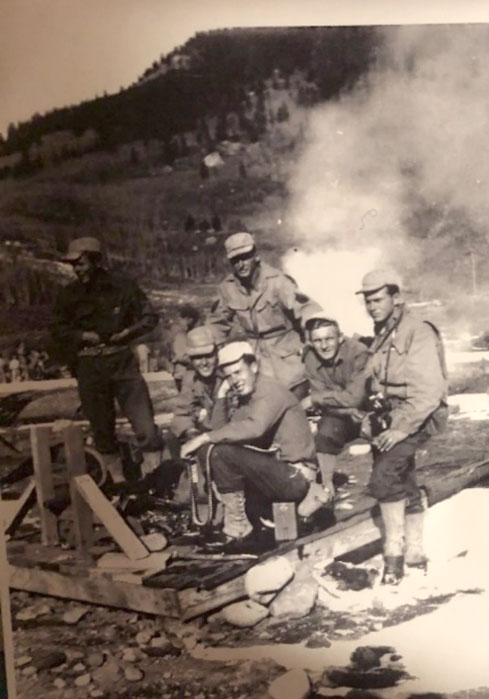
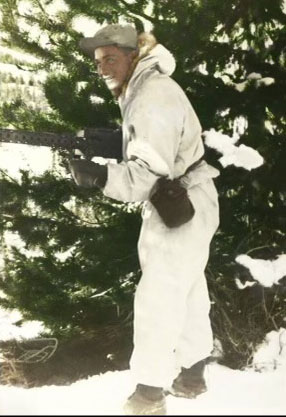
After extensive training in each discipline to include mountaineering, winter survival and the fun part -- skiing -- Weldon had become the fastest man in camp on skis and was now being encouraged to compete for a spot on the 1948 US Olympic team in the downhill slalom. But there was a war to fight first. He had adapted quickly to skis and he was already competing against the top skiers in the US and some Olympians from Europe who had arrived at Camp Hale to coach the soldiers. So a shot at the Olympics did not seem out of reach.
Below is an article from a military newspaper summarizing Weldon’s high speed downhill skills and the documentary films being made.
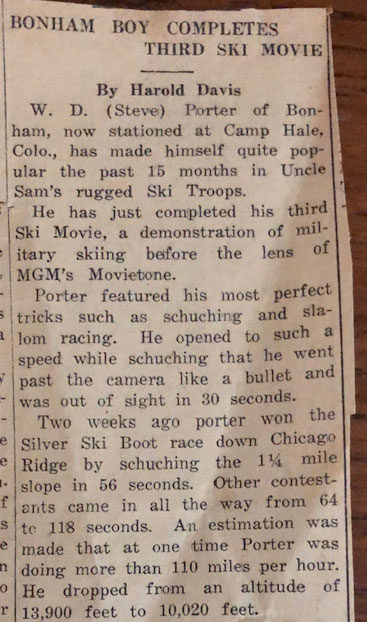
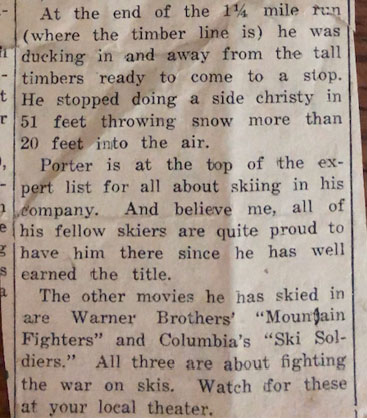
Bonham boy completes third ski movie
W.D. (Steve) Porter of Bonham, now stationed at Camp Hale, Colo., has made himself quite popular the past 15 months in Uncle Sam’s rugged Ski Troops.
He has just completed his third ski movie, a demonstration of military skiing before the lens of MGM’s Movietone.
Porter features his most perfect tricks such as sussing and slalom racing. He opened to such a speed while sussing that he went past the camera like a bullet and was out of sight in 30 seconds.
Two weeks ago Porter won the Silver Ski Boot race down Chicago Ridge by sussing the 1 ¼ miles slope in 56 seconds. Other contestants came in all the way from 64 to 118 seconds. An estimation was made that at one time Porter was doing more than 110 miles per hour. He dropped from an altitude of 13,900 feet to 10,020 feet.
At the end of the 1 ¼ mile run (where the timber line is) he was ducking in and away from the tall timbers, ready to come to a stop. He stopped, doing a side Christy in 51 feet, throwing snow more than 20 feet into the air.
Porter is at the top of the expert list for all about skiing in his company. And believe me, all of his fellow skiers are quite proud to have him there since he well earned the title.
The other movies he has skied in are Warner Brothers’ “Mountain Fighters” and Columbia’s “Ski Soldiers.” All three are about fighting the war on skis. Watch for these at your local theater.
May 26, 1944 – Weldon came home on leave to marry his childhood sweetheart, Helen Barnett of Ravenna. They returned to Camp Hale after the ceremony.
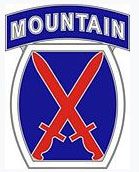
After extensive winter combat and warfare training Weldon and his 86th regiment were sent to Camp Swift in Texas for flatland training. But that stop was brief as he was soon riding a train to Camp Patrick, Virginia for embarkment for an “Impossible Mission.” They were as fit and ready and motivated as any unit anywhere.
By December 11, 1944 Weldon was boarding the SS Argentina in very crowded conditions with his 86th Infantry of the 10th Mountain Division and arriving in Naples, Italy on December 22. They were greeted by cold, rainy conditions, poverty, begging and despair of the locals.
It was then that the 10th Mountain Division found they had been assigned the impossible task of driving the embedded German forces out of the northern Apennine Mountains of Italy. The US Fifth Army and allied troops had made three prior attempts only to be met with failure. (The 10th was initially brought in to “take the high ground.” But after its initial success in Italy, the 10th Mountain Division led the rest of the Fifth Army north, ultimately achieving success in every subsequent operation until the war’s end.)
The 85th and 87th Infantry arrived a month later after the 86th had landed. The 10th was comprised of the 85th, 86th and 87th Infantry. And Weldon’s 86th was leading the charge.
General Hayes takes command of the 10th and by all accounts would be “a hell of a football coach.” Hayes has already won the Medal of Honor from WWl. His pep talk that resonates with the men is “always move forward; never stop.”
January 6, 1945 Weldon was headed to the front lines with the 86th and had moved to Bagni de Lucca near Mount Belvedere in preparation for an offensive to capture the mountain along with the surrounding high ground. By late January of 1945 Weldon’s 86th prepares for the coming attack on Riva Ridge. An eventual attack on Mt. Belvedere would only be successful if German positions on Riva Ridge were eliminated. Riva Ridge overlooks Mt. Belvedere and provides clear artillery view of Mt. Belvedere.
Weldon and the 86th have 25 miles of mountains between them and the nearest Allied unit. Mt. Belvedere is key to the Germans as it gives a clear view of Route 64, one of the main approaches to the Po Valley in the 5th Army Sector.
On the evening of February 18, 1945, 700 brave men of the 86th make a daring night climb, scaling 2,000 vertical feet of Riva Ridge to surprise and overtake the embedded Germans. Men were given orders not to fire their weapons under any circumstance, not even if fired upon. Company command wanted total silence in the ascent as to not give away their position.
The Germans were caught by complete surprise and were yet to have their morning coffee as they felt the cliff was unclimbable. It is considered among the most daring nighttime attacks in military history. Countless bone-chilling nights training in thin Rocky Mountain air served them well when the ski troops scaled the steep, icy face of the east side of Riva Ridge.
There was only one US casualty in the initial assault but counterattacks and heavy shelling over the next seven days for control of Mt. Belvedere cost the division 923 casualties.
The stark brutality of infantry warfare had become quick reality - gory and unforgiving. And to make matters worse it was not unusual to have a German soldier position themselves as if they were surrendering only to lob a grenade into a group of US soldiers. Or to steal a US uniform from the dead only to get close enough to fire on US soldiers.

March 3, 1945 and the 10th Mountain March Offensive begins on a thrust towards Po Valley. The goal is to gain high ground for terrain leading downhill to the Po Valley. But there is great German resistance. There are another 1,012 casualties in the offensive. The 10th continues their advance.
Along the way Weldon’s group comes under heavy fire as he jumps into a shell hole for protection, but his Missouri pack mule is hit by sniper fire and falls on top of him and is covered in blood. Medics are called along with several men to remove the mule but it turned out Weldon was OK and all of the blood was from the mule. There was no opportunity to shower for days.
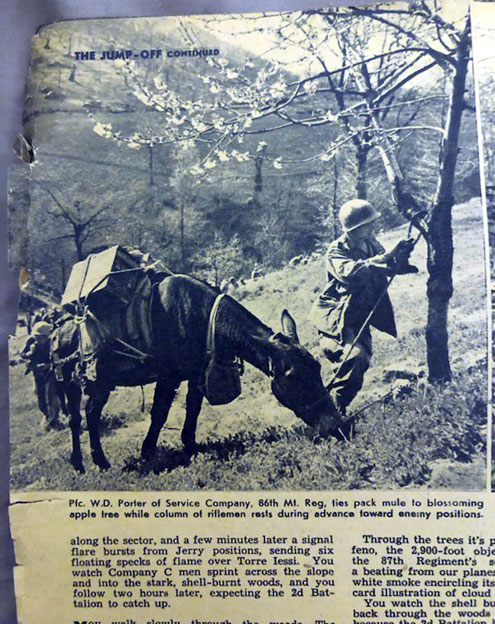
By April 14, 1945 the 10th is a day ahead of other Allies and launches the Spring Offensive and assaults German positions on the hills of Mt. Dealla Spe. Each infantry attacks from a different angle. But this time there is no surprise and the division has its bloodiest day in spite of artillery and aircraft support. The attacks were so aggressive the men were ordered to not stop and help the wounded and continue to advance forward. It was truly the ugliest part of war with massive casualties- grotesque body parts, bones protruding through flesh and body parts scattered everywhere. The stench of rotting bodies was horrendous -- that of a slaughterhouse.
It is in this assault that 2nd Lt. Robert Dole of the 10th 87th Regiment is seriously wounded. Dole would later become a senator, vice-presidential nominee and presidential nominee. Other notable men of the 10th Mountain were Bill Bowerman who later developed Nike and also Werner and Rupert von Trapp who immigrated from Austria to join the US Army after refusing to play a birthday concert for Hitler. The von Trapps are better known as the basis for the musical, "The Sound of Music."
By April 23, the 10th is moving rapidly towards Po Valley and the Germans are in full retreat. But Weldon’s 86th is slowed because the Germans are heaving random and desperate artillery fire through the mountain passages and tunnels. And the Germans get lucky collapsing several traffic tunnels, some with both ends collapsed with rock shards flying and as harmful as the shrapnel with men trapped inside. The concussions of the explosions are deafening and stunning to the men. Weldon was caught in one of the collapsed tunnels and seriously wounded but was fortunate to survive. He was one of three men who survived out of the 35 men in his squad.
Porter also sustained multiple artillery & shrapnel wounds from other shell explosions and was treated in an Italian hospital. Throughout his life Weldon required medical attention to remove shards of shrapnel from various parts of his body. There would be no Olympics for Weldon.
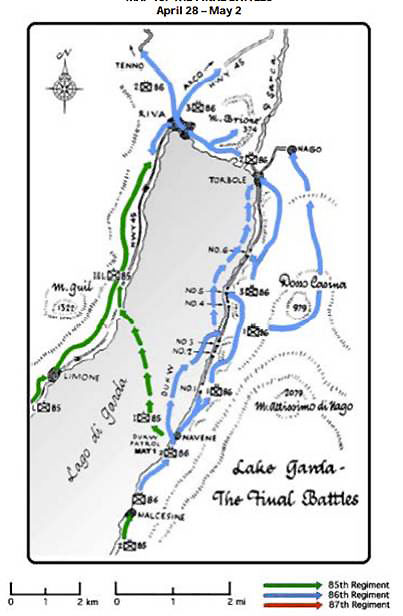
By May 1 of 1945, the German Army in Italy surrenders. The 10th had done its job. It was a pivotal victory; other US forces or allied troops had been unable to dislodge the strong German forces from the altitude advantage of the mountains of Italy.
On May 4, the 86th with Lt. Col. Hays still in command reaches Resia Pass in the Alps on the border between Italy and Austria. Two days later they meet with the troops of the 44th Infantry after the Battle of the Bulge.
A few days later, on May 7, Germany surrenders after Hitler commits suicide. A genocidal madman had been stopped. But it was not without cost as the 10th Mtn suffered the war’s heaviest casualties with 4,866.
On July 14, 1945 Weldon’s 86th Infantry leaves Livorno on the SS Westbrook Victory and arrives at Newport New, VA on August 7. The atomic bomb is dropped on Hiroshima on August 6.
The men of the 10th report to Camp Carson, CO in mid September 1945 and the 10th Mtn is deactivated at the end of November.
Weldon Porter, the young farm boy from Bonham, Texas had just been a part of one of the most important military victories in US history. He returned to Texas with his wife, Helen, and moved to the metroplex where he raised a family and had a successful life. Weldon received the Bronze Star, Combat Infantry Badge (CIB), six Purple Hearts and other campaign medals.
Through no fault of their own, the 10th Mountain Division was a Johnny-come-lately to combat. The 10th Mountain Division never lost a battle and never gave an inch. The soldiers and their leaders adapted their expertise and techniques in a way that overwhelmed the capabilities of the German units they faced. Weldon later renewed old relationships by attending his last 10th Mountain reunion in Vail, Colorado in 1992.
Many books and movies have been made about this incredible military victory. Like many men of WWII, Weldon would rarely discuss the horrors he experienced or his involvement in the war effort to his family.
The positive outcome of the division, other than the pivotal victory that led to the end of the war, is that 62 resorts across Colorado and other areas were developed and operated by veterans of the 10th Mountain Division.
Weldon was buried with military honors at Willow Wild Cemetery in Bonham on Feb. 6, 1993 beside his wife, Helen. Representatives of the 10th Mountain Division were at his funeral to pay their final respects.
Sidenote: Every family in Fannin County was impacted by WW2 in some manner. All gave some and some gave all.
Just a month before Weldon was shipped out to Italy, his brother-in-law, Charles Hunter, married to Blanche Porter and a trainee at Jones Field, was shot down in his P-51 Mustang over central Germany after confirming the kill of a German Focke-Wulf 190. Charles was listed MIA and buried five years later in the US National Cemetery in Belgium.
Weldon’s older brother Forrest was serving in the Army Air Force in the South Pacific and was headed for Okinawa.
Weldon’s other brother-in-law, Ernie Sims, married to Helen Porter, had been a flight instructor at Jones Field and later flew missions over Europe before becoming an air traffic controller in the reserves.
Ernie was called back into active duty in 1948 to help set up the air traffic control system for humanitarian relief in the Berlin Airlift. He also flew C-54s “Skymasters” and C-47 “Skytrain” cargo planes for the Berlin Airlift. This air traffic control system developed for the Berlin Airlift was used as the basis for modern air traffic control. Capt. Sims later became the FAA Assistant Chief at the Ft. Worth Air Route Traffic Control Center in Ft. Worth before retiring to raise champion registered Angus cattle in Bonham.
Weldon’s other brother, Edwin, had enlisted in the Army but his parents requested a farm deferment and Edwin had to come back home to the farm. I never heard any of these men complain or discuss in detail their time in the war. Like most other men of that era they just did their part.