This article will conclude the series about a hike along the railroad tracks from Windom to Bonham. The plan was to learn more about what we will find if there is an opportunity to restore a small section of the track for a lightweight tourist train that might run on weekends, as well as create a biking/walking path that would run on either side of the railroad. I would like to think I'm not the last person to get to enjoy one of the most interesting walks in Fannin County.
This little tramp along the tracks had three stages.
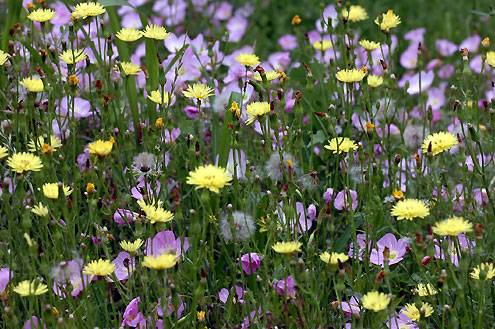
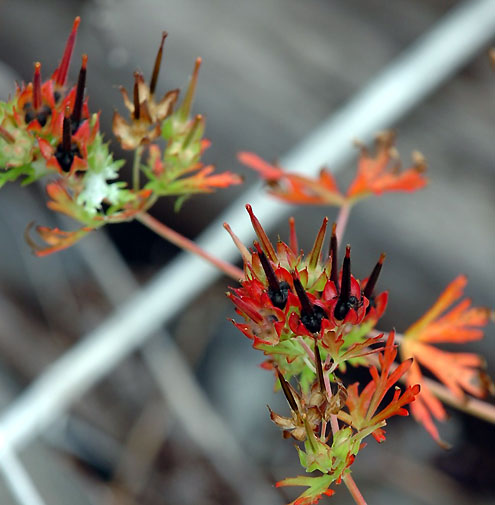
Windom to Dodd City is level, teeming with interesting vegetation (particularly the wildflowers) and home to a healthy population of cardinals and other songbirds. Thanks to Johnny Johnson, a Lamar County resident with a vast knowledge of local botany, now I know those were red Texas stars that were blooming all along the tracks.

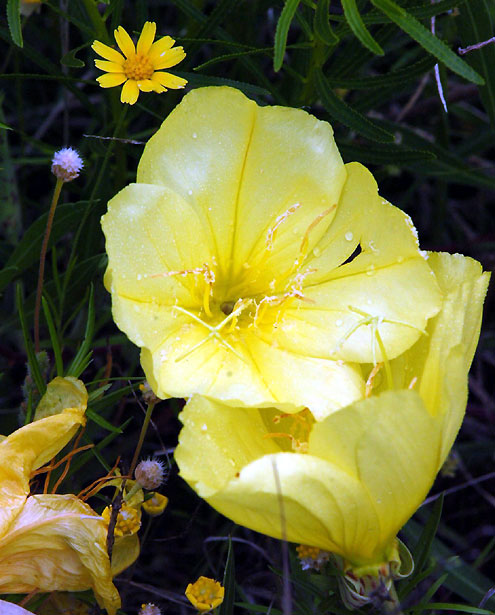
Just west of Dodd City were different wild flowers and the prettiest creek of the tramp. The bridge over Sloans Creek was the perfect place for a weary traveler to rest aching feet for the final leg of the journey. Besides the springs feeding into Sloans Creek, the memory I will carry from this part of the walk was a group of native yellow primroses.
There was a time when cotton was king along the third section of this hike, but now poison ivy is queen of the tracks.
My friend H.G. Dulaney says there are also three stages of a man's life: youth, middle age and "Hey, you're looking good!"
My father, who happened to be a close friend of Mr. Dulaney's in the early 1920s when the two kids spent free time after the chores were done playing in the Ector sandpits, told me that surely there were three stages to almost all my ideas: beginning, end and the part somewhere in the middle when it dawns on me this is the stupidest thing anybody on earth ever tried.
Now that I'm approaching the "Hey, you're looking good" part of my life, I can safely say the only thing dad was wrong about was that most of my ideas don't have an end. Most of my adventures don't get past the "this is the stupidest thing anybody on earth ever tried" part, and that's where we pick up this story.
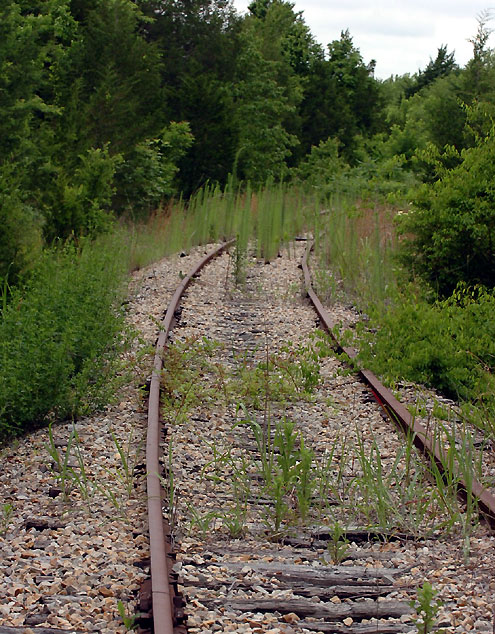
To be honest, there were still scenic stretches of the walk once I bid adieu to the cool waters of Sloans Creek. One special half-mile or so I've knicknamed "the saddle" because the tracks had 30-foot slopes on either side. Many moons ago, there was a bridge that crossed over the tracks here, carrying cars and trucks out to the old Bonham Lake.
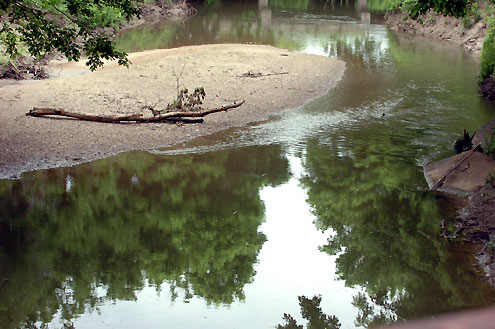
After walking through the saddle, the accumulative effects of floods over the years was evident in several areas where erosion had removed the soil below the tracks and crossties were often attached only on one end. The bridge over Bois 'd Arc Creek, however, was built to last and it stands as a monument to the engineers and craftsmen that erected the structure. There's been a lot of water under that bridge.
By now, I had been walking almost five hours in wet boots. The thrill was gone from the tramp, but the situation reminded me of the phrase daddy always used to coax the cows when we would help deliver calves down on the farm: "It's just too late to turn back now, Bessie."
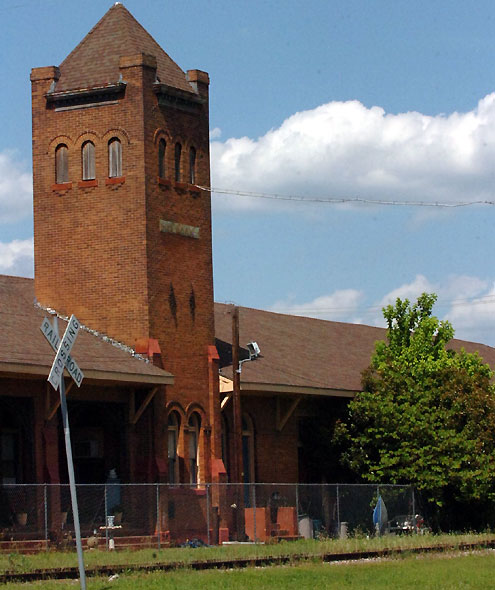
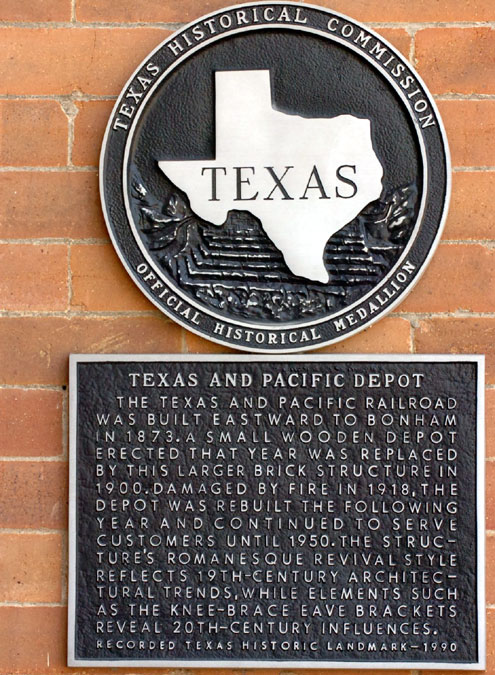
It also occurred to me there were two railroads in Bonham at the turn of the last century: the Texas and Pacific, as well as the Denison, Bonham and New Orleans. The Texas and Pacific never made it to the Pacific, the Denison, Bonham and New Orleans never made it to New Orleans and I wasn't sure I'd ever make it to the depot in Bonham.
Maybe I should mention that, in addition to the T&P and the DB&NO, we also had a streetcar running the rails through downtown Bonham during this same era. You've probably heard of the Tennessee Williams classic, "The Streetcar Named Desire." Well, we weren't quite that romantic. We had a streetcar named "Dummy" from 1890 until 1915.
According to the history book entitled: "Bonham, the era has gone - but memories linger on" by Lucille Hackley, the streetcar history goes like this:
The steam powered streetcar called "Dummy" started in 1890. It ran from Russell Heights in the north part of Bonham, down W. 10th to North Main to the Texas and Pacific Railroad Station. This was a distance of two and a half miles which the car ran every 30 minutes. In 1914, Stewart Arledge was motorman on the car. Stewart recalled the shock when the chains on the car broke as he neared the T&P tracks going downhill. The car bounced over the track and landed in Bedford's Hamburger place on Powder Creek.
So, that's the story about how "Dummy" launched the drive-in food industry. You can't make stuff like this up!
But, back to the tramp...
Almost every step now disappeared in knee-deep or waist-deep poison ivy. If you've spent much time in Bois d'Arc bottom, you know it is a good idea to watch where you step. But that wasn't an option as I held my arms above my head and tried to keep the poison ivy from making contact with my skin. Some of the best prayers of my life were recited there. He must have been clearing my path, because I came out of this with everything but my pride intact; not even a mosquito or chigger bit me.
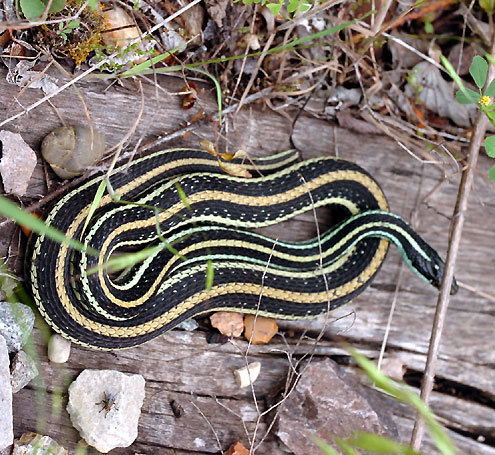
I think one thing scared me more than the copperheads and cottonmouth water moccasins that slithered aside to wait on a better tasting meal. The thing that scared me most, and frightens me even more in retrospect, is that we are letting a precious part of Fannin County history, and, on a grander scale, American history, disappear in a tangle of vines.
Here is a note from Gerald Finley...
"Raised in Honey Grove 1937 and forward. I can remember when the passenger trains were traveling those tracks with the steam engine puffing black smoke and the steam whistle blowing so loud.
"One of my first recollections of the train was on a Sunday afternoon during World War II, when the casket of "Red" Gordon was taken out of the baggage car. He was killed in a training incident in Texas. Red was my parents' best friend. His funeral was held at the First Baptist Church by Rev. T. J. Watts and the choir sang "Jesus Savior Pilot Me." Red Gordon is buried at Oak Wood Cemetery."
Malinda Carter said this story reminded her of those days in the l940s when it rained and the best way to town was to walk the Cotton Belt track west of Randolph into town, closing with, "when there really was a town of Randolph."
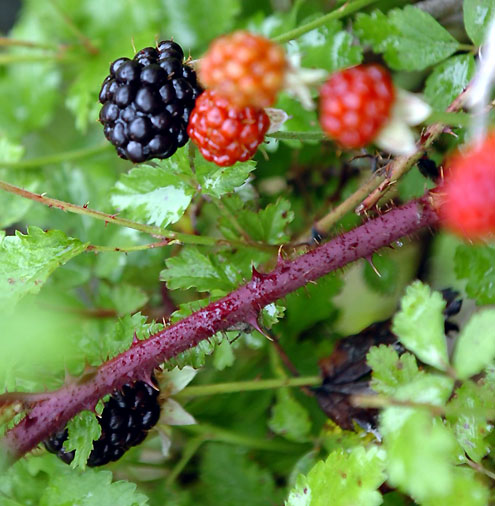
"I might add during the spring months berries grew along the tracks and that was a treat," Malinda recalled. "Of course, it sounds so much more romantic now than it did when I was a first or second grader and on my way to school."
Well, the berries are still there, Malinda. Wouldn't it be nice if, oh, 100 years or so from now, people are still grabbing a handful of those wild Fannin County blackberries that grow along the railroad.
Maybe the days when larger-than-life steam locomotives ran these tracks are gone forever. And the men who laid these tracks through an untamed land have been gone for a century. But they left their mark on America. It would seem a shame not to preserve that legacy.




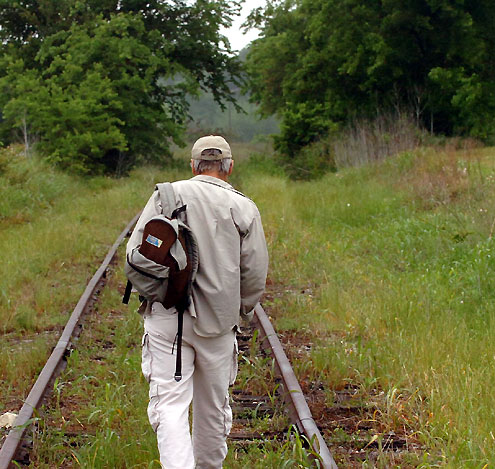
The title for this article is a bit of a double entendre that was shamelessly borrowed from Mark Twain's humorous tale of an American tourist that sets out to walk through southern Europe, A Tramp Abroad. Bonham native Harry Peyton Steger was also fond of a good tramp, particularly of the European variety.
I owe a hearty "thank you" to the staff at Bonham Public Library and the staff at the Fannin County Museum of History for helping me understand a little about the history of the two railroad companies that were operating in Bonham at one time.
My brother, Lynn Rich, was kind enough to ferry me over to Windom to start my walk. Like the kind brother that he is, Lynn also drove back along Hwy. 56 that afternoon to see if I had given up, come out of the woods and was walking along the road with my tail tucked 'tween my legs.
And the readers that enriched my little tramp on the tracks with first-hand knowledge of the railroad were a blessing. It would have been much less of a story without every one of you.