

To recall and celebrate the positive contributions to our nation made by people of African descent, American historian Carter G. Woodson established Black History Week. The first celebration occurred on Feb. 12, 1926. In 1976, as part of the nation’s bicentennial, the week was expanded into Black History Month.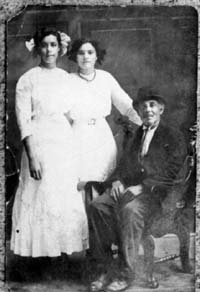
Did you know?
Population
39.2 million
As of July 1, 2004, the estimated population of black residents in the United States, including those of more than one race. They made up 13.4 percent of the total U.S. population. This figure represents an increase of half a million residents from one year earlier. More
61.4 million
The projected single-race black population of the United States as of July 1, 2050. On that date, according to the projection, blacks would constitute 15 percent of the nation’s total population. More
3.5 million
The estimated black population of New York on July 1, 2004, highest of any state. Four other states had black populations that surpassed 2 million:
Florida, Texas, California and Georgia. About 85,900 blacks were added to Florida’s population between July 1, 2003, and July 1, 2004. That is the largest numeric increase of any state in the nation. Georgia and Texas added 61,800 and 45,000, respectively. More
59 percent
As of July 1, 2004, the proportion of the District of Columbia’s population identified as black — the highest rate for this race group of any state or state-equivalent in the nation. The District of Columbia was followed by Mississippi (37 percent), Louisiana (33 percent) and Georgia, Maryland and South Carolina (30 percent each). More
1.4 million
The number of blacks in Cook County, Ill., as of July 1, 2004. Cook led all the nation’s counties in the number of people of this racial category.
Broward County, Fla., had the largest numerical increase (17,900) between
2003 and 2004. More
32%
The proportion of the black population under 18 as of July 1, 2004. At the other end of the spectrum, 8 percent of the black population was 65 or older. More
Businesses
$92.7 billion
Receipts for black-owned businesses in 2002, up 30 percent from 1997. The rate at which black-owned businesses increased their receipts was higher than the national average (22 percent). More
1.2 million
The number of black-owned businesses in 2002, up by more than 370,000, or
45 percent, since 1997. An estimated 94,862 such firms had paid employees, with receipts of $69.8 billion or about $735,586 per firm. More
• Thirty-eight percent of black-owned firms were in health care and other
service industries; health care and retail trade accounted for a fourth
of their receipts. More
• A fourth of the businesses in Washington, D.C., were black-owned.
Black-owned businesses accounted for between 12 percent and 15 percent
of firms in Maryland, Georgia, Mississippi and Louisiana. More
• Black business owners were more likely to hold graduate degrees when
they started or acquired ownership in their business (about 1-in-4)
than the national average (19 percent). More
Education
81%
Among blacks age 25 and older, the proportion that had at least a high school diploma in 2004. This proportion rose by 8 percentage points from 1994 to 2004. More
18%
Among blacks age 25 and older, the proportion that had a bachelor’s degree or higher in 2004 — up 5 percentage points from 1994. More
1.1 million
Among blacks age 25 and older, the number who had an advanced degree in
2004 (e.g., master’s, Ph.D., M.D. or J.D.). Ten years earlier — in 1994 — only 624,000 blacks had this level of education. More
2.3 million
Number of black college students in fall 2004, roughly double the number 15 years earlier. More
Income and Poverty
$30,134
The annual median income of black households in 2004. This represents no change from 2003. More
24.7%
Poverty rate in 2004 for those reporting black as their only race. This rate was unchanged from 2003. More
Voting
60%
Percentage of black citizens age 18 and older who voted in the 2004 presidential election. That amounted to 14 million voters. The percentage of those voting is up 3 percentage points from the previous election. Blacks had the highest turnout rate of any minority group in 2004. More
Families and Children
9.1 million Number of black families in the United States. Of these, nearly one-half
(47 percent) are married-couple families. More
11%
Proportion of black children who live in a household maintained by a grandparent. More
Homeownership
48%
The proportion of black householders who own their own home. More
Serving Our Nation
2.3 million
Number of black military veterans in the United States in 2003.
(Source: American FactFinder)
Health Insurance
20%
The proportion of blacks who lacked health insurance in 2004, unchanged from the previous year. More
Jobs
27%
The percentage of blacks age 16 and older who work in management, professional and related occupations. (Source: American FactFinder)
There are 50,600 black physicians and surgeons; 69,400 postsecondary teachers; 44,800 lawyers; and 53,800 chief executives. (Source: Upcoming Statistical Abstract of the United States: 2006)
Questions or comments should be directed to the Census Bureau’s Public Information Office: telephone: (301) 763-3030; fax: (301) 457-3670; or e-mail: pio@census.gov