|
Printed From North Texas e-News == ntxe-news.com School News McKinney teens take In London, Stonehenge and Bath English painter John Berger once said that “Every city has a sex and age which have nothing to do with demography. Rome is feminine. So is Odessa.” [[Not to worry, it’s Russia, not Texas.]] “Paris, I believe, is a man in his twenties in love with an older woman. . . London is a teenager, an urchin, and, in this, hasn’t changed since the time of Dickens.” In an ancient city like London, the ambience of Dickens’ storied era still lives, and several McKinney teenagers recently had the chance to embrace its spirit firsthand. Students in McKinney High School’s Humanities class traveled with their teacher, Kacie Krug, and her father, MNHS counselor Mark Hundley, to London in July. Having spent their fair share of time studying and analyzing Dickens or familiarizing themselves with Berger’s painterly works, the trip gave students the ability to immerse themselves in British history and culture as no book ever could. Studying historical fiction and annotating literary passages can prepare one for travel, but never fully. These students were now able to let the old city seep deeply into their young suburban American souls. The group touched down at London Heathrow Airport, the largest traffic volume international airport in Europe and one of the world’s busiest. They quickly learned to speak the language of international finance at the airport’s currency exchange.
“Things weren’t as expensive as we thought they’d be, which is good because the exchange rate is really low right now”, said Michael Houser, who had been to London once before. A British Pound Sterling, or BPS, is worth about $2 US. “We all learned the British monetary system pretty quickly and the coins look a lot like ours. A pence is copper and worth about a penny. The paper money is finer and larger than our bills,” he added.
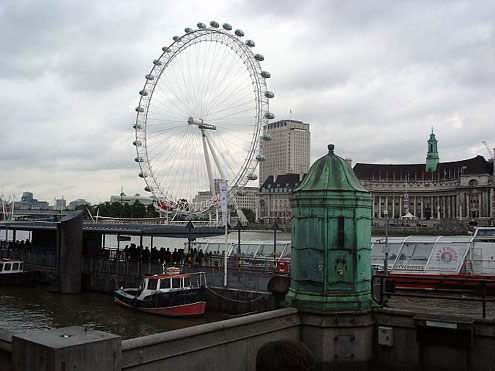
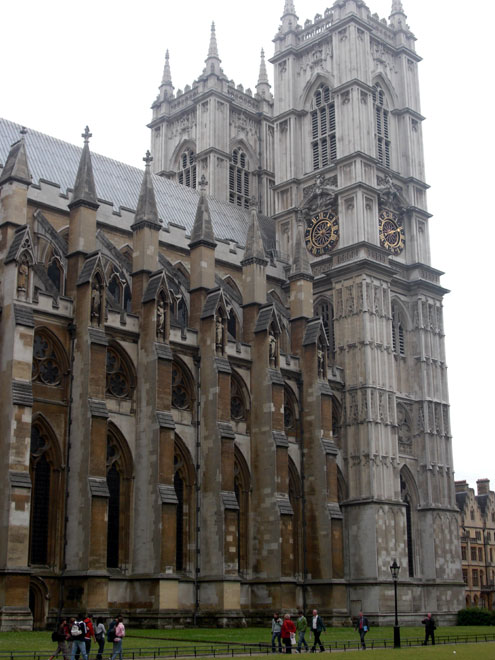
Once out of the airport, the group wasted no time boarding their bus for a day of sightseeing in London. From their studies, they knew that England has played a large role in the advancement of architecture, having some of the finest buildings and architecture in the world. It is home to some of the most impressive medieval castles and forts including the Tower of London and Windsor Castle, the world’s largest inhabited castle. Highlights for the students included hovering over the Thames River atop the huge ferris-wheel-like London Eye, which gave them a 360-degee view of the city. They visited Westminster Abbey, toured Windsor Castle, enjoyed the Thames by boat and crossed the London Bridge.
English architects are legendary for developing a variety of architectural styles over the centuries, including Tudor, English Baroque and Victorian. Yet students on their first trip abroad were astonished at how massive, solid, intact and intricately crafted London buildings are.
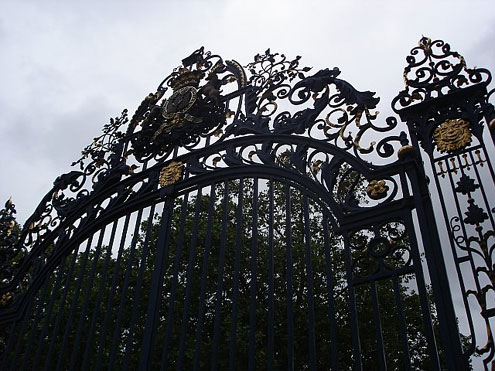
“I was not expecting all the incredible Victorian architecture. I thought it would look more modern, like Manhattan”, said Evan Weinberger. “The workmanship and level of detail on the gates, stonework and buildings was amazing.”
Like travelers everywhere, food played an important part in the teens’ foreign experience. Several commented before the trip that they had heard British fare might be “bland and boring.” Or worse: that Cokes were served warm, without ice. Happily, they found ‘surprisingly delicious’ Italian and East Indian fare in family restaurants near their central London hotel. They enjoyed fish and chips - not greasy fast food but fresh, tasty and satisfying.
Even the Cokes tasted better, according to Andrew Alvarez. “They use real sugar and not fructose like in the US; they were not overly sweet, just really tasty. I wish we could get them here.”
At a London Subway restaurant, they found a sub not offered here: Reggae Reggae Chicken, appealing to the city’s multicultural population. The students even had a brush with greatness on their first sightseeing excursion.
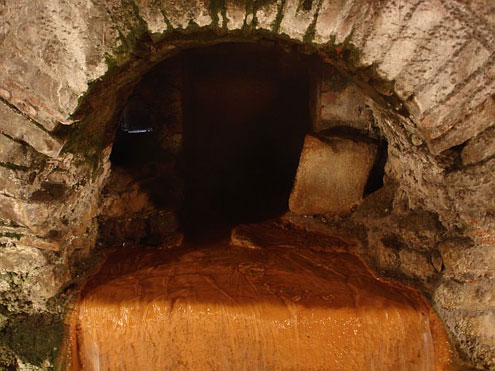
According to Jesse Carriere, “We were out exploring near Piccadilly Circus when our tour guide heard that the Queen was supposed to stop and visit nearby. There were tons of police with big guns and tons of people waiting. After we were there about an hour and she still hadn’t come, we were guided to the bus to head to our next stop. The roads were blocked off, so we were on a back road behind an alley. The guide suddenly stopped in mid-sentence and screamed, 'THERE SHE IS!' I saw the back of her convoy. Some people in our group actually saw her in her car, a gold Bentley.” A trip by ‘motorway’ to Stonehenge took them two hours west through tiny villages in the lush English countryside. Like the rest of the group, chaperone Mark Hundley was excited to see the ancient structure. “From the first moment I saw a picture of the marvelous monument as a child, I have been fascinated by its inherent power to confound,” he said. “At last, the monument came into view and my breath was momentarily taken away! I could hardly wait to disembark from the bus and make my way to this near ageless mystery. The weather was bleak on that morning -- cold, windy and punctuated by fits of rain. Still, the grandeur and glory of this site was not diminished one bit.” The Roman city of Bath was next on their itinerary, and several students agreed that the city of about 80,000 people was easier to navigate and enjoy than the confusing and crowded streets of London. The ancient Roman baths that made the city famous are still intact; green water fills its huge cavernous openings. The natural spring water at Bath is well-known for is therapeutic power.
According to Carriere, “For 50 pence you could buy a glass of water from the springs; it is supposed to give you good luck. I paid the 50 pence and tasted it and . . . it tasted awful. Then a man walked up and said, ‘I'm a resident; three glasses please.’ And he downed them in a second.”
J. Christopher Proctor said he marveled at Bath Abbey and at all the ancient artifacts discovered in and around the city displayed in the Bath Museum … as well as more modern conveniences.
“The (restroom’s) hand driers were big boxes – you put our whole hand inside and they dried in an instant,” he said. He added, “Another favorite was getting to see Wembly Stadium in all its archy epicness.” While no foreign language skills were required, students found British English a bit different: they rode lifts (elevators) and the Tube (subway), waited in queue (line), ate crisps (chips), and savored dainty biscuits (cookies) with Four O’clock Tea, still a daily ritual.
When Paige Malcom went shopping with Georgia Williams, they were puzzled at signs for trainers (sneakers) and jumpers (sweaters). The signs they had seen in front of posh restaurants - “No Trainers” - suddenly made sense.
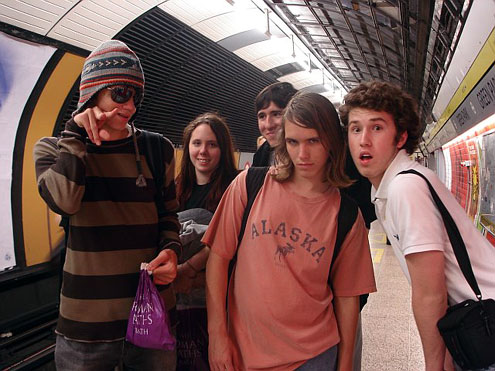
Malcom added, “I'd never really been on a subway or even many trains, so it was cool to use the Tube.” As the group learned about the culture, history, economy and society of Great Britain’s largest city, the chaperones learned something about their young charges.
According to Krug, who has taught most of the students for two years, “The biggest thing that I realized while I was on the trip was how amazing these kids really are. They are so intelligent, worldly, and philosophical all at the same time. They embraced everything that we encountered with no qualms about any of the differences. They desired a sense of independence and struggled with not knowing their way around. The sights we took in were those we had only seen in pictures, or in Humanities textbooks. I would go with them again in a heartbeat.” Hundley, who bravely agreed to chaperone before he had even met any of the students, shared that when others heard he was traveling abroad with a group of teenagers, they either grimaced or shook their heads in pity.
During the trip, he recalled, “I often had to remind myself that I was traveling with sophomores, juniors and seniors in high school and not fourth-year college or graduate students. As a group, they were outstanding! As individuals -- as varied and rich in personality, perspective and potential as any educator could ask for. I miss them! They made me smile; laugh; pause; think; reflect; re-evaluate; ponder. They were simply wonderful!” (Hundley has written his account of the trip in four parts on his blog: livinginthemeantimes.typepad.com:80.) According to European travel expert Rick Steves, “I see Europe as the wading pool for world exploration. You can go into a place and observe and meet people and pull wonderful understanding out of mundane situations, and I just love that. If you’re gold-panning, those are the nuggets.” In these McKinney students’ big bicycle ride of foreign travel, their training wheels have been officially taken off. The London Eye photo by Mark Hundley
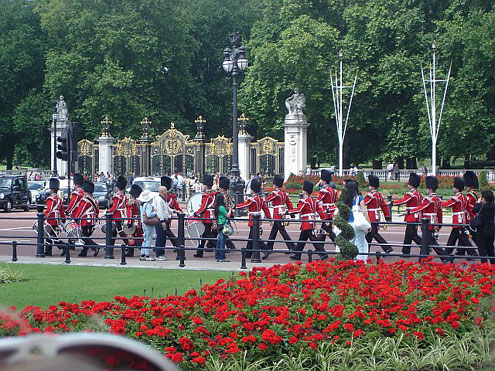
Changing of the Guard photo by Kacie Krug
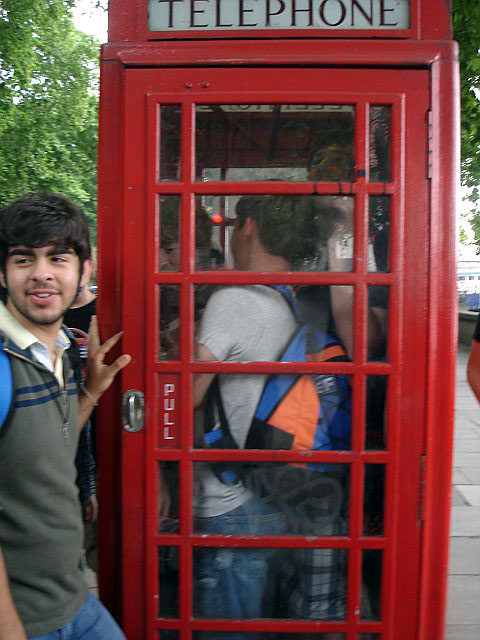
Austin Heitkamp wonders just how many students…London phone booth photo by Kacie Krug
Students in the Tube photo by Kacie Krug – L to R: Evan Weinberger, Paige Malcom, Andrew Alvarez, J. Christopher Proctor, and Michael Houser.
Elaborate London gate photo by Kacie Krug
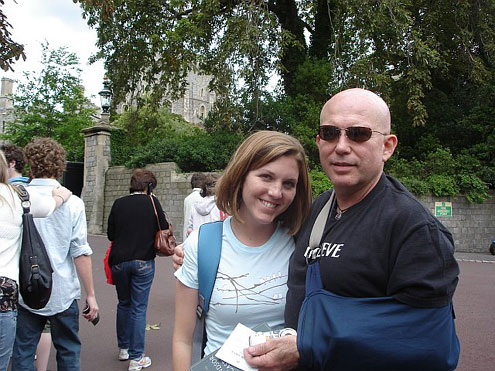
Chaperones Kacie Krug and Mark Hundley photo by Kacie Krug
Westminster Abbey photo by Jesse Carriere
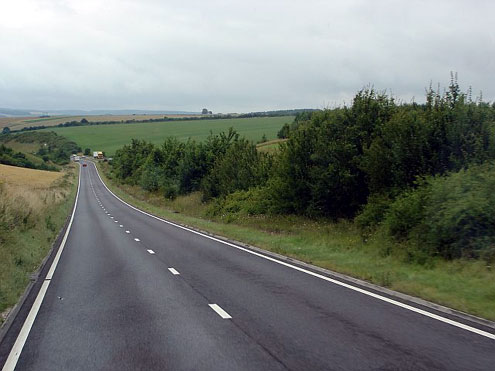
English country road photo by Kacie Krug
Mineral springs at Bath photo by Kacie Krug © Copyright 2002-2005 by North Texas e-News, llc. |